

Key Takeaways
- What underground support systems are and why they are vital for mine safety
- Classification and key design principles of underground support
- Five strong support systems with optimized descriptions
- How to choose the right support based on tunnel conditions
- A comparison table to guide your selection
- FAQs written in Google-style search questions
Table of Contents
What Are Underground Support Systems?
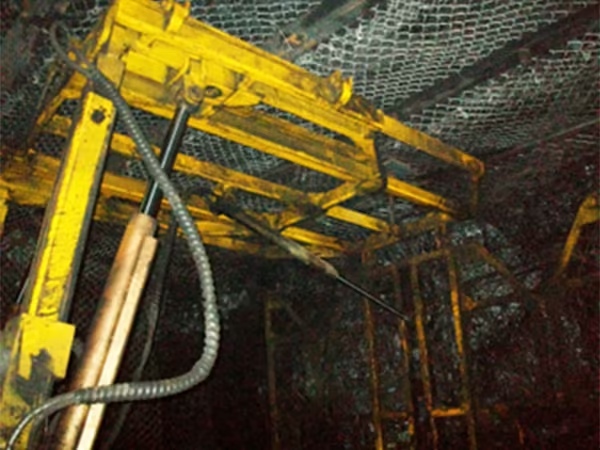
Underground support systems are engineered structures designed to stabilize tunnels, stop rockfall, and maintain roof integrity. They are essential in mining, tunneling, and underground construction, especially in unstable geology or high-stress environments.
Why support systems are the backbone of underground safety
Without proper support, tunnels can deform, collapse, or cause dangerous rock bursts. Support systems distribute stress and prevent localized failure.
The main goals of underground support
- Prevent roof collapse and wall failure
- Reduce ground deformation
- Protect workers and equipment
- Ensure long-term tunnel stability
Types of Underground Support Systems
Underground support systems can be classified into several types based on their function, structure, and application stage. Understanding these categories helps mining engineers choose the most suitable solution for different geological conditions and construction requirements. In modern mining and tunneling, underground support systems are not a single product but a combination of methods and equipment that work together to ensure stability and safety.
1. Passive Support Systems
Passive support systems are designed to respond to ground movement rather than actively push against it. They rely on the rock itself to provide confinement and load-bearing capacity.
How passive systems work
When the surrounding rock begins to move or deform, passive supports activate by engaging with the rock surface and distributing the load. Common examples include roof bolts, wire mesh, and shotcrete.
Typical types of passive supports
- Rock bolts and cable bolts: Provide reinforcement by anchoring into the rock mass.
- Wire mesh: Prevents small rock fragments from falling and provides surface containment.
- Shotcrete (sprayed concrete): Creates a thin concrete shell that binds loose rock and reduces surface spalling.
- Steel ribs and lattice girders: Support tunnel walls and prevent deformation.
Advantages and limitations
Advantages:
- Cost-effective and easy to install
- Ideal for stable rock formations
- Minimal equipment requirements
Limitations:
- Less effective in highly unstable or high-stress environments
- Requires continuous monitoring
- May need frequent replacement or reinforcement
Where passive systems are commonly used
Passive systems are often used in combination with other supports, especially in the early stage of excavation. They are suitable for soft rock, low-stress tunnels, and stable geological zones, where the main goal is to prevent minor rockfall and surface degradation.
2. Active Support Systems
Active support systems are designed to apply continuous pressure or reinforcement to the rock mass, regardless of whether movement has occurred. These systems actively control deformation and stabilize the tunnel.
How active systems work
Active supports typically use hydraulic force or mechanical pressure to push against the tunnel roof and walls. This creates a pre-stressed support environment, helping to prevent deformation before it starts.
Common types of active supports
- Hydraulic props and shield supports
- Hydraulic roof supports
- Mechanical bracing systems
- Steel arch supports with tensioning mechanisms
Advantages and limitations
Advantages:
- Higher stability in high-stress environments
- Strong resistance to sudden rock bursts
- Better control of deformation
Limitations:
- More complex equipment and maintenance
- Higher cost and power requirements
- Requires trained personnel for operation
Where active systems are commonly used
Active supports are widely used in high-stress mining tunnels, deep underground excavations, and areas prone to rock bursts or high ground pressure. They are also common in modern mechanized tunneling operations where continuous support is critical for safety.
3. Temporary vs. Permanent Support
TeAnother way to classify underground support systems is by their intended service life and application stage.
Temporary support systems
Temporary supports are installed during excavation to provide immediate protection and stability. They are typically removed or replaced once the permanent structure is in place.
Common temporary supports include:
- Timber sets
- Temporary steel frames
- Retractable hydraulic supports
- Temporary mesh and shotcrete
When temporary supports are used:
- During excavation and drilling
- In emergency stabilization situations
- In short-term tunnels or exploratory drifts
Permanent support systems
Permanent supports are designed to provide long-term stability for the tunnel. They are installed once the excavation is complete and remain in place for the lifetime of the tunnel.
Common permanent supports include:
- Concrete lining
- Steel arches and ribs
- Permanent rock bolts and cable bolts
- Reinforced shotcrete with mesh
When permanent supports are used:
- Long-term infrastructure tunnels
- High-stress mining roadways
- Tunnels with long service life requirements
4. Composite Support Systems
In modern tunneling, underground support systems often combine passive and active elements to achieve the best balance of cost, safety, and stability.
What composite systems include
Composite support systems may include:
- Rock bolts + shotcrete + steel arches
- Hydraulic props + mesh + sprayed concrete
- Cable bolts + reinforced lining
Why composite systems are preferred
They offer:
- Improved safety and redundancy
- Better adaptation to variable geological conditions
- More efficient installation and maintenance
Where composite systems are used
Composite systems are widely used in complex geological zones, deep mining projects, and long-term tunneling projects where a single support method is insufficient.
5. Specialized Support Systems
Certain tunnel environments require specialized support systems designed for specific challenges. These specialized solutions are a crucial part of modern underground support systems.
Examples of specialized systems
- Forward extension support for flat roofs
- Arch-shaped forward extension for arched roadways
- High gradient support for steep roofs
- Hydraulic telescopic platforms for cutting head protection
- Compact retractable support for narrow tunnels
These systems provide targeted support in areas where traditional methods may not be sufficient, and they help improve safety, efficiency, and tunnel integrity.
Key Design Principles for Underground Support
Principle 1: Load Distribution
A good support system spreads the roof load evenly to prevent localized failures.
Principle 2: Flexibility and Adaptability
Tunnels often face changing conditions. Support systems must adjust to varying rock behavior and tunnel geometry.
Principle 3: Ease of Installation
In mining, time is money. Support systems that can be installed quickly reduce downtime and improve safety.
Common Risks in Underground Mining
Roof collapse and rockfall
Rock fragments can fall unexpectedly, causing injury and equipment damage. Strong support systems reduce this risk.
Stress concentration
High-stress zones can lead to sudden rock bursts. Support systems must be able to handle dynamic loads.
Water inflow and erosion
Water can weaken rock structures and reduce support effectiveness. Proper drainage and waterproofing are essential.
1. Flat Roof Forward Extension Support
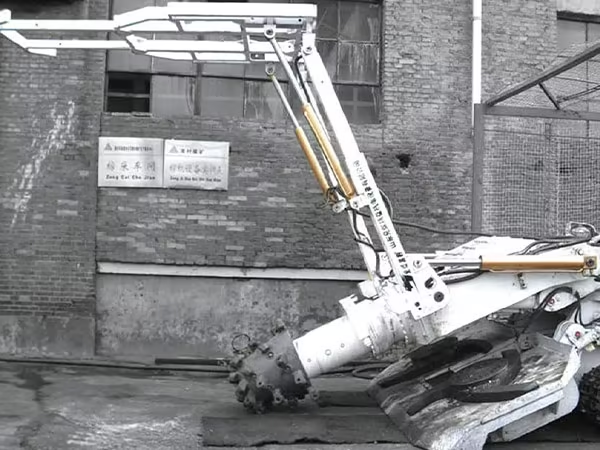
What it is
The Flat Roof Forward Extension Support is a hydraulic support system designed for flat roof tunnels. It features a hydraulic forward extension that increases roof coverage and strengthens the support zone ahead of the excavation face.
Why it’s essential
Flat roof tunnels often experience roof sagging, separation, and sudden collapses due to poor roof contact and insufficient coverage. The forward extension support increases roof contact and reduces the risk of roof failure.
Key features
- Hydraulic extension for extended reach
- Enhanced roof coverage for flat roofs
- Reduces roof deformation and increases stability
- Improves tunneling efficiency and safety
- Can be customized for different tunnel widths (commonly 3–6 m)
- Typically supports loads from 150–250 kN (varies by model and rock conditions)
How it works
The hydraulic extension pushes forward into the tunnel roof area, covering a larger surface area and stabilizing weak rock. It is typically installed in advance of the roadheader or tunneling face, providing a protective “roof shield” before excavation proceeds.
Typical performance data
- Forward extension reach: 0.8–1.8 m
- Hydraulic pressure: 18–22 MPa
- Roof coverage area: 1.5–3.0 m² per unit
- Installation time per unit: 3–5 minutes (depending on site conditions)
Best use cases
- Long flat roof roadways with continuous tunneling
- Soft or fractured rock conditions
- Tunnels with frequent roof deformation
- Projects requiring high safety margins and long-term stability
Benefits summary
- Higher roof coverage per support unit
- Less manual adjustment and faster installation
- Lower roof sagging and reduced deformation
- Better safety for workers at the excavation face
2. Arch-Shaped Forward Extension Support
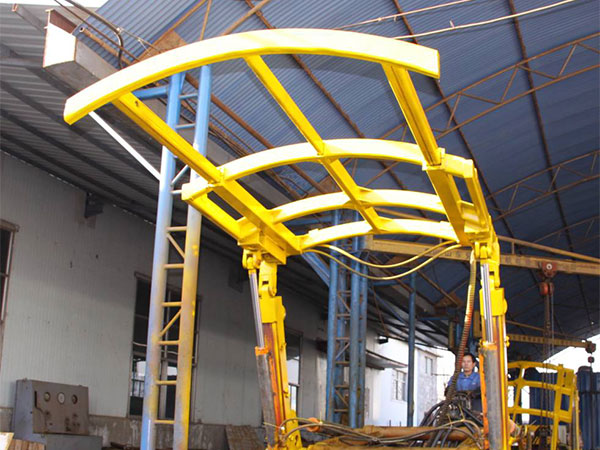
What it is
The Arch-Shaped Forward Extension Support is specifically designed for arched tunnel roadways. It provides adaptive support with a forward extension and optional side flip mechanisms for wider roof coverage.
Why arched tunnels need specialized support
Arched roofs distribute stress differently, with higher pressure along the arch sides. Without proper support, the tunnel sides may fail first, causing roof collapse or severe deformation.
Key features
- Optimized for arched roadway geometry
- Forward extension for greater reach
- Optional side flip for broader coverage
- Improved adaptability for varying tunnel widths
- Often supports load ranges from 200–300 kN
- Can be customized for arch radii and height requirements
Side flip mechanism explained
The side flip mechanism expands the support laterally, increasing roof coverage width. This improves stability in wider tunnels and helps maintain consistent support contact with the roof.
Typical performance data
- Forward extension reach: 0.7–1.6 m
- Side flip extension width: 0.5–1.2 m
- Hydraulic pressure: 18–24 MPa
- Installation time: 4–6 minutes per unit
Best use cases
- Arched roadways in mines and tunnels
- Tunnels with irregular widths and variable geometry
- Complex geological environments requiring flexible support
- Long-term tunneling projects needing high adaptability
Benefits summary
- Wider coverage for arched roofs
- Better stability in irregular tunnel shapes
- Reduced risk of side collapse
- Lower frequency of roof support adjustments
3. High Gradient Support for Steep Roof Angles
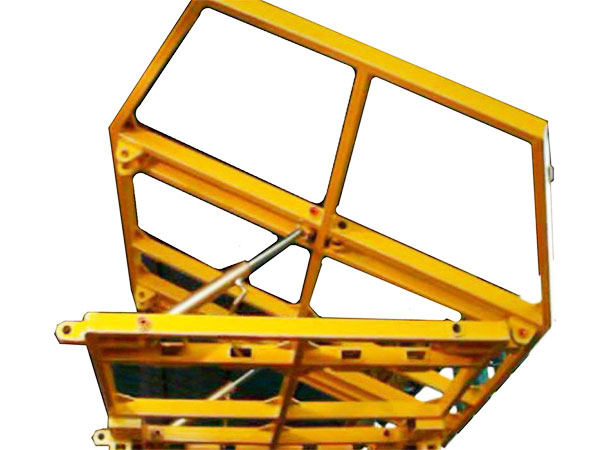
What it is
The High Gradient Support is engineered for tunnels with steep roof inclination angles. It provides stable roof support under high gravity stress and complex rock conditions.
Why steep roof tunnels are dangerous
Steep roofs increase the risk of rockslides and sudden roof failure due to gravity and stress concentration. Support systems must be strong enough to withstand these forces while maintaining stability.
Key features
- Designed for steep roof angles (commonly 30°–60°)
- High load-bearing capacity
- Enhanced roof stability under high stress
- Improves worker safety in difficult terrain
- Can handle dynamic loads during blasting or excavation
Typical performance data
- Load capacity: 250–400 kN
- Support angle adjustment range: 20°–65°
- Hydraulic pressure: 20–26 MPa
- Recommended roof inclination: 30°–60°
Best use cases
- Mountainous tunnels and steep roadways
- High-gradient mining operations
- Unstable geological zones with weak rock
- Projects requiring high stability and long-term support
Benefits summary
- Reliable stability in steep gradients
- Lower risk of rock slides
- Higher load-bearing performance
- Better safety in challenging conditions
4. Support with Hydraulic Telescopic Platform
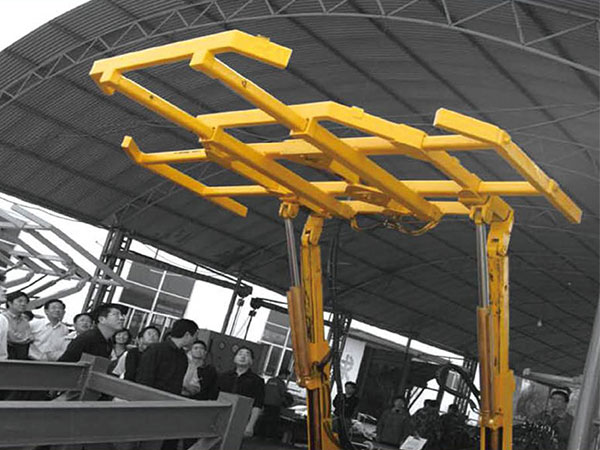
What it is
This support system includes a hydraulic telescopic platform that covers the roadheader’s cutting head, improving safety and operational efficiency.
Why it matters
The cutting zone is one of the most dangerous areas in tunneling. This system provides protection and reduces rockfall hazards by covering the cutting head and providing a stable working platform.
Key features
- Cutting head protection
- Enhanced worker safety
- Hydraulic adjustment for easy operation
- Improved tunnel face protection
- Suitable for roadheaders and mechanical excavation
How it improves productivity
By shielding the cutting area, it reduces downtime and enables continuous tunneling without compromising safety. It also supports safe inspection and maintenance operations.
Typical performance data
- Platform extension reach: 0.5–1.5 m
- Load capacity: 150–250 kN
- Hydraulic pressure: 18–22 MPa
- Protection coverage: 1.2–2.0 m²
Best use cases
- Roadheader operations with high rockfall risk
- Projects requiring safe cutting head access
- Complex tunneling operations with frequent face inspections
- Long-term tunnels needing high safety standards
Benefits summary
- Improved worker protection and safety
- Better operational efficiency
- Reduced risk of rockfall at the cutting face
- Easier maintenance and inspection
5. Compact Retractable Support System
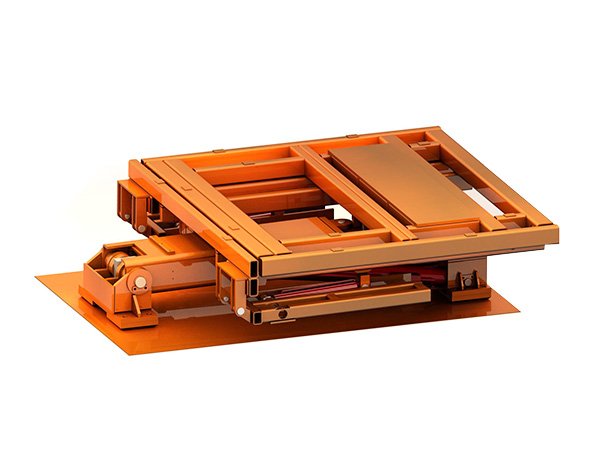
What it is
A compact support system designed to retract above the cutting unit, maintaining a narrow profile and enabling uninterrupted roadheader operations.
Why compact design is important
In narrow tunnels, space is limited. A compact retractable support prevents blockage and improves workflow, allowing roadheaders to move freely without support interference.
Key features
- Space-saving retractable design
- Supports continuous cutting operations
- Stable and reliable performance
- Ideal for narrow tunnels and tight working conditions
- Typically supports load ranges from 120–200 kN
Typical performance data
- Retractable height: within cutting unit width (≤ tunnel width)
- Retracting speed: 3–6 seconds per cycle
- Hydraulic pressure: 16–20 MPa
- Support load capacity: 120–200 kN
Best use cases
- Narrow tunnel sections
- High-speed excavation
- Frequent repositioning requirements
- Projects requiring minimal downtime
Benefits summary
- Uninterrupted roadheader operations
- Higher efficiency and faster cycle time
- Less workspace blockage
- Better operational flexibility
Comparison Table: Choose the Best Underground Support System
| Support System | Tunnel Shape | Main Strength | Best Benefit | Ideal Conditions |
|---|---|---|---|---|
| Flat Roof Forward Extension | Flat roof | Extended coverage | Prevents sagging | Soft rock, long tunnels |
| Arch-Shaped Forward Extension | Arched roof | Wider coverage | Reduces side failure | Irregular widths |
| High Gradient Support | Steep roof | High stability | Handles gravity load | Mountainous terrain |
| Hydraulic Telescopic Platform | Roadheader | Worker protection | Safe cutting zone | High-risk excavation |
| Compact Retractable Support | Narrow tunnel | Space-saving | Uninterrupted operations | Tight working space |
Conclusion
Choosing the right underground support systems is essential for mine safety, operational efficiency, and long-term tunnel stability. Whether you are working with flat roofs, arched roadways, steep gradients, or narrow tunnels, there is a support solution designed for your needs.
If you want to improve safety and efficiency in your mining operations, start by evaluating your tunnel shape, roof conditions, and excavation method. A strong support system can prevent accidents, reduce downtime, and ensure a safer working environment underground.
FAQ
What are underground support systems and why are they needed?
Underground support systems stabilize tunnels by preventing rockfall and collapse. They are essential for worker safety and long-term tunnel integrity.
How do I choose the right support system for my tunnel?
Choose based on roof shape, gradient, rock conditions, and equipment type. Flat roofs require forward extension systems, while steep roofs need high gradient supports.
Are hydraulic supports better than traditional supports?
Hydraulic supports offer better adjustability and faster installation, but they can be more expensive and require maintenance.
Can underground support systems prevent rock bursts?
Support systems reduce the risk but cannot eliminate rock bursts entirely. Proper design, monitoring, and stress control are also needed.
What is the difference between passive and active support?
Passive supports only activate when the rock moves, while active supports apply pressure continuously to stabilize the rock mass.
Welcome to Shandong Yanmei Heibao Mining Equipment Co., Ltd.! Since 2002, we’ve been redefining mining with intelligent equipment, delivering safer, more efficient, and sustainable solutions.
📌 Follow us for updates and insights:
- Facebook: Shandong Yanmei Heibao
- YouTube: Shandong Yanmei Heibao Channel
Join us to explore innovation and excellence in mining—together!