

Key Points of This Article
- Introduction to mining roof support and its critical role in safety and productivity
- Detailed comparison of different roof support types and technologies
- Advanced materials and structural considerations
- Global standards, regulations, and compliance benchmarks
- Case studies from China, Europe, and North America
- Cost efficiency, maintenance, and lifecycle management
- Emerging trends in mechanized and AI-integrated mining roof support
- FAQs addressing operational, safety, and regulatory concerns
Table of Contents
Introduction
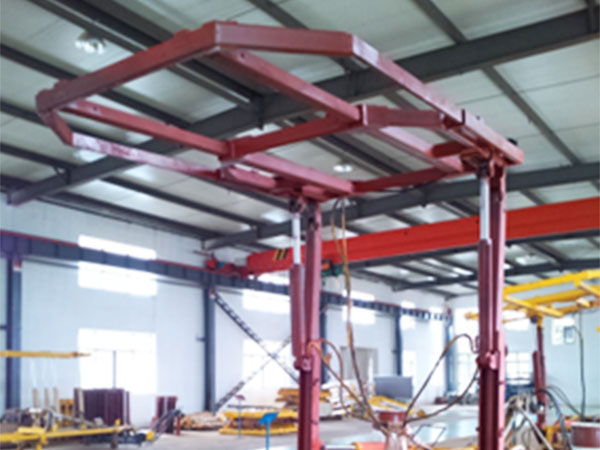
Mining roof support is no longer just a safety requirement; it is a strategic investment in operational efficiency, worker protection, and cost optimization. In 2026, the mining industry faces deeper shafts, more complex geological conditions, and stricter safety regulations. Roof collapses remain one of the leading causes of underground mining accidents, accounting for nearly 25% of serious incidents worldwide.
Modern mining operators are moving away from traditional timber and pipe supports, adopting mechanized, hydraulically operated, and AI-assisted roof support systems. Studies indicate that using advanced mechanized supports can:
- Reduce roof-related incidents by up to 35%
- Improve productivity by 20–25%
- Minimize labor costs and manual handling risks
- Increase operational lifespan of tunnels by 15–20%
In short, choosing the right mining roof support system is crucial for safety, regulatory compliance, and long-term operational success.
Understanding Mining Roof Support Systems
Mining roof support systems are engineered solutions to stabilize underground structures, prevent collapses, and maintain tunnel integrity during excavation. These systems can be categorized based on application, deployment method, and design complexity.
Onboard Temporary Support Equipment
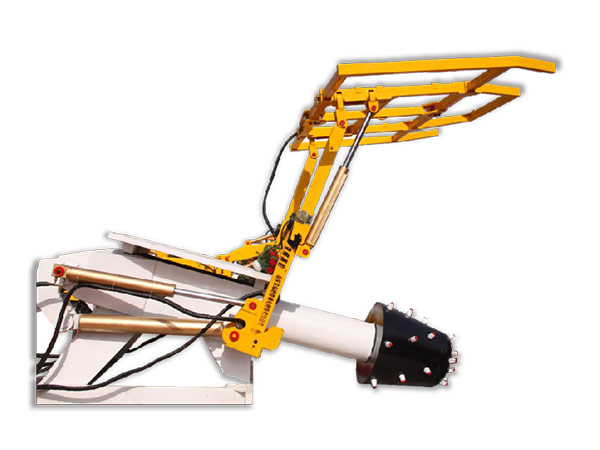
Onboard temporary support equipment integrates directly with roadheaders. This system replaces traditional pipe and forepoling support, improving tunnel efficiency and worker safety.
Key Features:
- Compatible with most roadheader models
- Customizable roof beam support for specific tunnel conditions
- Minimal modification required for existing machinery
- Reduces labor intensity while improving operational efficiency
- Hydraulic system shares pump station with the roadheader or can operate separately
Parameters Table:
| Parameter | Unit | ZLJ-20 | ZLJ-30 |
|---|---|---|---|
| Rated operating pressure | MPa | 16 | 16 |
| Rated setting load | kN | 18 | 25 |
| Rated load-bearing capacity | kN | 20 | 30 |
| Roof support area | mm | 2780×3400 | 2780×3400 |
| Deployment time | s | 100 | 100 |
| Overall weight | kg | ~1000 | ~1000 |
Arch-Shaped Forward Extension Support
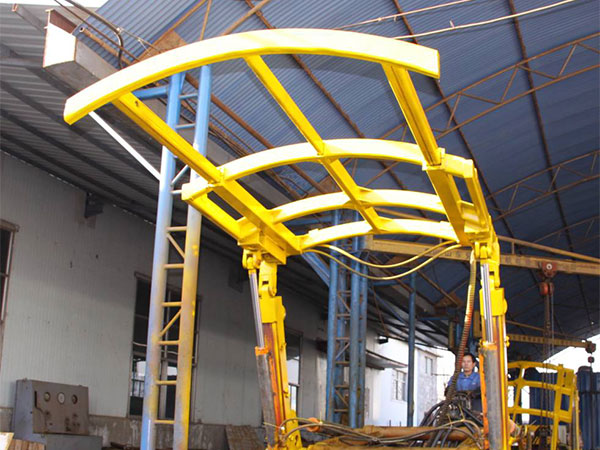
Designed for arched tunnels, this system provides extensive roof coverage and stability. Optional side flip mechanisms extend the coverage further.
Benefits:
- Optimized for arched tunnels with variable heights
- Forward extension increases reach and coverage
- Reduces manual adjustments, saving time and labor
- Enhances worker safety and operational efficiency
Example Deployment Scenario:
- Roadway width: 4–6 meters
- Tunnel height: 3–4.5 meters
- Roof coverage: Up to 3.5 meters lateral extension
Lift-Type Column Support
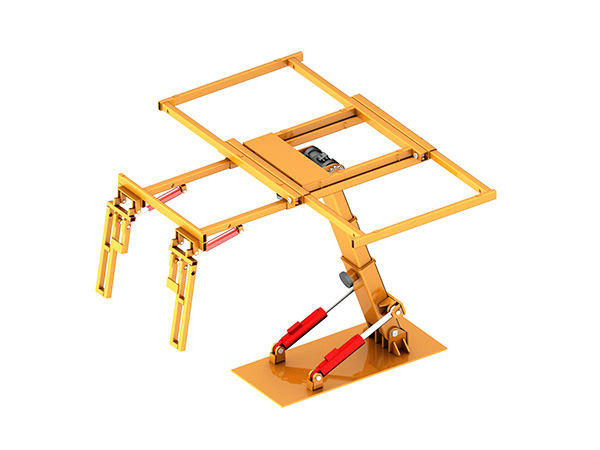
Ideal for tight or urban mining environments, this system reduces installation footprint while maintaining robust support. Its lift-type design avoids flipping and allows smooth integration.
Advantages:
- Compact and space-efficient
- Adjustable height for variable tunnel dimensions
- Minimizes installation complexity
- Reliable vertical support with minimal labor
Compact Retractable Support System
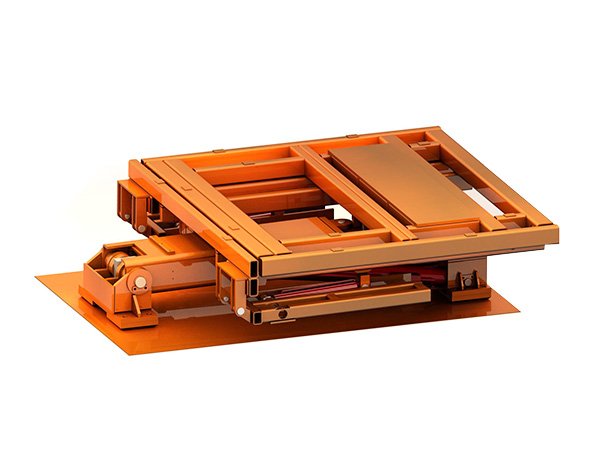
The retractable system is engineered to operate above cutting heads, enabling continuous operation of roadheaders without interference.
Highlights:
- Retractable design optimizes workspace
- Maintains tunnel operations uninterrupted
- Reduces downtime and improves productivity
- Provides consistent roof support under variable conditions
Materials and Structural Considerations
The choice of material is a critical factor in the performance and longevity of mining roof support systems.
Steel Components
- High-strength alloy steel ensures long-term durability
- Suitable for deep mining operations with high roof pressure
- Corrosion-resistant options extend operational lifespan
Hydraulic Systems
- Smooth deployment and height adjustment
- Pressure-controlled to maintain stability under variable loads
- Low maintenance with real-time monitoring
Composite and Lightweight Materials
- Ideal for confined or urban tunnels
- Resistant to corrosion and wear
- Reduces weight, improving ease of installation and transport
Comparison Table: Steel vs Composite vs Hybrid
| Feature | Steel | Composite | Hybrid |
|---|---|---|---|
| Strength | Very High | Moderate | High |
| Weight | Heavy | Light | Medium |
| Corrosion Resistance | Medium | High | High |
| Cost | Medium | High | Medium-High |
| Installation Ease | Moderate | High | High |
Global Standards and Compliance
Mining roof support systems must adhere to strict international and regional safety regulations to ensure the safety of workers, maintain operational efficiency, and comply with legal requirements. Non-compliance can lead to structural failures, accidents, legal penalties, and increased operational costs. Key standards include:
ISO 9001 – Quality Management
ISO 9001 provides a framework for consistent quality control across manufacturing and installation processes. For mining roof support, this ensures:
- Components meet design specifications and load requirements
- Manufacturing tolerances and materials are strictly monitored
- Continuous improvement programs are implemented for operational safety
ISO 14001 – Environmental Compliance
Environmental sustainability is increasingly important in mining operations. ISO 14001 ensures that support system production and deployment:
- Minimize environmental impact during manufacturing and installation
- Reduce waste, emissions, and resource consumption
- Comply with local environmental laws and corporate social responsibility initiatives
MSHA (U.S.) – Mine Safety and Health Standards
In the United States, the Mine Safety and Health Administration (MSHA) sets regulations for underground mining safety. Mining roof support must:
- Provide reliable load-bearing capacity to prevent roof collapses
- Incorporate emergency response measures for tunnel stability incidents
- Be inspected regularly to comply with occupational safety standards
EN Standards (Europe) – Design and Safety Requirements
European EN standards govern the engineering design, materials, and safety testing of mining roof support systems. Compliance ensures:
- Structural integrity under various geological conditions
- Compatibility with mechanized mining equipment
- Verification through standardized load and pressure testing
China GB/T Standards – National Mining Regulations
In China, GB/T standards regulate the design, installation, and inspection of mining roof support systems. Key requirements include:
- Structural safety for tunnels of different sizes and shapes
- Hydraulic and mechanical system reliability
- Regular testing for load-bearing capacity, deformation, and durability
Why Compliance Matters:
- Protects workers from accidents and injuries
- Ensures efficient tunneling operations with minimal downtime
- Reduces liability risks for mining companies
- Supports international market acceptance of mining equipment
By following these global and regional standards, mining companies can implement high-performance, reliable, and safe roof support systems while maintaining compliance across multiple jurisdictions.
Cost, Efficiency, and Lifecycle Management
Deployment and Operational Costs
- Mechanized supports: Higher upfront cost, lower labor costs
- Manual supports: Lower initial investment, higher labor and safety risks
Maintenance Considerations
- Daily hydraulic pressure checks
- Structural integrity inspections
- Lubrication and adjustment of retractable mechanisms
- Record-keeping of deployment cycles
Cost Efficiency Table: Mechanized vs Manual Systems
| Feature | Mechanized | Manual |
|---|---|---|
| Initial Investment | High | Low |
| Labor Cost | Low | High |
| Safety Risk | Low | High |
| Downtime | Minimal | High |
| ROI | 3–5 years | 5–8 years |
Case Studies
1. Deep Coal Mine, China
- System: Onboard Temporary Support
- Impact: Reduced roof incidents by 32%; tunnel efficiency increased by 18%
- Notes: Seamless integration with existing roadheaders minimized workflow disruption
2. European Arched Tunnel Project
- System: Arch-Shaped Forward Extension
- Impact: Adjustment time reduced by 40%; optimized roof coverage for irregular arch profiles
- Notes: Side flip mechanism critical for complex geometries
3. Urban Mining Shaft, North America
- System: Compact Retractable Support
- Impact: Continuous cutting in narrow shafts; productivity increased 22%
- Notes: Space-saving design maximized operations without compromising safety
Emerging Trends in Mining Roof Support
- AI & Predictive Maintenance: Real-time monitoring of hydraulic pressure and component wear
- Digital Twin Integration: Simulating tunnel stability and support performance before deployment
- Lightweight High-Strength Materials: Reducing weight while maintaining strength
- Mechanized Global Adoption: Increasing use in emerging mining regions like Southeast Asia and Africa
- Smart Sensors: Detecting roof stress and alerting operators to potential risks
FAQ
What is mining roof support?
Mining roof support is a system designed to stabilize underground tunnel ceilings, prevent collapses, and protect workers during excavation.
Which type is best for deep mining?
Mechanized supports like onboard temporary or arch-shaped systems are ideal for high load capacity and deep operations.
How often should inspections be conducted?
High-risk areas: daily; low-risk areas: weekly. Hydraulic and mechanical components must be monitored closely.
Can retractable supports be used in narrow tunnels?
Yes, compact retractable supports allow continuous cutting without interfering with roadheader operations.
What are the key international standards?
ISO 9001, ISO 14001, MSHA (U.S.), EN (Europe), and local regulations like China GB/T codes govern quality, safety, and environmental compliance.
Welcome to Shandong Yanmei Heibao Mining Equipment Co., Ltd.! Since 2002, we’ve been redefining mining with intelligent equipment, delivering safer, more efficient, and sustainable solutions.
📌 Follow us for updates and insights:
- Facebook: Shandong Yanmei Heibao
- YouTube: Shandong Yanmei Heibao Channel
Join us to explore innovation and excellence in mining—together!