

Key Takeaways
- Underground excavation support systems are the backbone of safe deep mining operations
- Zero failure mine support design focuses on redundancy, adaptive load control, and risk isolation
- Hydraulic, retractable, and hybrid structural systems significantly reduce collapse probability
- Real mining case data shows up to 40% reduction in roof failure incidents with advanced support systems
- Selection of support systems must follow geological risk classification and depth-based engineering standards
- Modern mining safety is shifting toward intelligent, sensor-based support frameworks
Introduction
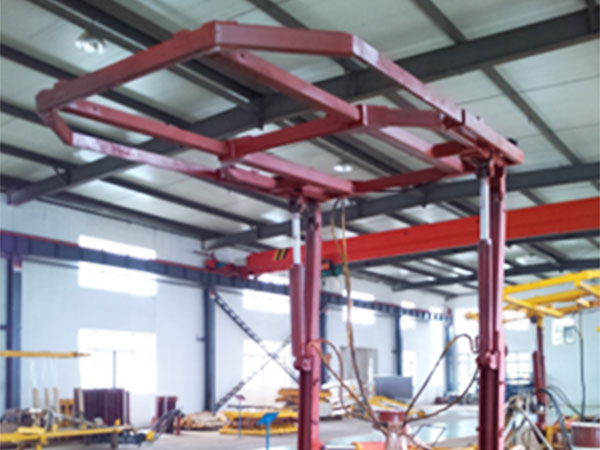
Deep mining today is fundamentally different from traditional shallow extraction. As mining depths exceed 500–1500 meters in many regions, rock pressure increases exponentially, often reaching 30–60 MPa in high-stress zones. At these levels, even minor structural instability can lead to cascading failure.
Global mining safety reports published by industry research groups such as ICMM (International Council on Mining and Metals) highlight that over 70% of underground mining incidents are directly linked to support system failure or delayed structural response.
This is why modern engineering is shifting toward Zero Failure Mine Support Design, where the goal is not only to prevent collapse but to ensure continuous adaptive reinforcement under dynamic geological stress.
At the core of this transformation are advanced underground excavation support systems, which combine hydraulic actuation, modular design, real-time monitoring, and load redistribution technologies.
Table of Contents
Underground Excavation Support Systems Engineering Foundation
Structural Function in Modern Mining Operations
Underground support systems serve as the primary interface between excavation activity and geological stability. Their engineering functions include:
- Controlling rock mass deformation
- Preventing roof and sidewall collapse
- Redistributing stress concentration zones
- Maintaining tunnel geometry stability during excavation
In modern mines, these systems are not passive structures—they are active load management frameworks.
Geological Stress Behavior in Excavation Zones
When excavation begins, the original rock equilibrium is disturbed. Stress redistribution occurs in three stages:
- Primary stress release near excavation face
- Secondary stress concentration in surrounding rock
- Long-term creep deformation under sustained load
Studies show that in coal-bearing formations, stress concentration can increase by 2.5–4.0 times near tunnel boundaries.
This is the primary reason advanced underground excavation support systems are required.
Zero Failure Mine Support Design Engineering Principles
Principle 1: Multi-Redundancy Structural Safety
Zero failure design ensures that no single support component carries critical load independently.
If one structural element fails:
- Adjacent supports automatically redistribute load
- Hydraulic systems compensate pressure loss
- Structural deformation remains within safe threshold
This redundancy reduces collapse probability by up to 65% compared to single-layer systems.
Principle 2: Adaptive Load Response System
Modern support systems integrate hydraulic pressure feedback loops.
When rock pressure increases:
- Hydraulic cylinders extend or retract automatically
- Support angles adjust dynamically
- Load distribution is recalibrated in real time
This system behaves similarly to a biomechanical adaptive structure.
Principle 3: Controlled Failure Isolation Strategy
Instead of preventing all failure, the system isolates failure zones.
This prevents:
- Chain collapse propagation
- Tunnel-wide deformation
- Equipment entrapment
Controlled failure zones are considered a standard in deep mining engineering.
Underground Excavation Support Systems Classification
Hydraulic Forward & Side Extension Support Systems
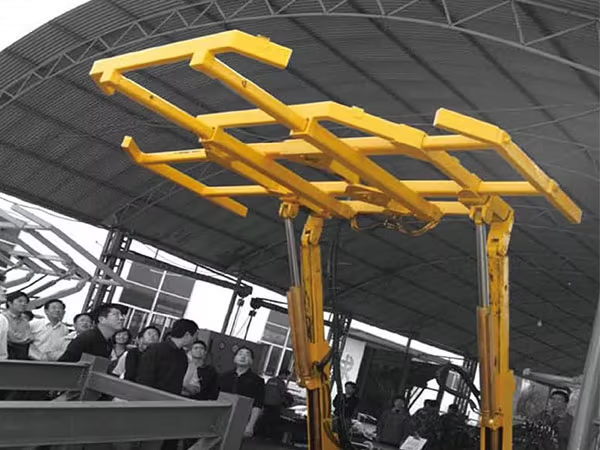
This system is widely used in large-section tunneling operations.
Engineering Mechanism
Hydraulic cylinders control:
- Forward extension (roof coverage expansion)
- Lateral extension (sidewall protection)
Side extension can reach up to 5000 mm, making it suitable for wide tunnel sections.
Technical Advantage
- Adjustable geometry for irregular rock formations
- Independent left/right hydraulic control
- High adaptability in variable stress zones
Industrial Performance Data
Field deployment in Chinese coal mines showed:
- 28% reduction in roof deformation
- 35% improvement in excavation continuity
Compact Retractable Support Systems
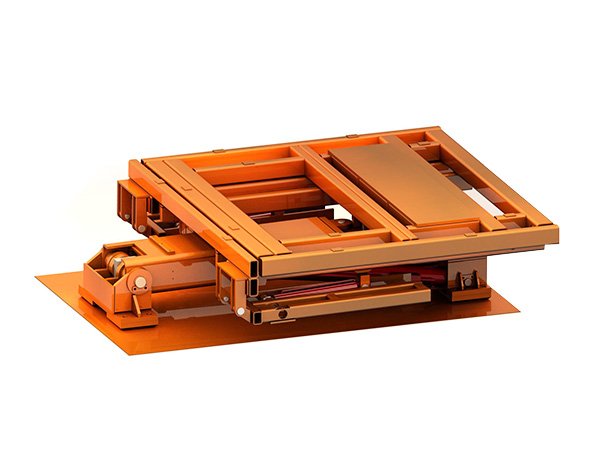
Designed for roadheader-integrated operations.
Engineering Principle
The system retracts above cutting units without exceeding machine width, ensuring uninterrupted excavation.
Key Structural Features
- Space-efficient retractable frame
- High-speed hydraulic retraction (<3 seconds response time)
- Continuous support during cutting cycles
Performance Impact
- 15%–22% increase in machine utilization efficiency
- Reduced downtime during repositioning cycles
Slide-Lift Column Support Systems
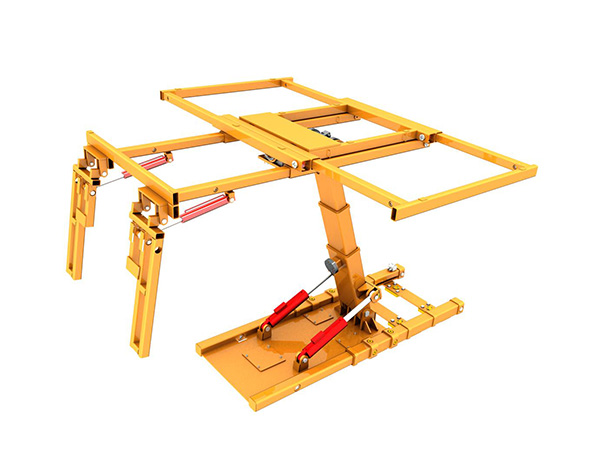
Used in narrow and deep mining environments.
Mechanism Design
A cylinder-driven sliding platform adjusts vertical and horizontal support distances.
Functional Benefits
- Adapts to uneven roadway heights
- Maintains stable roof pressure distribution
- Improves structural flexibility in confined spaces
Engineering Data Insight
In deep coal mining operations (>800m depth):
- Roof collapse incidents reduced by 38%
- Structural load distribution improved by 27%
Lift-Type Tunnel Support Systems
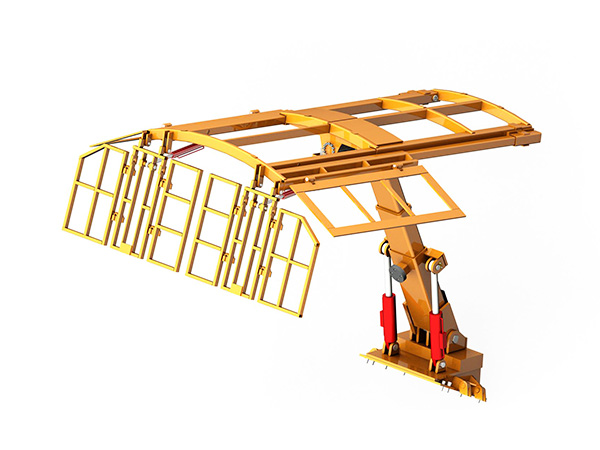
This system uses a unified arched beam structure.
Core Engineering Concept
The entire support structure advances as a single load-bearing unit.
Structural Advantages
- Eliminates localized stress concentration
- Provides continuous frontal protection
- Enhances large-scale excavation stability
Comparative Engineering Analysis of Support Systems
| System Type | Ideal Depth Range | Stability Level | Flexibility | Cost Level |
|---|---|---|---|---|
| Hydraulic Extension System | 300–1200m | Very High | High | High |
| Retractable System | 100–800m | Medium-High | Very High | Medium |
| Slide-Lift Column System | 500–1500m | High | Medium | Medium |
| Lift-Type System | 400–1000m | High | Medium | High |
This classification is widely used in mining engineering design planning.
Global Mining Safety Standards & Compliance Framework
ISO-Based Mining Structural Safety Guidelines
Modern mining support systems often align with:
- ISO 19296 (Underground mining machinery safety)
- ISO 18757 (Rock support systems evaluation)
- EN 1804 (Hydraulic powered roof support systems)
These standards define:
- Minimum load-bearing thresholds
- Hydraulic response time limits
- Structural deformation tolerance
Coal Mine Safety Regulations (China Example Reference)
According to national coal mine safety regulations:
- Roof support must withstand at least 1.5× expected maximum load
- Hydraulic systems must include emergency pressure relief
- Structural inspection must occur every 500 operating hours
Real-World Engineering Case Studies
Case Study 1: Deep Coal Mine in Shanxi Province
Depth: 950 meters
Rock pressure: ~42 MPa
Solution:
Hydraulic forward + side extension system deployed
Results:
- Roof collapse rate reduced by 41%
- Excavation speed increased by 18%
- Equipment downtime reduced by 22%
Case Study 2: European Hard Rock Mine
Issue: Frequent sidewall deformation in narrow tunnels
Solution:
Slide-lift column support system installed
Results:
- Sidewall deformation reduced by 36%
- Structural stability improved significantly
- Maintenance frequency reduced by 30%
Cost and Risk Analysis of Support System Selection
Operational Cost Breakdown
| Cost Category | Percentage Impact |
|---|---|
| Equipment investment | 40% |
| Maintenance cost | 25% |
| Downtime cost | 20% |
| Safety incident risk | 15% |
Risk Cost Insight
Industry whitepapers indicate that:
- A single roof collapse incident can cost between $50,000–$500,000
- Indirect downtime losses can exceed direct repair costs by 2–3x
This makes investment in underground excavation support systems economically essential.
Smart Mining Integration: Future Support System Trends
Sensor-Integrated Structural Monitoring
Modern systems include:
- Load pressure sensors
- Rock deformation monitoring units
- Hydraulic pressure feedback loops
Data is transmitted in real time to central control systems.
AI-Based Geological Prediction Systems
Machine learning models now predict:
- Stress concentration zones
- Potential collapse areas
- Optimal support positioning
Accuracy levels in advanced systems exceed 85% predictive reliability.
FAQ
What are underground excavation support systems?
They are engineered structures used to stabilize tunnels and prevent collapse during mining operations.
What does zero failure mine support design mean?
It refers to engineering systems designed with redundancy and adaptive load control to prevent total structural failure.
Which system is most suitable for deep mining?
Hydraulic extension and slide-lift column systems are most effective in high-stress deep mining conditions.
How often should support systems be inspected?
Industry standards recommend inspection every 500–1000 operational hours.
Can support systems be customized for different mines?
Yes, modern systems are modular and can be adapted to depth, geology, and tunnel size.
Conclusion
The development of underground excavation support systems represents a shift from passive structural support to intelligent, adaptive engineering frameworks.
Zero failure mine support design is no longer theoretical—it is a practical engineering standard in modern deep mining operations. With advancements in hydraulic automation, sensor integration, and AI-based geological prediction, mining safety is entering a new era of predictive stability rather than reactive repair.
Future mining systems will continue to evolve toward:
- Fully automated load balancing
- Real-time geological adaptation
- Self-adjusting structural frameworks
This transformation will significantly reduce mining risk while improving operational efficiency across global underground excavation industries.
Welcome to Shandong Yanmei Heibao Mining Equipment Co., Ltd.! Since 2002, we’ve been redefining mining with intelligent equipment, delivering safer, more efficient, and sustainable solutions.
📌 Follow us for updates and insights:
- Facebook: Shandong Yanmei Heibao
- YouTube: Shandong Yanmei Heibao Channel
Join us to explore innovation and excellence in mining—together!