

Introducción
Modern mining has shifted far beyond traditional excavation methods. Today, big mining equipment represents fully integrated, intelligent systems that combine cutting, transport, support, and automation into a unified mining workflow.
Según el ICMM Global Mining Report 2024, mai mult de 72% of new underground mining projects now rely on mechanized or semi-automated systems. This transformation is driven by the need for higher productivity, improved safety, and reduced labor dependency.
A 2023 white paper from the Global Mining Equipment Analytics Group further highlights that:
- Productivity increases by 35%–60% with automation
- Worker exposure to hazards drops by up to 50%
- Equipment downtime decreases by 25%–40% through system integration
These figures show why modern mining operations increasingly depend on advanced equipment systems rather than standalone machines.
Tabla de contenido
Understanding Big Mining Equipment in Modern Mining Industry
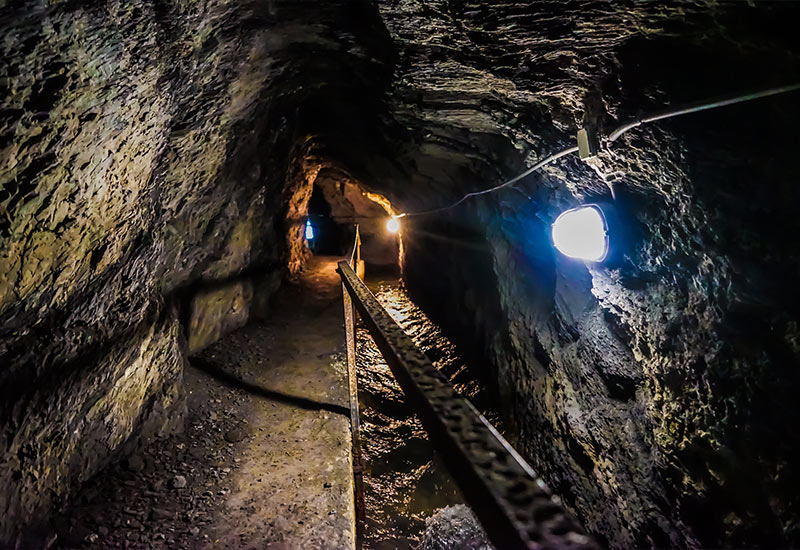
What Defines Big Mining Equipment Today
Big mining equipment refers to large-scale mechanical systems designed for excavation, support, drilling, and transportation under extreme geological conditions. Unlike traditional machines, modern systems operate as multi-functional mining platforms.
These systems typically integrate:
- Excavation and cutting
- Hydraulic roof support
- Material transport systems
- Automated drilling and bolting
- Intelligent control modules
Engineering Definition of Modern Mining Systems
In industrial engineering terms, big mining equipment is defined as:
A multi-functional mechanized system capable of continuous underground operation with integrated hydraulic, electrical, and automated control systems.
Evolution of Big Mining Equipment Systems
The development of big mining equipment reflects the broader transformation of the mining industry—from manual labor dependence to fully integrated intelligent systems. Each stage represents a significant leap in productivity, safety, and engineering complexity.
Stage 1: Manual Mining Era
During the early phase of mining development, operations relied heavily on manual labor and basic tools. This stage was characterized by extremely limited mechanization and high physical risk.
Core Characteristics
- Hand tools such as picks, shovels, and manual drills
- Use of explosives for rock fragmentation
- No integrated transport or support systems
- High dependency on human labor in hazardous underground environments
Operational Limitations
At this stage, mining productivity was extremely low due to:
- Inefficient excavation speed
- Frequent safety incidents such as roof collapses
- Lack of ventilation and monitoring systems
- Minimal control over geological uncertainties
Industry historical data shows that manual mining productivity was often below 10–15% of modern mechanized systems, making it unsustainable for large-scale operations.
Stage 2: Mechanized Transition
The mechanized transition phase marked the first major industrial upgrade in mining history. This stage introduced the earliest forms of big mining equipment designed for single-purpose tasks.
Core Developments
- Introduction of mechanical drilling machines
- Early-stage conveyor belt systems for material transport
- Separate equipment for cutting, loading, and hauling
- Basic hydraulic support systems in some underground operations
Performance Improvements
Compared to manual mining, mechanized systems achieved:
- Significant increase in excavation speed
- Reduction in physical labor intensity
- Improved consistency in ore and coal extraction
However, despite improvements, systems remained fragmented. Each machine operated independently, requiring frequent repositioning and manual coordination, which limited overall efficiency gains.
Key Limitation
The biggest challenge of this stage was lack of system integration, meaning:
- Drilling, loading, and transport were not synchronized
- Downtime between processes remained high
- Labor demand was still relatively significant
Stage 3: Integrated Intelligent Systems
The modern era of big mining equipment is defined by full system integration, automation, and intelligent control. Unlike previous stages, equipment now functions as a coordinated ecosystem rather than isolated machines.
Core Technologies in Modern Systems
Modern mining operations now commonly include:
- Bolter miners for combined excavation and roof support
- Self-advancing conveyor systems that eliminate manual repositioning
- Hydraulic support shields for dynamic tunnel stabilization
- Remote-controlled or semi-autonomous cranes for underground logistics
These systems are often linked through centralized control units, allowing real-time coordination across multiple operational layers.
Big Mining Equipment Core System Architecture
Four Core Subsystems
Modern mining systems are built around four major components:
1. Cutting and Excavation System
Responsible for breaking rock and coal seams using hydraulic or mechanical cutting heads.
2. Support System
Hydraulic roof supports stabilize underground tunnels and prevent collapse.
3. Transport System
Conveyor belts and self-advancing tailpieces ensure continuous material flow.
4. Control System
Centralized automation enables remote operation and system synchronization.
Big Mining Equipment in Coal Mining Applications
Serie Bolter Miner Descripción general
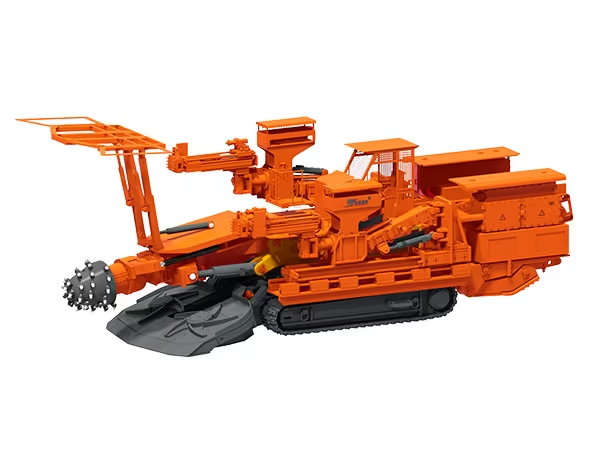
The Bolter Miner Series is one of the most advanced examples of integrated big mining equipment, combining multiple operations into one machine.
It performs:
- Tunneling
- Loading
- Transporting
- Drilling
- Bolting
- Roof support
- Exploration
Bolter Miner Technical Performance Data
| Modelo | Potencia (kW) | Rock Hardness (MPa) | Peso (t) | Altura de corte (m) |
|---|---|---|---|---|
| EBZ160M-2 | 260 | ≤60 | 48 | 4.8 |
| EBZ220M-2 | 350 | ≤70 | 70 | 5.1 |
| EBZ260M-4 | 480 | ≤80 | 104.5 | 5.2 |
| EBZ280M-4 | 500 | ≤90 | 105.6 | 5.2 |
Engineering Insight: Rock Hardness Impact
Rock hardness determines excavation difficulty:
- Soft coal: ≤60 MPa
- Medium rock: 60–80 MPa
- Hard rock: 80–90+ MPa
Higher hardness requires:
- Greater hydraulic pressure
- Reinforced cutting tools
- Higher torque output
Safety Systems in Big Mining Equipment
Hydraulic Roof Support Tecnología
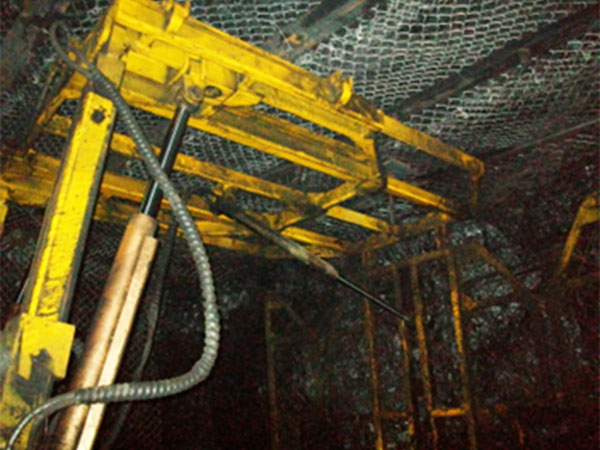
One of the most critical safety systems in modern mining is the hydraulic support structure.
Key functions include:
- Tunnel face protection
- Roof collapse prevention
- Structural load distribution
The wide hydraulic shield system can extend up to 3,500 mm, significantly improving safety coverage.
Safety Performance Impact
According to EMSI 2023 mining safety data:
- Roof collapse incidents reduced by 40%–55%
- Worker injury rates reduced by 30%+
Material Transport Systems in Mining Operations
DWZYZ Self-Advancing Tailpiece System
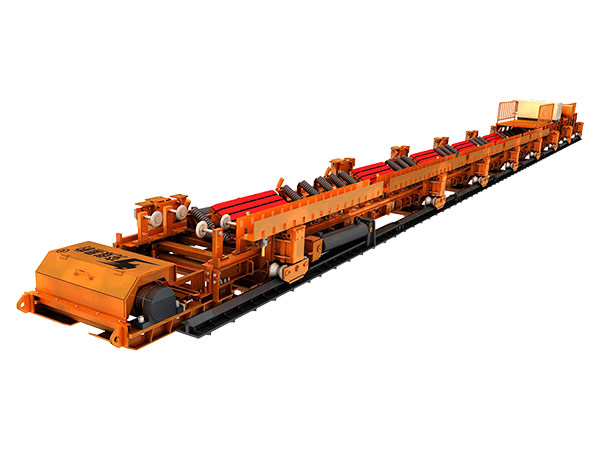
This system improves underground transport efficiency by eliminating fixed conveyor limitations.
Key advantages:
- Self-advancing movement
- Hydraulic alignment correction
- Integrated dust control
Transport Efficiency Improvement
Compared to traditional conveyor systems:
- Efficiency increases by 20%–35%
- Downtime significantly reduced
- Continuous material flow achieved
Technical Parameters Overview
| Modelo | Belt Width (mm) | Stroke (mm) | Pressure (MPa) | Thrust (kN) |
|---|---|---|---|---|
| DWZY1000/2000 | 1000 | 2000 | 18 | 800 |
| DWZY800/1500 | 800 | 1500 | 18 | 800 |
| DWZY800/1200 | 800 | 1200 | 18 | 800 |
Electric Monorail Crane in Mining Systems
System Overview
The electric monorail crane is designed for underground lifting and transportation in narrow mining tunnels.
Key specifications:
- Load capacity: 10 tons
- Speed: 0.4 m/s
- Voltage: 660/1140V
- Remote operation
Environmental Advantages
Compared to diesel-powered systems:
- Zero underground emissions
- Lower heat generation
- Reduced maintenance cost
Big Mining Equipment Industry Applications
Coal Mining Operations
- Excavación continua
- Roof support
- Coal transport
Metal Mining
- Hard rock extraction
- Deep underground tunneling
Infrastructure Projects
- Subway systems
- Railway tunnels
- Underground utilities
Global Big Mining Equipment Market Trends
Automatización e integración de IA
Modern mining is rapidly shifting toward:
- AI-driven excavation systems
- Remote-controlled machinery
- Predictive maintenance platforms
Market Growth Data
According to Grand View Research (2024):
- Global mining equipment market CAGR: 5.2%
- Automation segment growth: 7%+ annually
Big Mining Equipment vs Traditional Mining Systems
| Característica | Minería Tradicional | Modern Big Mining Equipment |
|---|---|---|
| Automatización | Bajo | Alto |
| Seguridad | Manual | Integrated systems |
| Eficiencia | Moderado | High (+60%) |
| Labor Demand | Alto | Reduced 40–70% |
| Impacto ambiental | Alto | Reduced emissions |
Advanced Technologies in Big Mining Equipment
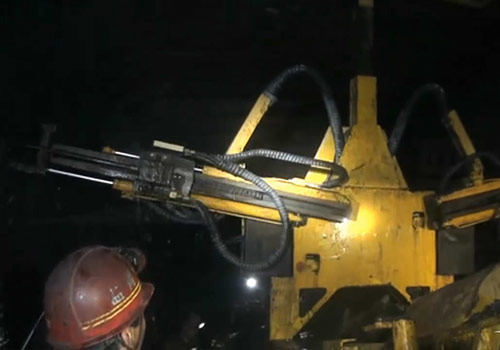
Predictive Maintenance Systems
Modern equipment uses:
- Vibration sensors
- Hydraulic pressure monitoring
- AI failure prediction
Digital Twin Mining Systems
Digital twin technology enables:
- Real-time simulation
- Equipment stress testing
- Safety optimization before deployment
Conclusión
Big mining equipment has transformed the mining industry from labor-intensive operations into highly automated, integrated engineering systems.
With technologies such as bolter miners, hydraulic support systems, self-advancing conveyors, and electric monorail cranes, modern mining achieves:
- Mayor productividad
- Improved safety
- Lower labor dependency
- Better environmental performance
As global demand for minerals increases, intelligent mining equipment will continue to define the future of underground and surface mining operations.
Preguntas frecuentes
Qué es big mining equipment ¿usado para?
It is used for excavation, drilling, transport, and support in mining operations such as coal and metal extraction.
What is the most advanced mining equipment today?
Integrated systems like bolter miners and self-advancing transport systems are among the most advanced.
How does mining equipment improve safety?
Through hydraulic support systems, automation, and remote operation technologies.
What is the lifespan of mining equipment?
Typically 8–15 years depending on usage and maintenance levels.
Is mining equipment becoming automated?
Yes, modern mining systems are increasingly AI-driven and remotely operated.

Bienvenido a ¡Shandong Yanmei Heibao Mining Equipment Co., Ltd.! Desde 2002, estamos Redefiniendo la minería con equipos inteligentes, ofreciendo soluciones más seguras, eficientes y sostenibles.
📌 Síguenos para recibir actualizaciones e información:
- Facebook: Shandong Yanmei Heibao
- YouTube: Canal Shandong Yanmei Heibao
Únase a nosotros para explorar la innovación y la excelencia en la minería.¡juntos!