

Оглавление
Введение
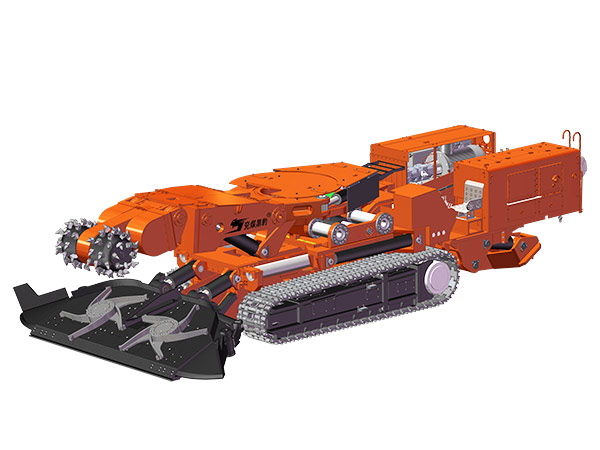
Selecting a roadheader for an underground mining project involves much more than comparing cutting power, machine weight, or maximum excavation dimensions. A machine that performs efficiently in one mine may struggle in another because roadheader productivity depends heavily on the interaction between the cutting system, geological conditions, roadway geometry, material handling, ground support, ventilation, and the overall excavation cycle.
For coal mines and underground roadway development projects, this makes roadheader selection an engineering decision rather than a simple equipment comparison.
The right machine should provide sufficient cutting capability for the expected geology while remaining maneuverable within the available roadway. It should also work efficiently with loading, conveying, roof support, dust-control, and auxiliary transport systems.
This guide explains the most important factors mine operators, engineers, and equipment procurement teams should evaluate when choosing a roadheader for underground mining.
What Is a Roadheader?
A roadheader is a self-propelled partial-face excavation machine equipped with a boom-mounted rotating cutting head.
During operation, the cutting boom moves across the face while picks mounted on the cutterhead break coal or rock. Excavated material falls toward the machine’s loading apron, where gathering mechanisms transfer it into an internal conveying system for discharge behind the machine.
Unlike full-face tunnel boring machines, which excavate essentially the entire tunnel face in a predetermined geometry, roadheaders work progressively across the face.
This gives them considerably greater flexibility when excavating:
- Mine roadways
- Crosscuts
- Entries
- Chambers
- Intersections
- Irregular profiles
- Variable roadway dimensions
Research published through the Colorado School of Mines Earth Mechanics Institute describes roadheaders as highly flexible partial-face excavation machines widely applied in soft- to medium-strength formations in mining and tunneling.
For underground coal operations, this flexibility is particularly useful because mine roadway dimensions and excavation profiles may change as development progresses.
Where Are Roadheaders Commonly Used?
A roadheader is primarily suited to mechanized excavation where geology allows efficient mechanical cutting.
Typical applications include underground coal mine roadway development, access tunnels, crosscuts, chambers, infrastructure excavations, and some civil tunneling projects.
Within a coal mine, roadheaders may be used for:
- Main roadway development
- Panel entries
- Transportation roadways
- Ventilation roadways
- Crosscuts
- Equipment chambers
- Infrastructure openings
- Roadway enlargement
YMHB’s оборудование для прокладки туннелей portfolio includes roadheaders together with bolter miners, hydraulic anchor drilling rigs, integrated tunneling and bolting systems, and temporary support equipment intended for different stages of underground roadway development.
The important point is that a roadheader should not be selected independently from the rest of the roadway development system.
Its cutting capacity must be coordinated with support, loading, transportation, ventilation, and maintenance operations.
The Most Important Roadheader Selection Factors
Several technical parameters influence whether a roadheader is suitable for a mine.
| Фактор отбора | Почему это важно | What Buyers Should Provide |
|---|---|---|
| Rock or coal strength | Directly affects cutting performance | Geological test results |
| Abrasiveness | Influences pick wear and maintenance | Rock mineralogy or abrasiveness data |
| Roadway width | Determines required cutting reach | Planned excavation width |
| Roadway height | Determines boom working range | Minimum and maximum height |
| Cross-section | Affects excavation sequence | Roadway drawings |
| Gradient | Influences travel and stability | Maximum operating slope |
| Мощность резки | Affects cutting capability | Expected geology |
| Machine dimensions | Determines underground access | Minimum clearances |
| Грузоподъемность | Must match cutting output | Expected excavation volume |
| Пропускная способность | Prevents material bottlenecks | Downstream transport configuration |
| Support method | Influences excavation cycle | Bolt and support design |
| Ventilation | Affects dust and face conditions | Ventilation arrangement |
The best roadheader is therefore not necessarily the machine with the highest cutting power. It is the machine whose complete operating envelope matches the project.
Start With Geological Conditions
Geology should usually be the first consideration when selecting a roadheader.
Roadheaders perform best when the cutterhead can fracture the material efficiently without excessive pick consumption, vibration, or machine loading.
Uniaxial Compressive Strength
Uniaxial compressive strength, commonly abbreviated as UCS, provides useful information about how resistant intact rock is to compression.
However, UCS alone does not determine roadheader performance.
Two formations with similar compressive strength can behave very differently during cutting because one may be highly fractured while the other is massive and abrasive.
Important geological information can include:
- UCS
- Tensile strength
- Joint spacing
- Bedding
- Fracturing
- Abrasiveness
- Mineral composition
- Quartz content
- Water conditions
- Variation between strata
Research from the Earth Mechanics Institute emphasizes that roadheader performance prediction requires consideration of rock conditions together with cutterhead and machine characteristics rather than relying on one strength value alone.
Rock Mass Structure
A fractured rock mass can sometimes be easier to excavate mechanically than intact rock with the same laboratory strength.
Natural discontinuities may assist fragmentation.
Conversely, highly massive material can require greater cutting force even when laboratory strength is not exceptionally high.
For coal mine roadways containing alternating coal, mudstone, sandstone, and other strata, expected geological variation should be provided to the manufacturer before equipment selection.
Consider Rock Abrasiveness, Not Just Hardness
One of the most expensive consequences of incorrect roadheader selection can be excessive cutting-tool wear.
The picks mounted on a roadheader cutterhead continuously interact with coal or rock and are therefore wear components.
Highly abrasive formations can cause:
- Rapid pick wear
- Increased pick replacement
- Reduced cutting efficiency
- Increased machine vibration
- More maintenance interruptions
- Higher specific energy consumption
A rock does not need to be exceptionally strong to be abrasive.
Quartz-rich formations, for example, can create significant wear problems.
This is why procurement teams should avoid specifying simply that the roadway contains “medium-hard rock.” Whenever possible, provide actual geological and abrasiveness data.
Match the Roadheader to the Roadway Cross-Section
One of the major advantages of roadheaders is their ability to excavate different roadway profiles.
However, every machine has a limited positioning cutting range.
Roadway dimensions should therefore be checked carefully against:
- Maximum cutting height
- Maximum cutting width
- Minimum working height
- Boom articulation
- Cutterhead position
- Machine body width
- Tail clearance
For large cross-section coal mine roadways, YMHB’s Проходческий комбайн EBH300 стрелового типа provides a positioning cutting range of approximately 4.7 m in height and 6.2 m in width.
The machine itself is approximately 12.3 m long, 4.2 m wide, and 2.55 m high.
These specifications illustrate why the complete roadway geometry must be evaluated.
It is not enough for the cutterhead to reach the required excavation profile. The machine must also enter the roadway, pass through existing infrastructure, turn where required, and operate without interfering with support equipment.
Understand Cutting Power Correctly
Cutting power is one of the first specifications buyers notice on a roadheader datasheet.
It is important, but higher power does not automatically mean better excavation performance.
Cutting performance depends on the relationship between:
- Cutterhead power
- Cutterhead speed
- Cutterhead design
- Pick arrangement
- Machine mass
- Boom stiffness
- Rock strength
- Rock abrasiveness
- Operator control
- Cutting sequence
The EBH300 Roadheader, for example, uses a 300 kW cutting system within a total installed power of 447 kW.
But when evaluating whether this level of power is appropriate, mine engineers should ask a more useful question:
Can the machine transfer that power efficiently into the expected geology?
If picks cannot penetrate the material effectively, simply adding motor power may increase vibration and wear rather than proportionally increasing excavation output.
Cutterhead Design Has a Major Effect on Performance
The cutterhead is where electrical and hydraulic power is converted into actual rock-breaking work.
Its geometry, pick layout, rotation, and interaction with the boom all influence cutting efficiency.
Roadheaders commonly use transverse or longitudinal cutting arrangements.
Transverse Cutterheads
A transverse cutterhead rotates around an axis positioned across the boom.
It can provide effective cutting action for many underground roadway applications and allows the operator to progressively sweep the head across the face.
Longitudinal Cutterheads
A longitudinal cutterhead has a different rotational orientation and can provide advantages in particular geological or excavation conditions.
Neither configuration is automatically superior.
Selection should depend on:
- Ground conditions
- Required excavation profile
- Cutting strategy
- Machine configuration
- Desired productivity
The Colorado School of Mines has identified cutterhead design as one of the major factors affecting roadheader performance.
This is one reason two roadheaders with similar motor power can achieve significantly different results in the same geology.
Machine Weight and Stability Matter
Mechanical excavation generates substantial cutting forces.
A roadheader must resist these forces without excessive movement.
Machine weight therefore contributes to stability and the ability to apply cutting force effectively.
However, heavier is not always better.
Additional machine weight can create challenges involving:
- Давление на грунт
- Transport underground
- Roadway floor conditions
- Machine relocation
- Access through shafts or declines
- Maneuverability
The equipment needs sufficient stability for cutting while remaining compatible with the underground infrastructure.
Floor bearing conditions should be considered especially carefully where weak or water-affected floors are expected.
Do Not Ignore Ground Conditions Below the Machine
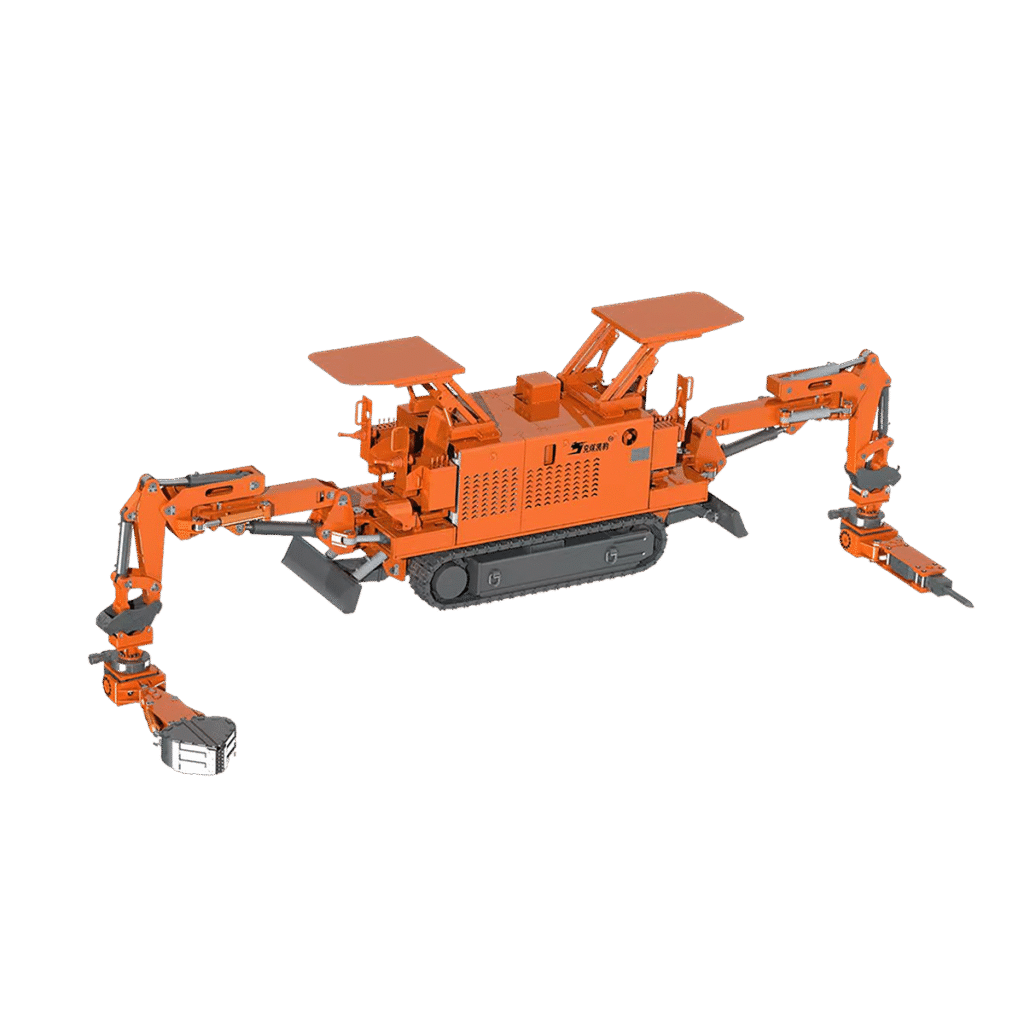
Roadheader selection discussions often focus heavily on the face while overlooking the roadway floor.
Poor floor conditions can affect:
- Crawler traction
- Machine leveling
- Cutting accuracy
- Advance speed
- Maneuverability
- Component loading
Soft or uneven floors may also require more frequent roadway maintenance.
The procurement team should therefore describe both roof and floor geology when discussing a roadheader application.
Where floor deterioration is expected, the wider mining equipment plan may also need dedicated roadway maintenance equipment so transport and excavation machinery can continue operating within the required clearance.
Evaluate Cutting, Loading, and Conveying as One System
A roadheader does more than cut the face.
After material is broken, it must be collected and transferred away from the excavation area.
The operating sequence is generally:
Cutting → gathering → loading → internal conveying → downstream transport
If any stage has less capacity than the cutting system, it can become the production bottleneck.
For example, increasing cutterhead output may provide little practical benefit if the loading apron cannot collect fragmented material quickly enough.
Similarly, the roadheader’s conveyor may discharge efficiently while downstream mine transport cannot remove the material.
A roadheader should therefore be evaluated based on complete material flow rather than theoretical cutting output alone.
Roadheader Productivity Is More Than Cutting Rate
A common mistake is estimating project performance using only instantaneous cutting capacity.
Actual roadway advance includes considerably more than cutting.
Total cycle time may include:
- Machine positioning
- Face cutting
- Material removal
- Roof inspection
- Временная поддержка
- Drilling
- Bolting
- Mesh installation
- Equipment repositioning
- Ventilation adjustments
- Обслуживание
- Tool replacement
This creates two different measures:
Net cutting rate measures how quickly the machine excavates while actively cutting.
Overall advance rate measures how much roadway development is completed during an entire shift or day.
For mine planning, overall advance is usually the more useful metric.
A highly productive roadheader can still produce disappointing roadway advance if support work repeatedly interrupts the excavation cycle.
Coordinate the Roadheader With Roof Support
Ground support is one of the largest influences on roadway development productivity.
After excavation exposes a new section of roof and ribs, the approved support system may need to be installed before further development continues.
Depending on mine design, support can involve:
- Roof bolts
- Cable bolts
- Rib bolts
- Mesh
- Steel supports
- Временная поддержка
If the roadheader excavates significantly faster than support equipment can operate, the machine spends more time waiting.
That is why rapid roadway development increasingly focuses on coordination between excavation and bolting.
YMHB’s интеллектуальные решения для майнинга include rapid roadway excavation, intelligent bolting and anchoring, and integrated tunneling technologies intended to address the complete excavation-support process rather than only the cutting stage.
Roadheader vs Tunnel Boring Machine
Roadheaders and tunnel boring machines are both mechanical excavation systems, but they are designed around very different excavation concepts.
| Фактор | Проходческий комбайн | Туннельная расточная машина |
|---|---|---|
| Excavation style | Partial face | Full face |
| Profile flexibility | Высокий | Usually fixed/circular |
| Cutter movement | Boom mounted | Full-face rotating cutterhead |
| Machine size | Generally more compact | Often very large |
| Roadway intersections | Гибкий | Less flexible |
| Route changes | Easier to accommodate | More constrained |
| Initial setup | Generally simpler | More complex |
| Long uniform tunnels | Application-dependent | Often advantageous |
| Mine development | Highly suitable | Limited to specific layouts |
A roadheader can move its cutting boom across the face, allowing it to create non-circular profiles and excavation chambers.
A TBM usually excavates the full tunnel cross-section simultaneously.
Research from Rutgers University similarly notes that a roadheader’s movable arm allows it to follow a wide variety of tunnel cross-section shapes, whereas conventional TBM geometry is more constrained.
For underground coal mine roadway development, where intersections, crosscuts, chambers, and changing profiles are common, this flexibility is one of the roadheader’s major advantages.
Roadheader vs Drill-and-Blast Excavation
Drill-and-blast remains important in many hard-rock underground projects.
Roadheaders provide a different excavation approach.
Roadheader Advantages
Mechanical cutting can provide:
- Непрерывные раскопки
- Reduced dependence on explosives
- Flexible profiles
- Controlled excavation boundaries
- Easier integration with mechanized loading
- Potentially smoother excavation surfaces
- Rapid switching between different face areas
Drill-and-Blast Advantages
Drill-and-blast can remain attractive where:
- Rock strength is very high
- Abrasiveness is extreme
- Mechanical cutting becomes inefficient
- Excavation volume does not justify specialized mechanical equipment
- Geology varies beyond practical roadheader capability
The correct method should therefore be selected according to geology and project conditions rather than assuming mechanical excavation is always preferable.
Dust Control Is Part of Roadheader Selection
Mechanical cutting can generate significant airborne dust at the face.
Effective dust management is therefore essential for both worker health and operating visibility.
Although individual dust-control requirements depend on mine design and regulations, common approaches include:
- Водные брызги
- Local dust suppression
- Ventilation
- Dust collection
- Remote operation
- Cutting-sequence optimization
The U.S. National Institute for Occupational Safety and Health provides detailed best practices for dust control in underground coal mining, noting the importance of controlling dust close to the cutting source through appropriate water and ventilation systems.
When evaluating a roadheader, buyers should ask how the machine’s cutting system, boom geometry, spray system, and surrounding ventilation arrangement work together.
Dust control should be planned during machine selection rather than added after commissioning.
Consider Automation and Intelligent Control
Modern roadheaders increasingly incorporate digital and intelligent functions.
Depending on equipment configuration, these can include:
- Пульт дистанционного управления
- Machine status monitoring
- Fault diagnostics
- Cutting profile control
- Position sensing
- Automatic protection
- Operating data recording
- Intelligent hydraulic control
- Unmanned-operation interfaces
These technologies can improve visibility into machine condition and reduce direct personnel exposure near the cutting face.
However, automation should always address a real operational problem.
Before specifying advanced control functions, mine engineers should identify what they want to improve.
For example:
| Mining Problem | Potential Intelligent Function |
|---|---|
| Inconsistent cutting profile | Automated profile control |
| High personnel exposure | Remote operation |
| Unexpected failures | Condition monitoring |
| Difficult fault diagnosis | Intelligent diagnostics |
| Excessive overload | Automatic protection |
| Poor production visibility | Operating data collection |
This ensures technology investment is connected to measurable operating benefits.
Maintenance Requirements Should Be Evaluated Before Purchase
A roadheader operates in an abrasive, dusty, vibration-intensive underground environment.
Preventive maintenance is therefore central to equipment availability.
Major maintenance areas can include:
- Cutting picks
- Cutterhead
- Cutting gearbox
- Гидравлическая система
- Crawler system
- Gathering mechanism
- Conveyor chains
- Electrical components
- Water-spray system
- Sensors
- Lubrication system
Before selecting equipment, buyers should ask the manufacturer which parts are expected to wear most rapidly under the proposed geology.
A recommended spare-parts package should reflect expected operating conditions rather than being a generic list.
For example, abrasive sandstone may create very different cutting-tool requirements from predominantly coal excavation.
How to Estimate Roadheader Productivity Realistically
Roadheader productivity cannot be predicted accurately from cutting power alone.
A useful assessment should combine geological, mechanical, and operational information.
Important variables include:
Geological Variables
- Rock strength
- Abrasiveness
- Jointing
- Bedding
- Water
- Geological variation
Machine Variables
- Мощность резки
- Cutterhead design
- Вес машины
- Pick layout
- Boom design
- Грузоподъемность
- Conveyor capacity
Operational Variables
- Operator experience
- Cutting sequence
- Обслуживание
- Support cycle
- Материальный транспорт
- Shift organization
The Earth Mechanics Institute specifically notes that roadheader performance prediction is more complex than full-face mechanical excavation because operator skill, boom behavior, cutterhead interaction, and geology can all influence production.
This is why responsible equipment selection should use realistic project data rather than guaranteed output figures taken from unrelated mine conditions.
What Information Should You Send a Roadheader Manufacturer?
A strong technical proposal begins with a detailed project description.
Before contacting a manufacturer, prepare the following information.
Geological Data
Provide:
- Material being excavated
- UCS where available
- Rock composition
- Abrasiveness
- Geological layers
- Roof and floor conditions
- Water conditions
Roadway Dimensions
Provide:
- Required width
- Required height
- Cross-section drawing
- Minimum clearance
- Turning radius
- Maximum gradient
Production Requirements
Provide:
- Target advance per shift
- Number of shifts
- Expected operating hours
- Downstream material-handling capacity
Support Requirements
Include:
- Roof support method
- Bolt length
- Bolt pattern
- Temporary support arrangement
- Support cycle
Mine Infrastructure
Specify:
- Available voltage
- Ventilation arrangement
- Underground transport method
- Conveyor configuration
- Dust-control requirements
This information enables the manufacturer to evaluate whether the selected machine can realistically achieve the required duty.
A Practical Roadheader Selection Checklist
Before confirming a model, ask these questions:
- Is the expected rock strength within the machine’s practical cutting range?
- How abrasive is the formation?
- Does the cutterhead design suit the geology?
- Can the machine excavate the entire required roadway profile?
- Can the machine physically enter and maneuver through the mine?
- Is cutting power appropriate rather than simply oversized?
- Is loading capacity sufficient for expected cutting output?
- Can downstream transport keep pace?
- What is the maximum operating gradient?
- Are floor conditions suitable for crawler operation?
- How will roof support be coordinated with excavation?
- How will respirable dust be controlled?
- Which components will experience the most wear?
- Which spare parts need to be held underground or on site?
- What intelligent or remote-control functions are actually required?
- What training is required for operators and maintenance technicians?
If several of these questions remain unanswered, it is usually too early to finalize the equipment model.
Common Roadheader Selection Mistakes
Selecting Only by Motor Power
A higher-powered machine does not automatically provide a proportionally higher advance rate.
Geology, cutterhead design, stability, support operations, and material handling can become the actual limitations.
Ignoring Abrasiveness
Strong rock receives attention because it can be difficult to cut, but abrasive formations can create equally serious productivity problems through rapid pick consumption.
Using Nominal Roadway Dimensions
Infrastructure such as ventilation ducts, pipes, conveyors, cables, and existing support structures can reduce actual machine clearance.
Use the real available operating envelope.
Assuming Maximum Cutting Rate Equals Daily Advance
Net cutting is only part of the roadway-development cycle.
Support, material handling, maintenance, and repositioning all influence actual daily progress.
Treating the Roadheader as a Standalone Machine
Roadway development is a system.
A roadheader can only perform effectively if material removal, roof support, transportation, ventilation, and maintenance can keep pace.
How Roadheaders Fit Into Rapid Roadway Development
Modern mining projects increasingly focus on reducing the gap between excavation capacity and completed roadway advance.
This has led to greater integration between:
- Проходческие комбайны
- Bolter miners
- Anchor drilling rigs
- Temporary support equipment
- Conveying systems
- Auxiliary transportation
- Intelligent controls
YMHB’s rapid roadway excavation strategy combines several of these equipment categories within its broader underground mining solutions.
For mine operators, this changes the procurement question.
Instead of asking:
“Which roadheader has the highest cutting power?”
A more useful question is:
“Which equipment configuration can complete the greatest amount of safely supported roadway per shift under our geological conditions?”
That distinction is critical.
Заключение
Choosing a roadheader for underground mining requires matching the machine to the complete excavation environment.
Geology determines whether mechanical cutting is practical. Roadway dimensions determine the required cutting envelope. Machine power, cutterhead design, weight, and stability influence excavation performance. Loading and transportation systems determine whether excavated material can leave the face efficiently, while roof support controls how quickly the next cutting cycle can begin.
For this reason, procurement teams should avoid selecting a roadheader from one or two headline specifications.
The strongest equipment decision is based on the complete operating cycle:
Geology → cutting → loading → transport → support → maintenance → next advance.
A machine that performs well across this entire sequence can contribute far more to roadway productivity than one selected simply because it has the highest rated cutting power.
For projects involving coal mine roadway development, large-section excavation, or intelligent tunneling, explore the Проходческий комбайн EBH300 стрелового типа and YMHB’s complete range of оборудование для прокладки туннелей.
If your project requires equipment matching for specific geology, roadway dimensions, gradients, or excavation targets, you can also contact the YMHB engineering team with your technical project information for a more suitable equipment configuration.
Часто задаваемые вопросы
What is a roadheader used for in mining?
A roadheader is used for mechanical excavation of underground roadways, entries, crosscuts, chambers, and other mine openings. Its boom-mounted cutterhead allows it to excavate different profiles without using full-face boring.
What type of rock can a roadheader cut?
Roadheaders are commonly used in soft- to medium-strength formations, although the practical cutting range depends on rock strength, abrasiveness, jointing, cutterhead design, machine power, and machine stability.
How do I select the right roadheader size?
Roadheader size should be based on roadway width, height, cross-section, access clearance, gradient, turning radius, required cutting range, geology, and production target rather than machine size alone.
Is a roadheader the same as a tunnel boring machine?
No. A roadheader is a partial-face excavation machine with a movable boom-mounted cutterhead, while a tunnel boring machine normally excavates essentially the entire circular tunnel face at once.
Is more cutting power always better?
No. Higher cutting power is useful only when the cutterhead, machine stability, geology, loading system, and downstream transport can use that power effectively.
What affects roadheader productivity the most?
Major factors include rock strength, abrasiveness, cutterhead design, machine stability, pick condition, loading capacity, operator technique, roof-support cycle, maintenance, and downstream material transport.
How can pick wear be reduced?
Correct cutterhead design, appropriate cutting technique, suitable pick selection, adequate water supply, proper maintenance, and avoiding operation with excessively worn tools can all contribute to better pick life.
What should a buyer provide before requesting a roadheader recommendation?
Provide geological information, roadway dimensions, cross-section drawings, gradient, production target, operating voltage, support requirements, transport configuration, ventilation conditions, and relevant mine certification requirements.