

Key Takeaways
- Comprehensive overview of rail mounted cranes in coal mining
- Key performance indicators: traction, speed, battery life, and safety
- Comparison between battery-powered, electric, lithium, and flameproof cranes
- Operational considerations for confined spaces and steep gradients
- Standards, regulations, and best practices for underground crane use
- Case studies and real-world applications highlighting ROI and efficiency
- Maintenance, cost analysis, and long-term total cost of ownership
- Emerging trends: automation, remote monitoring, and eco-friendly operation
Introduction
Mining is evolving rapidly, driven by safety, environmental, and efficiency demands. In coal mining, material handling challenges include confined tunnels, steep gradients, and the presence of explosive gases or dust. Selecting the right rail mounted crane is no longer just about lifting capacity—it’s about reliability, efficiency, safety, and sustainability.
Imagine a coal mine with narrow, uneven tunnels and heavy support structures. Using an outdated crane can lead to downtime, accidents, and excessive operational costs. Conversely, modern battery-powered, lithium, or flameproof rail cranes enable high throughput, low emissions, and remote monitoring. With automation trends and green energy solutions, rail mounted cranes are becoming a core pillar of smart mining operations.
This article covers everything mining operators need to know about rail mounted cranes, from technical specifications and safety standards to real-world case studies and cost analysis.
Table of Contents
Types of Rail Mounted Cranes in Mining
Battery-Powered Mining Monorail Cranes
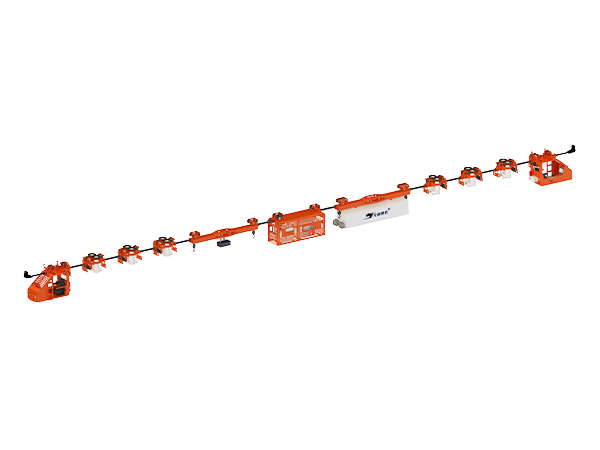
Battery-powered cranes, such as the DX-SERIES, are designed to handle uneven roadways and confined mining tunnels. With reverse charging and zero exhaust emissions, these cranes reduce environmental impact while increasing operational efficiency.
Key Advantages:
- High passability for narrow tunnels
- Reverse charging regenerates energy on downhill travel
- Remote monitoring and unmanned operation capabilities
Technical Highlight:
DX120/72P features a maximum traction force of 120 kN, emergency braking force up to 240 kN, and endurance mileage of 20–24 km per charge.
Electric Monorail Cranes
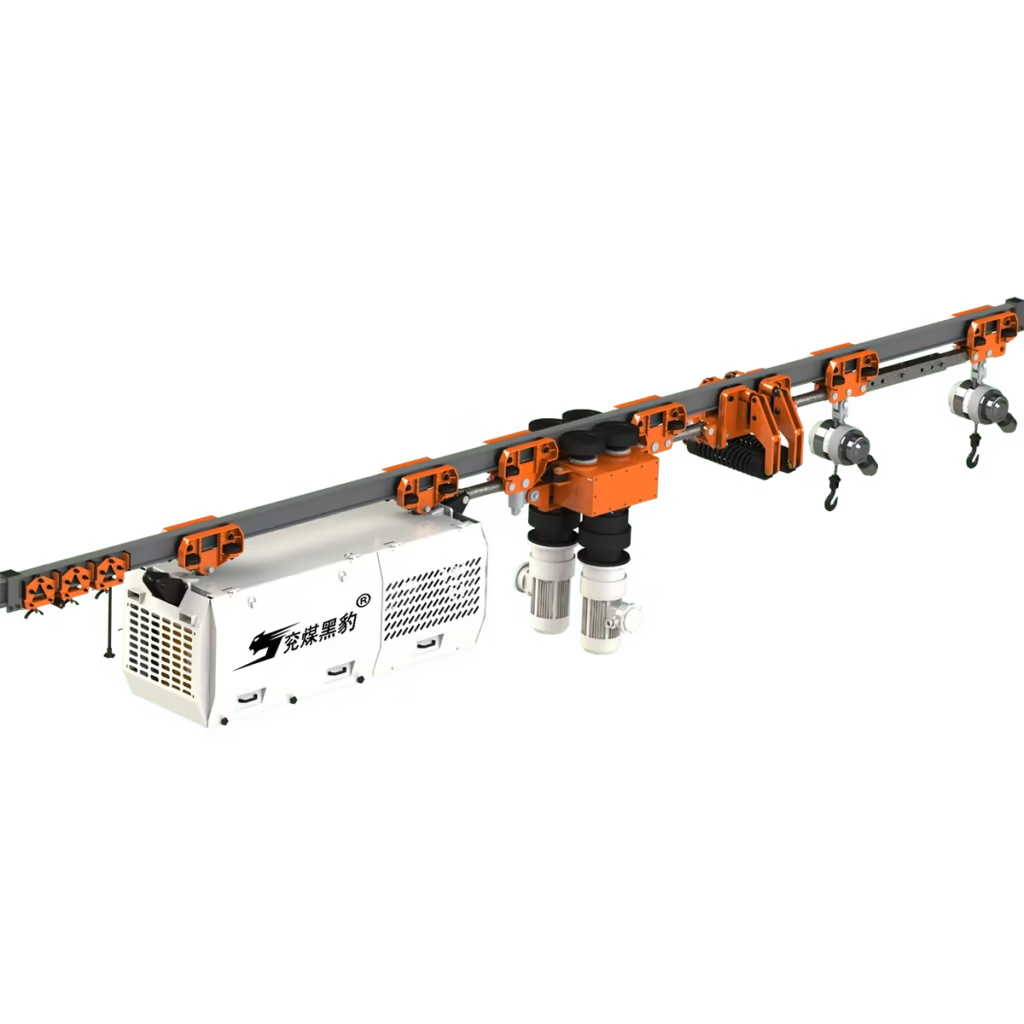
Electric monorail cranes are ideal for confined mining environments. Their compact design, combined with wireless flameproof remote control and multiple protection systems, ensures safe and reliable operation with minimal maintenance.
Key Advantages:
- Low maintenance and high reliability
- Energy-efficient and eco-friendly operation
- Unique models available in China with advanced flameproof technology
Technical Highlight:
Rated traction force: 30 kN, maximum operating speed: 0.4 m/s, maximum lifting weight: 10 tons.
Lithium Battery-Powered Cranes
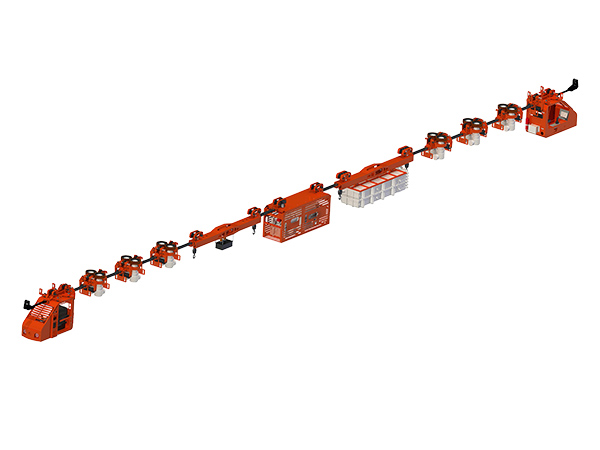
Lithium battery cranes, such as the DL-SERIES, provide fast charging, high endurance, and strong adaptability. Ideal for continuous operations, they combine environmental friendliness with advanced automation interfaces.
Key Advantages:
- Fast charging in 1.5–2 hours
- Ideal for continuous shifts
- Remote operation via LAN or internet
Technical Highlight:
Maximum traction force: 120 kN, battery capacity: 2×74 kWh, horizontal turning radius: 4 m.
One-to-One Flameproof Battery-Powered Cranes
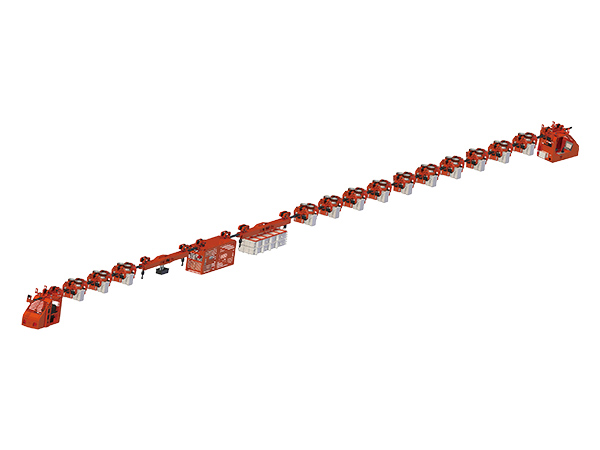
These cranes are designed for heavy-duty lifting, steep gradients, and hazardous underground conditions. The independent motor system ensures minimal downtime and high operational reliability.
Key Advantages:
- Maximum traction force: 360 kN
- Independent motor control
- Real-time monitoring and high safety standards
Technical Highlight:
Emergency braking force up to 720 kN, maximum operating speed 2 m/s, compatible with I140V/I140E rails.
Key Features to Consider in Rail Mounted Cranes
Traction and Load Capacity
Traction force is critical in coal mines with steep gradients. Choosing a crane with the correct maximum traction ensures smooth transportation of heavy materials.
Industry Insight:
According to the Mining Equipment White Paper 2025 (International Mining Association), insufficient traction is one of the leading causes of crane downtime in underground coal mining.
Passability and Maneuverability
Cranes must navigate narrow and irregular tunnels without causing delays or damage. The horizontal and vertical turning radius is a key parameter.
Conceptual Insight:
A crane with high passability allows operators to maneuver safely through congested mine layouts, reducing the risk of accidents and material damage.
Safety Features and Flameproof Compliance
Underground coal mines contain flammable gases. Flameproof cranes with ATEX/IECEx compliance prevent sparks that could trigger explosions.
Industry Standards:
- IECEx 60079-0/1: Equipment protection by flameproof enclosure
- ATEX Directive 2014/34/EU: Ensures safety in explosive atmospheres
- ANSI Z223.1 Safety Guidelines: Mandates operational safety and maintenance procedures
Comparative Analysis: Rail Mounted Crane Types
| Feature | DX-Series Battery | Electric Monorail | DL-Series Lithium | One-to-One Flameproof |
|---|---|---|---|---|
| Max Traction Force (kN) | 120 | 30 | 120 | 360 |
| Max Speed (m/s) | 2 | 0.4 | 2 | 2 |
| Battery Capacity | 560 Ah | N/A | 2×74 kWh | 4×74 kWh |
| Emergency Braking (kN) | 180–240 | 50–70 | 180–240 | 540–720 |
| Horizontal Turning Radius (m) | 4 | 4 | 4 | 4 |
| Vertical Turning Radius (m) | 10 | 8 | 10 | 10 |
| Ideal Use | Medium-to-large tunnels | Confined spaces | Continuous operations | Heavy-duty lifting |
| Environmental Impact | Zero emissions | Zero emissions | Zero emissions | Zero emissions |
Maintenance and Lifecycle Considerations
Scheduled Maintenance
Regular inspection of traction motors, brakes, and battery systems is essential to prevent failures. Mining operators should maintain detailed digital logs of operating parameters.
Battery Lifecycle
Lithium batteries typically last 1,500–2,000 charge cycles, while lead-acid batteries may degrade faster in harsh environments. Fast charging systems reduce downtime and increase operational efficiency.
Cost Analysis
| Aspect | Battery-Powered | Electric | Lithium | Flameproof |
|---|---|---|---|---|
| Initial Cost | Medium | Low | Medium | High |
| Consumables | Low | Low | Medium | Low |
| Maintenance | Moderate | Minimal | Moderate | High |
| Total Cost of Ownership | Cost-effective for medium/large operations | Cost-effective for small tunnels | Efficient for continuous shifts | Best ROI for heavy-duty/high-risk environments |
Real-World Case Studies
Case Study 1: Shanxi Coal Mine, China
- Crane Type: DL-Series Lithium Battery
- Challenge: Steep gradients, continuous material transport
- Results:
- Endurance mileage: 24 km per charge
- Downtime reduced by 18%
- Safety compliance: 100%
Case Study 2: Midwest USA Coal Mine
- Crane Type: One-to-One Flameproof
- Challenge: Heavy-duty lifting and support installation
- Results:
- Maximum traction fully utilized (360 kN)
- Reduced operator intervention
- Remote monitoring enhanced safety and efficiency
Emerging Trends in Mining Rail Cranes
- Automation: PLC-controlled cranes enable precise operation and reduce human error
- Digital Logging: Real-time monitoring improves maintenance and QA/QC
- Eco-Friendly Operations: Battery and electric cranes eliminate exhaust emissions
- Remote Operation: Internet-connected systems allow operators to supervise multiple cranes simultaneously
FAQ
Q1: Can a battery-powered crane handle steep gradients?
A: Yes, especially models with high traction force and independent motor control like the DL-Series or One-to-One flameproof cranes.
Q2: Are flameproof cranes mandatory in underground coal mines?
A: In mines with explosive gases or dust, flameproof cranes are essential for safety.
Q3: What is the typical service life of a mining rail crane?
A: With proper maintenance, 15–20 years is typical for battery or electric cranes.
Q4: How do I choose between lithium and lead-acid battery cranes?
A: Lithium batteries offer faster charging, higher energy density, and longer lifecycle, while lead-acid batteries have lower upfront cost.
Q5: Can multiple cranes be remotely monitored simultaneously?
A: Yes, modern PLC and LAN/internet systems allow centralized monitoring of multiple units for operational efficiency.
Conclusion
Choosing the right rail mounted crane is critical for mining efficiency, safety, and ROI. Modern options—including battery-powered, electric, lithium, and flameproof cranes—allow operators to optimize material handling, reduce environmental impact, and enhance automation.
By understanding technical specifications, operational constraints, and compliance standards, mining operators can make informed decisions to improve productivity and safety. With the rise of smart mining technologies, rail mounted cranes will continue to evolve as a cornerstone of modern coal mining operations.
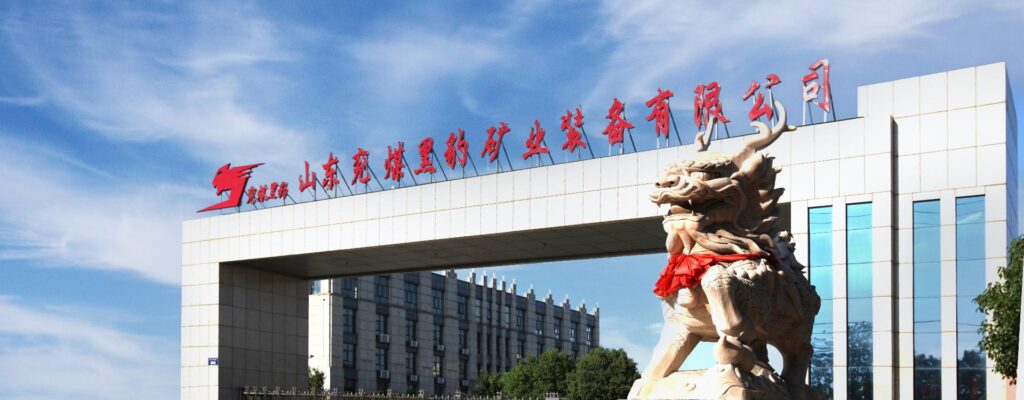
Welcome to Shandong Yanmei Heibao Mining Equipment Co., Ltd.! Since 2002, we’ve been redefining mining with intelligent equipment, delivering safer, more efficient, and sustainable solutions.
📌 Follow us for updates and insights:
- Facebook: Shandong Yanmei Heibao
- YouTube: Shandong Yanmei Heibao Channel
Join us to explore innovation and excellence in mining—together!