

جدول المحتويات
- Understand the main drilling rig jobs performed in underground mining.
- Compare anchor drilling, probe drilling, blast-hole drilling, roof cutting, and integrated bolting.
- Match mining drilling equipment with rock hardness, roadway dimensions, hole depth, and support requirements.
- Learn which equipment features can reduce repositioning, manual work, and operator exposure.
- Use a practical purchasing checklist before requesting a mining drilling rig quotation.
Mining operations depend on accurately drilled holes for exploration, blasting, roadway support, roof control, water detection, gas investigation, and pressure relief. However, not all drilling rig jobs require the same torque, feed force, boom configuration, mobility, or safety system.
A machine that performs well when installing shallow anchor bolts may not be suitable for drilling deep roof-cutting holes in hard rock. Mine owners, engineering contractors, and equipment buyers should therefore define the drilling task before comparing machine specifications or prices.
This guide explains the most common drilling rig jobs in mining, compares suitable equipment types, and provides a practical framework for selecting a mining drill rig.
What Are Drilling Rig Jobs in Mining?
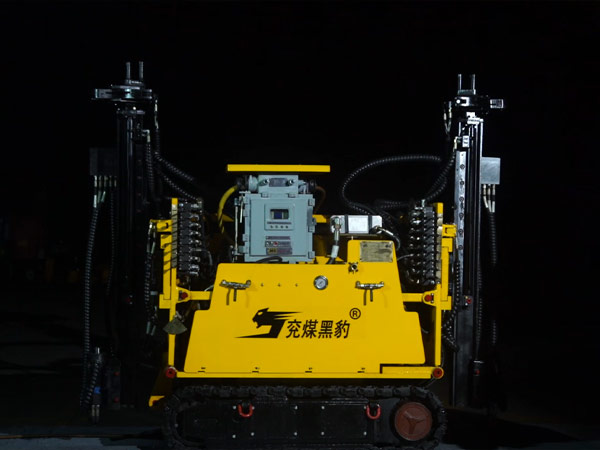
In this article, drilling rig jobs refer to drilling operations completed by mining equipment rather than employment vacancies. These operations create controlled boreholes for production, geological investigation, ground support, and mine safety.
Different drilling rig jobs require different hole diameters, depths, angles, drilling methods, and equipment configurations. Correctly identifying the application is therefore the first step in selecting suitable mining machinery.
Production Drilling
Production drilling prepares holes for blasting, ore extraction, roadway excavation, or controlled rock breaking. Hole diameter, spacing, angle, and penetration depth must remain consistent because drilling accuracy directly affects the following blasting or excavation stage.
Hole Pattern Control
A well-planned hole pattern distributes drilling and blasting energy more evenly. Poorly positioned holes can result in incomplete breakage, excessive overbreak, or additional secondary drilling.
Support Drilling
Support-focused drilling rig jobs include installing rock bolts and cable anchors in underground mine roofs and ribs. These holes form part of the mine’s ground-control system and help connect unstable rock layers to stronger surrounding formations.
Mechanized Roof Support
Mechanized support drilling reduces dependence on handheld equipment. It also helps operators complete repetitive drilling patterns with more consistent positioning and hole quality.
Exploration and Probe Drilling
Probe holes are drilled ahead of the working face to identify geological changes, water-bearing structures, gas conditions, faults, or unexpected voids.
The information collected from these drilling rig jobs helps the mine adjust excavation, drainage, and support plans before personnel and production equipment enter uncertain ground.
Pressure-Relief and Roof-Cutting Drilling
Pressure-relief and roof-cutting holes are used in specialized ground-control and non-pillar mining methods. These applications require reliable angle adjustment and straight boreholes because poor alignment may reduce the effectiveness of the planned fracture line.
Main Drilling Rig Jobs for Mining Projects
Anchor Bolt and Cable Installation
Anchor installation is one of the most common drilling rig jobs in underground coal mines. The equipment must repeatedly position its drilling boom, complete holes at the specified depth, and support efficient bolt or cable installation across the roof and ribs.
ال منصة حفر مرساة هيدروليكية من سلسلة CMM2 is designed for mechanized rock-bolt installation, cable anchoring, face blast holes, and exploratory holes. The series includes different machine sizes for various roadway cross-sections and uses two drilling booms for underground support work.
Key Purchasing Considerations
Buyers should check the applicable roadway cross-section, operating range, drilling diameter, hole depth, torque, feed force, machine height, traveling speed, and gradeability.
The selected rig should cover the required support pattern without excessive machine repositioning.
Face Exploration and Water-Detection Holes
Exploration-focused drilling rig jobs help identify conditions ahead of roadway excavation. These holes may be used for geological verification, water detection, gas investigation, or pressure-relief planning.
The drilling system should provide controlled positioning, stable feeding, and sufficient boom coverage. For larger roadways or operations combining support and probe drilling, the CMM2-SERIES Hydraulic Anchor Drilling Rig–Probe Drilling offers two drilling booms, temporary support, hydraulic interlocks, and an optional remote-control configuration.
Temporary Support
Temporary support protects the working area before permanent roof supports are installed. It is especially important when drilling is performed near newly exposed or unsupported roof sections.
Blast-Hole Drilling
Blast-hole drilling rig jobs require repeatable hole diameter, depth, direction, and spacing. In hard rock, the drilling method and drill-bit configuration have a major influence on penetration efficiency and consumable wear.
For roof-cutting and blasting holes in hard strata, the جهاز حفر الأنفاق الهيدروليكي CMJ1-18Y combines hydraulic rotary and impact drilling. It is designed for drilling diameters of 64–89 mm, depths of up to 25 meters, tracked underground travel, and remote operation from outside the immediate drilling area.
Rotary-Impact Drilling
Rotary-impact drilling combines rotational movement with impact energy. This method can improve rock breakage when conventional rotary drilling has difficulty penetrating hard or abrasive formations.
Roof-Cutting and Pressure-Relief Holes
Roof-cutting drilling rig jobs are more specialized than standard anchor installation. The boreholes must follow a planned angle and alignment so that directional blasting or roof cutting produces the intended structural result.
ال مسامير هيدروليكية جامبو CMM2-8 uses two drilling booms and independent adjustment mechanisms. It is designed to support aligned pre-splitting holes as well as auxiliary bolt and cable installation in roof-cutting, pressure-relief, and gob-side entry-retaining applications.
Borehole Alignment
Straight and consistently spaced boreholes help create a more predictable fracture line. Independent boom movement can also reduce the need to reposition the entire machine after every hole.
Integrated Tunneling and Bolting
Some mines need drilling rig jobs to be completed as part of a continuous roadway development cycle. Separate cutting, loading, drilling, and bolting machines can create waiting time whenever equipment must be exchanged or repositioned.
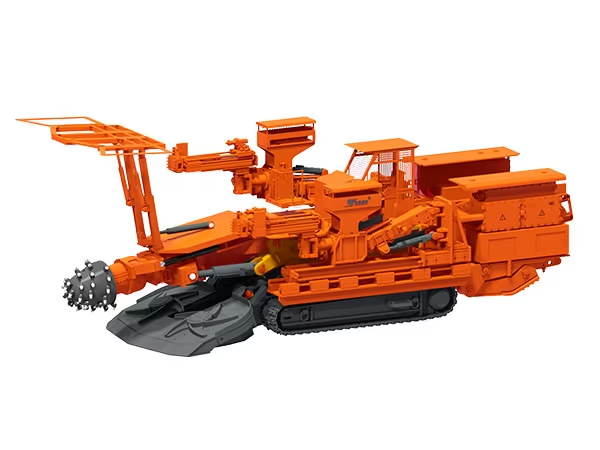
ال سلسلة بولتر ماينر combines tunneling, loading, transportation, temporary support, drilling, and bolting functions. Multiple onboard drilling units can cover the roadway support area without frequent repositioning of the main machine.
Integrated Workflow
An integrated workflow connects excavation and support operations more closely. It is generally suitable for mines seeking higher mechanization and fewer equipment changes during roadway advancement.
Comparison of Drilling Rig Jobs and Equipment Types
The following table compares common mining drilling operations with their main technical requirements. The recommendations are based on equipment applications available in Yanmei Heibao’s roadway tunneling, support, and roof-control product ranges.
| Mining application | Typical hole purpose | Main equipment requirement | Suitable equipment direction |
|---|---|---|---|
| Anchor drilling | Roof and rib support | Multi-angle boom movement and fast positioning | منصة حفر مرساة هيدروليكية من سلسلة CMM2 |
| Probe drilling | Geological, water, or gas investigation | Stable feed, flexible positioning, and temporary support | CMM2 Probe Drilling model |
| Blast-hole drilling | Controlled excavation or roof cutting | Hard-rock penetration and durable drilling tools | جهاز حفر الأنفاق الهيدروليكي CMJ1-18Y |
| Roof-cutting drilling | Pressure relief and directional fracture | Straight holes and accurate angle control | مسامير هيدروليكية جامبو CMM2-8 |
| Integrated roadway work | Excavation, support, drilling, and bolting | Multiple functions with less equipment switching | سلسلة بولتر ماينر |
| Advanced roadway development | Cutting, bolting, and exploration | Coordinated drilling and excavation workflow | EJM340/4-2 Integrated System |
The correct machine depends on the complete work cycle. A dedicated rig can offer greater flexibility for individual drilling rig jobs, while an integrated machine can reduce delays between excavation and roof support.
Dedicated Drill Rig vs. Integrated Mining System
Dedicated Drill Rig
A dedicated machine focuses on a narrower range of drilling rig jobs. It can often be deployed more flexibly for roadway maintenance, localized support, probe drilling, pressure-relief holes, or specialized roof-cutting tasks.
Best Application
Choose a dedicated rig when the mine already has excavation and loading equipment or when the drilling machine must move independently between several working areas.
Dedicated equipment may also be more practical when drilling requirements change frequently between different sections of the mine.
Integrated Mining System
An integrated system combines drilling with excavation, temporary support, bolting, loading, or material transportation.
This configuration can reduce equipment exchanges and simplify the production sequence in high-output roadway development.
Best Application
Choose an integrated solution when the mine requires continuous advancement, has sufficient roadway dimensions, and can support the larger machine’s transportation, power, maintenance, and operating requirements.
How Ground Conditions Affect Drilling Rig Jobs
Soft to Medium Formations
Rotary drilling may provide sufficient penetration in softer coal and rock. Under these conditions, buyers should focus on hole accuracy, boom coverage, feed stability, and total cycle time rather than automatically selecting the highest available impact power.
Stable Penetration
Stable drilling is often more valuable than maximum drilling speed. Excessive vibration or unstable feeding can reduce borehole quality and increase drill-tool wear.
Hard and Abrasive Rock
Hard formations increase bit wear, vibration, and drilling time. Rotary-impact equipment can be more suitable for difficult drilling rig jobs because it combines rotation with impact energy to improve rock breakage.
Consumable Selection
Drill bits and rods should be selected according to rock hardness, abrasiveness, hole diameter, and drilling method. Consumable availability should also be considered before the machine enters regular production.
Broken Roof and Unstable Ribs
Unstable ground changes both the drilling method and the safe operating sequence. Temporary support, remote operation, machine interlocks, and the ability to work from protected positions become more important than maximum penetration speed.
The official MSHA Roof and Rib Safety Alert advises mines to examine the roof, face, and ribs, follow the approved roof-control plan, maintain temporary roof-support systems, and add support when adverse conditions are identified.
Research published by NIOSH on roof bolting machine safety also identifies boom movement, restricted working height, operator posture, and pinch-point exposure as important safety considerations during roof-bolting operations.
How to Choose Equipment for Drilling Rig Jobs

Define the Hole Specification
Record the required hole diameter, depth, angle, spacing, and acceptable deviation.
Equipment selection becomes more accurate when suppliers receive a complete borehole schedule instead of only a general request for a mining drill rig.
Questions to Answer
- How deep must each hole be?
- What diameter is required?
- Will the holes be vertical, horizontal, or inclined?
- How much deviation is acceptable?
- How many holes must be completed per shift?
Measure the Roadway
Provide the minimum and maximum roadway width and height, turning restrictions, floor condition, gradient, and transportation route.
The drilling rig must not only reach the hole position. It must also enter, turn, stabilize, operate, and leave the working area safely.
Match the Drilling Method to the Rock
Provide information about rock type, hardness, abrasiveness, fracture condition, and groundwater.
These factors influence whether rotary drilling, rotary-impact drilling, or another method is the better match for the planned drilling rig jobs.
Review the Complete Drilling Cycle
Compare machine positioning, drilling, rod handling, bit replacement, hole flushing, support installation, and machine relocation.
The machine with the highest penetration rate does not always produce the lowest cost per completed hole.
Cycle Efficiency
A slightly slower rig that completes several holes from one setup may outperform a faster machine that requires frequent repositioning.
Evaluate Safety Functions
For hazardous drilling rig jobs, buyers should evaluate:
- أنظمة الدعم المؤقتة
- Remote-control capability
- Emergency-stop devices
- Traveling and drilling interlocks
- Moving-component guarding
- Operator visibility
- Lighting and alarms
- Hydraulic hose protection
- Stable machine positioning
The final equipment configuration should comply with local mining regulations, approved operating plans, and the mine’s site-specific risk assessment.
Confirm Service and Spare Parts
Ask the supplier to provide recommended spare-parts lists, maintenance intervals, hydraulic diagrams, electrical documentation, operator training, and remote technical support.
The availability of drill rods, bits, seals, hoses, filters, and other wear components directly affects long-term machine utilization.
Practical Procurement Checklist
Before requesting a quotation for drilling rig jobs, prepare the following information:
- Mine type and extracted mineral
- Underground or surface application
- Purpose of each borehole
- Required hole diameter and depth
- Rock hardness and abrasiveness
- Roadway width, height, and gradient
- Required drilling angle and operating coverage
- Power supply and underground restrictions
- Required drilling productivity
- Desired automation or remote-control level
- Local safety and certification requirements
- Expected working hours per shift
- Required spare parts and drilling tools
- Operator and maintenance training requirements
A detailed inquiry allows the manufacturer to recommend a more appropriate configuration. It also reduces the risk of comparing machines designed for completely different drilling rig jobs.
Common Mistakes When Planning Drilling Rig Jobs
Selecting by Maximum Depth Alone
Maximum drilling depth is only one parameter. A machine may reach the required depth but still lack the correct boom coverage, feed stability, flushing system, or underground mobility.
Better Approach
Compare all parameters against the actual drilling pattern and roadway layout. The machine must complete the work efficiently, not simply meet one specification.
Ignoring Repositioning Time
Frequent repositioning can reduce effective production even when the drilling rate is high.
Multi-boom machines or rigs with lateral and longitudinal boom adjustment can complete more drilling rig jobs from one machine position.
Using One Rig for Every Task
Anchor holes, probe holes, blast holes, and roof-cutting holes have different technical requirements.
A versatile machine can cover several operations, but forcing one configuration into every application may increase tool consumption, maintenance requirements, and downtime.
Comparing Only the Purchase Price
The lowest quotation may not deliver the lowest cost per completed hole.
Buyers should include the following costs:
- Drill bits and rods
- Labor
- Energy consumption
- Hydraulic maintenance
- Machine relocation
- Spare-parts availability
- Operator training
- Unplanned downtime
- Lost production
Cost per Accepted Hole
Cost per accepted hole provides a more useful comparison than equipment price alone. It includes both drilling performance and the quality of the completed borehole.
خاتمة
Drilling rig jobs in mining range from routine anchor installation to exploration, water detection, hard-rock blast holes, roof cutting, pressure relief, and fully integrated roadway development.
Each application requires a different balance of torque, impact energy, boom reach, drilling accuracy, mobility, temporary support, and operator protection.
For support and multi-purpose drilling, the CMM2 range provides several configurations for different roadway sizes and operating scopes. For hard-rock roof-cutting holes, the CMJ1-18Y offers rotary-impact drilling and remote operation. For combined roof cutting and bolting, the CMM2-8 provides dual-boom control, while the Bolter Miner Series supports a broader integrated roadway workflow.
A successful purchase begins with the work cycle rather than the machine name. Mine operators can explore Yanmei Heibao’s معدات حفر أنفاق الطرق أو contact the engineering team with their geological data, roadway dimensions, borehole requirements, and production targets.
Providing complete project information allows the manufacturer to recommend a more suitable configuration for the planned drilling rig jobs.
FAQ About Drilling Rig Jobs for Mining
What drilling rig is best for underground mining jobs?
The best rig depends on the hole purpose, rock condition, roadway dimensions, and required productivity.
Anchor support generally favors a multi-boom hydraulic anchor rig, while hard-rock roof-cutting holes may require rotary-impact drilling and remote operation.
Can one machine perform bolting and exploration drilling?
Yes. Some hydraulic anchor rigs can complete bolt holes, cable-anchor holes, face exploration holes, water-detection holes, and pressure-relief holes.
Buyers should confirm the required depth, diameter, flushing method, and boom coverage for every application.
How do I choose between a single-boom and dual-boom rig?
A single-boom rig may be more compact and suitable for specialized drilling rig jobs.
A dual-boom rig can provide greater coverage and may allow simultaneous or alternating operation, making it attractive for repetitive support drilling or aligned roof-cutting holes.
Is remote control necessary for mining drilling?
Remote control is particularly valuable when operators could be exposed to rockfall, unstable ground, dust, noise, or moving machinery.
It does not replace inspections, barriers, training, or approved procedures, but it can increase the distance between the operator and the immediate hazard area.
What information should I send to a drilling rig manufacturer?
Send borehole drawings, roadway dimensions, mine layout information, geological data, power conditions, required productivity, applicable safety standards, and photographs or videos of the working area.
This gives the engineering team enough information to recommend a realistic drilling configuration.
How can a mine reduce the cost of drilling rig jobs?
Match the rig to the rock and hole specification, reduce repositioning, standardize drilling consumables, train operators, monitor hydraulic parameters, and perform preventive maintenance.
Cost should be measured per accepted hole or completed support cycle rather than only per machine operating hour.
Can a hydraulic anchor rig work with a roadheader?
Yes. A hydraulic anchor drilling rig can be used in roadway advancement areas alongside excavation equipment, provided that the machines’ dimensions, working sequence, power requirements, and safety zones are properly coordinated.
What causes low drilling efficiency in underground mines?
Common causes include unsuitable drill bits, insufficient feed force, worn drilling tools, unstable machine positioning, incorrect drilling methods, poor hydraulic performance, excessive repositioning, and unexpected geological conditions.
مرحباً بكم في شاندونغ يانمي هيباو معدات التعدين المحدودة! منذ عام 2002، كنا إعادة تعريف التعدين باستخدام المعدات الذكية، وتقديم حلول أكثر أمانًا وكفاءة واستدامة.
📌 تابعونا للحصول على التحديثات والرؤى:
- فيسبوك: شاندونغ يانمي هيباو
- يوتيوب: شاندونغ يانمي هيباو القناة
انضم إلينا لاستكشاف الابتكار والتميز في مجال التعدين—معاً!