

Introducción
Imagine a modern underground coal mine operating more than 1,000 meters below the surface. Hundreds of workers, thousands of tons of materials, heavy roof support systems, ventilation equipment, electrical components, and mining machinery must move safely through narrow tunnels every day. In such environments, transportation is not simply a support function—it is the backbone of productivity, safety, and profitability.
Industry studies have shown that transportation and logistics activities can account for a significant portion of underground mining operating costs. Delays in transporting personnel, roof supports, spare parts, or production materials can directly impact coal output and increase downtime. At the same time, stricter global regulations on emissions, workplace safety, and energy efficiency are pushing mining companies to modernize their transportation systems.
As a result, the market for advanced underground coal mining vehicles is rapidly evolving. Traditional diesel-powered systems are increasingly being supplemented—or replaced—by battery-powered, flameproof, and intelligent transportation solutions capable of operating in challenging underground conditions while reducing environmental impact.
Among the most significant developments in recent years are battery-powered monorail cranes, intelligent dispatching systems, regenerative braking technology, remote operation platforms, and autonomous transportation solutions. These technologies are helping mines improve productivity while meeting increasingly demanding safety and sustainability goals.
This guide provides a comprehensive overview of today’s best underground coal mining vehicles, explains the technologies driving the industry forward, compares different transportation systems, and helps mine operators select the most suitable solution for their operations.
Conclusiones clave
- Understand the major categories of underground coal mining vehicles.
- Compare diesel, electric, battery-powered, and monorail transportation systems.
- Learn why monorail cranes are becoming increasingly popular in modern mines.
- Evaluate vehicle performance using traction force, gradeability, and automation capability.
- Understand industry standards and safety requirements.
- Explore emerging trends including electrification and intelligent mining.
- Review real-world case studies and operational scenarios.
- Learn how to reduce total ownership costs through proper vehicle selection.
Tabla de contenido
Why Underground Transportation Is Critical to Mine Productivity
Transportation is one of the most important operational systems within underground mines.
Without reliable transportation equipment, mining activities quickly become inefficient.
Direct Impact on Production
Transportation affects:
- Coal movement efficiency
- Equipment installation speed
- Maintenance response times
- Personnel transportation
- Emergency evacuation capability
Even a minor transportation bottleneck can affect production across an entire mining section.
Example Scenario
If roof support installation is delayed due to transportation limitations, mining equipment may remain idle while crews wait for materials.
This can result in significant production losses over time.
Impact on Safety
Efficient transportation reduces:
- Manual handling requirements
- Worker fatigue
- Congestion in roadways
- Equipment interaction risks
Modern transportation systems are increasingly designed around safety-first principles.
Evolution of Underground Coal Mining Vehicles
First Generation: Rail-Based Systems
Early underground mines relied heavily on rail carts pulled by locomotives.
Ventajas
- Simple operation
- High carrying capacity
- Proven technology
Limitaciones
- Limited flexibility
- Extensive infrastructure requirements
- Difficult route modifications
Second Generation: Rubber-Tired Vehicles
The introduction of diesel-powered vehicles increased operational flexibility.
Examples include:
- Shuttle cars
- Personnel carriers
- Utility vehicles
- Load-haul-dump machines
Third Generation: Electric and Battery-Powered Systems
The latest generation emphasizes:
- Cero emisiones
- Intelligent operation
- Lower operating costs
- Improved safety
This transition is accelerating globally.
Categories of Underground Coal Mining Vehicles
Personnel Transportation Vehicles
These vehicles transport workers between shafts and production areas.
Key Benefits
Faster Shift Changes
Reduces travel time and increases productive working hours.
Improved Worker Comfort
Minimizes physical strain during long underground journeys.
Material Transportation Vehicles
Used for transporting:
- Steel supports
- Electrical equipment
- Hydraulic components
- Spare parts
Reliable material transportation directly affects operational continuity.
Heavy-Duty Support Installation Vehicles
Designed to transport and install large support systems.
These vehicles often require high traction force and excellent stability.
Monorail Transportation Systems
Monorail systems have become one of the fastest-growing segments in underground transportation.
Why They Are Growing Rapidly
Reduced Roadway Dependence
Unlike wheeled vehicles, monorails are not heavily affected by floor conditions.
Excellent Space Utilization
They operate overhead, reducing traffic congestion.
Seguridad mejorada
Separated travel paths reduce collision risks.
Por qué Battery-Powered Underground Coal Mining Vehicles Are Gaining Popularity
Global mining companies are investing heavily in battery-electric equipment.
Environmental Benefits
Battery-powered systems eliminate:
- Diesel exhaust emissions
- Fuel leakage risks
- Noise pollution
This contributes to healthier underground environments.
Reduced Ventilation Costs
Ventilation systems represent one of the largest operating expenses in underground mining.
According to industry research, ventilation can account for 30% to 50% of underground mine energy consumption.
Battery-powered vehicles help reduce these requirements.
Lower Maintenance Requirements
Electric drive systems generally contain fewer moving parts than diesel engines.
Benefits include:
- Reduced maintenance hours
- Lower spare parts consumption
- Improved reliability
Grúa monorraíl minera antideflagrante con alimentación a batería serie DX
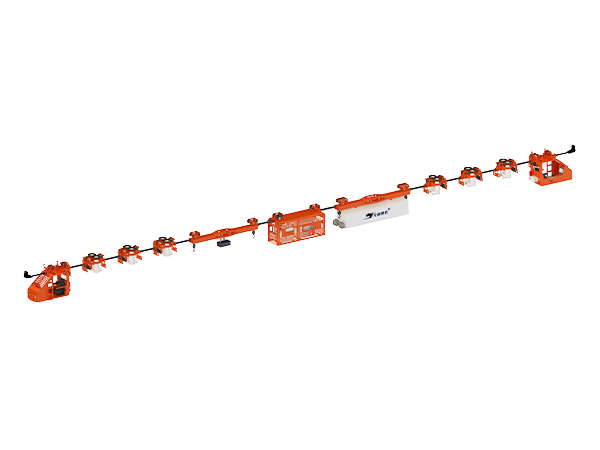
The DX-Series is specifically designed for modern underground mining operations.
Core Design Philosophy
The system combines:
- Seguridad
- Adaptabilidad
- Eficiencia energética
- Intelligent control
Gran adaptabilidad
The crane operates effectively despite:
- Roof deformation
- Roadway undulations
- Variable geological conditions
This adaptability is particularly important in older mining districts.
Energy Recovery Technology
One of the most innovative DX-Series features is regenerative charging.
How It Works
During downhill operation:
- Potential energy is captured
- Converted into electrical energy
- Stored in battery systems
This improves overall energy efficiency.
Remote Monitoring Capability
Operators can monitor:
- Battery status
- Vehicle location
- Operating parameters
- Maintenance conditions
Through LAN and internet-based platforms.
DX-Series Technical Comparison
| Modelo | Maximum Traction Force (kN) | Maximum Speed (m/s) | Capacidad de la batería (Ah) |
|---|---|---|---|
| DX120/72P | 120 | 2 | 560/730 |
| DX100/60P | 100 | 2 | 560/730 |
| DX80/48P | 80 | 2 | 560/730 |
| DX60/36P | 60 | 2 | 560/730 |
| DX40/24P | 40 | 2 | 560/730 |
Grúa monorraíl con batería de litio serie DL
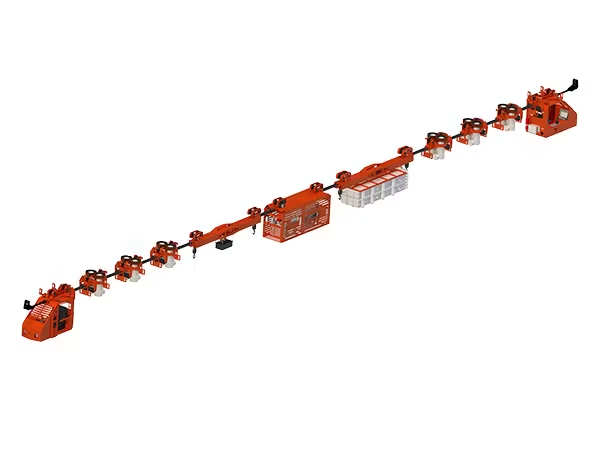
The DL-Series represents a major advancement in underground transportation technology.
Lithium Battery Advantages
Compared with conventional batteries:
Faster Charging
Charging time:
- Approximately 1.5–2 hours
Higher Energy Density
More operating time per charge cycle.
Reduced Downtime
Improves equipment utilization rates.
Superior Climbing Performance
The DL-Series achieves:
- Maximum gradeability: 25°
Compared to:
- DX-Series: 15°
This makes the DL-Series suitable for deeper mines and more challenging tunnel layouts.
Smart Mine Integration
The system is ready for:
- Autonomous operation
- Intelligent dispatching
- Remote diagnostics
- Digital mine platforms
One-to-One Flameproof Battery-Powered Monorail Crane
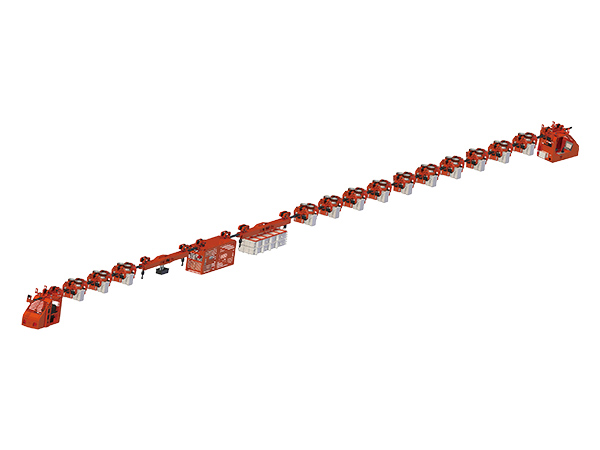
For heavy-duty transportation requirements, this system provides industry-leading traction capability.
Exceptional Traction Performance
The DL360/296Y delivers:
| Parámetro | Valor |
| Maximum Traction Force | 360 kN |
| Motor Power | 528 kW |
| Maximum Speed | 2 m/s |
| Número de unidades de accionamiento | 12 |
Why High Traction Matters
High traction enables:
- Steep-gradient transportation
- Large support transport
- Heavy equipment movement
Redundancy Design
Each motor operates independently.
If one motor fails:
- Remaining motors continue operation
- Downtime is minimized
- Safety is improved
This is a significant advantage in critical mining operations.
Industry Standards for Underground Coal Mining Vehicles
Purchasing decisions should always consider compliance requirements.
ISO 9001
Quality management systems ensure:
- Consistent manufacturing
- Process control
- Continuous improvement
IEC Standards
Relevant electrical safety standards include:
- IEC 60079 series
- Explosion protection requirements
ATEX Standards
Widely recognized in international markets.
Focus areas include:
- Explosive atmospheres
- Equipment certification
- Operational safety
MSHA Requirements
In the United States, mining equipment often follows Mine Safety and Health Administration requirements.
Flameproof Certification
Critical for:
- Coal mines
- Methane-rich environments
- Hazardous underground conditions
Intelligent Mining and Autonomous Transportation
The mining industry is entering the era of digital transformation.
Autonomous Transportation Systems
Benefits include:
- Reduced labor dependency
- Improved consistency
- Seguridad mejorada
Emerging Technologies
Artificial Intelligence
Used for:
- Route optimization
- Traffic management
- Predictive maintenance
Internet of Things (IoT)
Provides real-time equipment monitoring.
Tecnología de gemelos digitales
Creates virtual models of transportation systems.
These models help optimize operations before changes are implemented underground.
Ejemplo de aplicación del mundo real
Deep Underground Coal Mine Project
A large underground coal operation implemented battery-powered monorail systems for support transportation.
Desafíos
The mine faced:
- Long transportation distances
- Steep gradients
- High ventilation costs
Solución
Deployment of flameproof battery-powered monorail cranes.
Results
Reported benefits included:
- Reduced transportation time
- Improved installation efficiency
- Lower ventilation demand
- Mayor seguridad de los trabajadores
The project demonstrated how transportation modernization can improve overall mine performance.
Total Cost of Ownership Analysis
Many buyers focus only on initial acquisition costs.
However, the true cost includes:
Energy Costs
Battery-powered vehicles often consume less energy over their operational life.
Costos de mantenimiento
Electric drive systems generally require less maintenance.
Labor Costs
Automation reduces manpower requirements.
Downtime Costs
Improved reliability lowers production interruptions.
Example
A transportation system with higher acquisition costs may generate lower lifecycle expenses due to:
- Reduced fuel consumption
- Lower maintenance requirements
- Increased equipment availability
How to Choose the Best Underground Coal Mining Vehicles
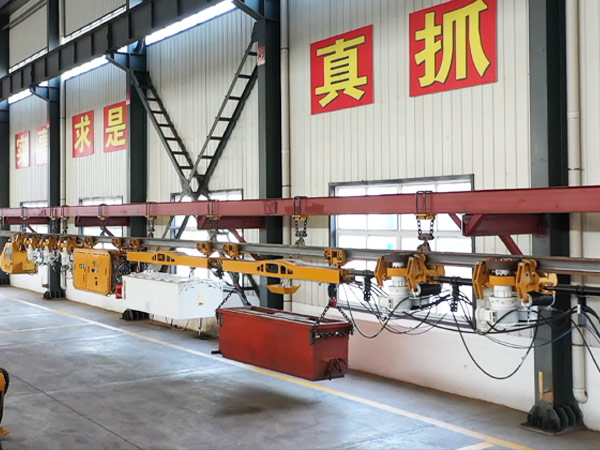
Evaluar las condiciones de la mina
Consider:
- Tunnel dimensions
- Roadway gradients
- Transportation distances
Assess Future Expansion Plans
Equipment should support future production growth.
Consider Automation Readiness
Future-proof equipment provides better long-term value.
Prioritize Safety
Safety should always outweigh short-term cost savings.
Review Supplier Support
Evaluate:
- Technical support
- Disponibilidad de repuestos
- Training services
- Cobertura de garantía
Future Trends in Underground Coal Mining Vehicles
Electrificación
Battery-powered equipment will continue gaining market share.
Autonomous Fleets
Driverless transportation systems are expected to expand rapidly.
Green Mining Initiatives
Mining companies are investing heavily in carbon reduction strategies.
Advanced Battery Technologies
Future batteries may offer:
- Faster charging
- Longer lifespan
- Higher energy density
Mantenimiento predictivo
Machine learning systems will increasingly detect failures before breakdowns occur.
Conclusión
The future of underground mining transportation is being shaped by electrification, automation, and intelligent operational management. While traditional underground coal mining vehicles remain important in many operations, advanced battery-powered monorail systems are increasingly setting new benchmarks for productivity, safety, environmental performance, and lifecycle cost efficiency.
From the DX-Series Flameproof Battery-Powered Mining Monorail Crane to the DL-Series Lithium Battery-Powered Monorail Crane and the powerful One-to-One Flameproof Battery-Powered Monorail Crane, mining companies now have access to transportation technologies capable of addressing the most demanding underground challenges.
For mine operators seeking to improve productivity, reduce emissions, enhance safety, and prepare for the next generation of intelligent mining, investing in modern underground coal mining vehicles is no longer simply an equipment decision—it is a strategic investment in the future competitiveness of the entire mining operation.
Preguntas frecuentes
What are the best underground coal mining vehicles for modern mines?
Battery-powered monorail systems, electric transportation vehicles, and intelligent material handling systems are among the most advanced solutions available today.
Why are battery-powered mining vehicles becoming more popular?
They reduce emissions, lower ventilation costs, improve worker health, and support sustainability goals.
Are monorail systems better than traditional mining vehicles?
In many underground environments, monorail systems offer superior adaptability, safety, and transportation efficiency.
How important is flameproof certification?
Flameproof certification is essential for operations in methane-rich coal mines and other potentially explosive environments.
What factors should buyers evaluate before purchasing?
Key considerations include traction force, gradeability, automation compatibility, maintenance requirements, safety certifications, and supplier support.
Can underground transportation systems be operated remotely?
Yes. Many modern systems support LAN and internet-based remote monitoring and control functions.
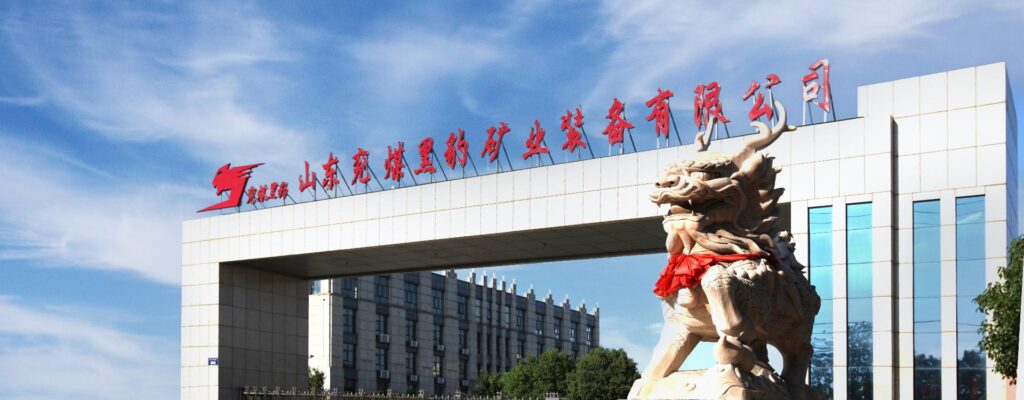
Bienvenido a ¡Shandong Yanmei Heibao Mining Equipment Co., Ltd.! Desde 2002, estamos Redefiniendo la minería con equipos inteligentes, ofreciendo soluciones más seguras, eficientes y sostenibles.
📌 Síguenos para recibir actualizaciones e información:
- Facebook: Shandong Yanmei Heibao
- YouTube: Canal Shandong Yanmei Heibao
Únase a nosotros para explorar la innovación y la excelencia en la minería.¡juntos!