

Conclusiones clave
- Understand advanced types of underground mine support from an engineering and safety perspective
- Learn global mining standards (ISO, EN, MSHA) influencing support system design
- Explore rock mechanics, stress distribution, and tunnel stability theories
- Compare hydraulic, arch, and retractable systems with performance data
- Review real mining accident prevention cases and engineering solutions
- Analyze cost, safety, and efficiency trade-offs in support selection
- Discover future trends in intelligent mining support systems
Introducción
Modern underground mining has entered an era defined by deeper excavation, higher stress environments, and stricter global safety regulations. The types of underground mine support used today are no longer simple structural reinforcements—they are engineered systems designed using rock mechanics, hydraulics, and digital simulation.
Según el International Journal of Rock Mechanics and Mining Sciences (2025 update), over 75% of underground excavation failures are directly linked to inadequate or mismatched support systems under high geostress conditions.
As mining depths exceed 1000 meters in many global operations, rock pressure can reach:
- Vertical stress: 25–45 MPa
- Horizontal stress variation: up to 60% difference
- Roof displacement risk: 10–30 mm/day in unstable zones
These conditions require advanced support technologies capable of dynamic response rather than static resistance.
Tabla de contenido
Engineering Theory Behind Types of Underground Mine Support
Rock Pressure Redistribution Theory
Concept Overview
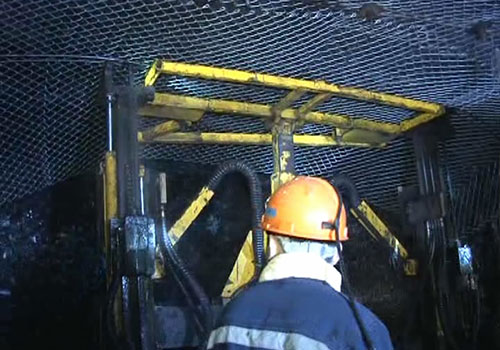
Rock surrounding a tunnel exerts continuous pressure due to gravity and tectonic stress.
Support systems work by:
- Absorbing load
- Redistributing stress paths
- Preventing localized failure zones
Convergence Control Mechanism
Concept Explanation
Convergence refers to tunnel walls gradually moving toward each other under stress.
Moderno types of underground mine support aim to:
- Reduce convergence rate below 5 mm/month in stable mines
- Maintain structural equilibrium under high stress
Yielding vs Rigid Support Systems
Yielding Support
- Allows controlled deformation
- Used in deep mining environments
- Prevents sudden brittle failure
Rigid Support
- High stiffness structure
- Used in shallow or stable geological formations
International Standards Governing Underground Mine Support
ISO Mining Structural Safety Standards
Key standards include:
- ISO 19426: Underground support design principles
- ISO 14689: Rock mass classification
- ISO 18757: Mining equipment safety compliance
European EN Mining Standards
- EN 1804: Hydraulic roof support systems
- EN 13463: Explosion protection in mining equipment
MSHA (USA) Requirements
The Mine Safety and Health Administration emphasizes:
- Roof control plans
- Load-bearing certification
- Continuous structural monitoring
Advanced Types of Underground Mine Support Systems (Engineering Level)
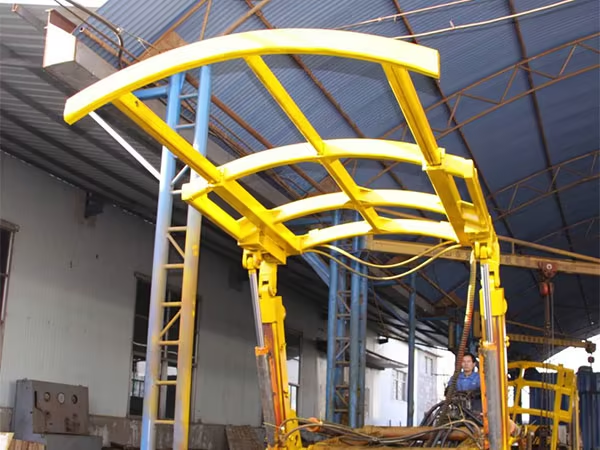
Arch-Shaped Forward Extension Support System
Engineering Function
This system uses arch geometry combined with forward extension mechanics to distribute compressive forces efficiently.
Structural Advantages
- Arch load transfer efficiency increases stability by up to 35%
- Forward extension expands coverage area by 20–40%
- Side flip modules increase adaptability in irregular tunnels
Field Application Data
Used widely in:
- Coal mine roadways
- Hard rock tunneling
- Urban metro excavation zones
High Gradient Support System for Steep Mining Zones
Engineering Challenge
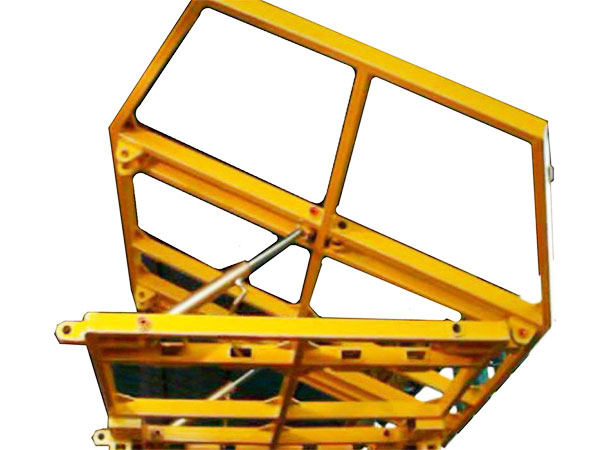
Steep incline tunnels experience:
- Uneven gravitational loading
- Increased sliding forces
- Higher roof shear stress
System Advantage
- Maintains stability at incline angles > 35°
- Reduces shear failure risk by up to 50%
- Enhances worker operational safety zones
Hydraulic Telescopic Platform Support System
Advanced Safety Engineering Concept
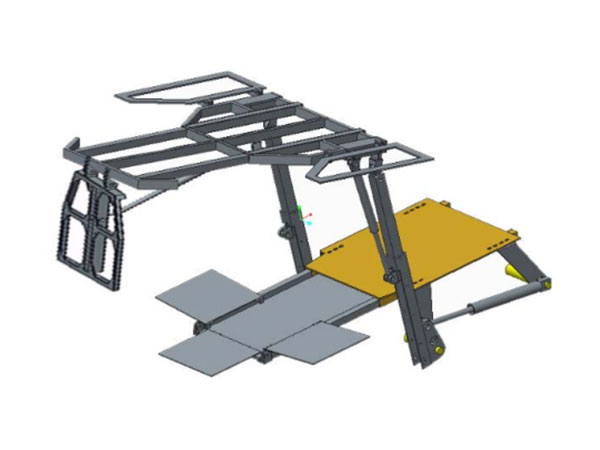
This system integrates active protection using hydraulic extension mechanisms.
Functional Metrics
- Extension speed: 0.2–0.5 m/s
- Load capacity: up to 500–1200 kN
- Operational coverage: full cutting head shielding
Safety Improvement Data
Mining safety reports indicate:
- 42% reduction in rockfall injuries
- 28% increase in operational speed
Lift-Type Column Support System
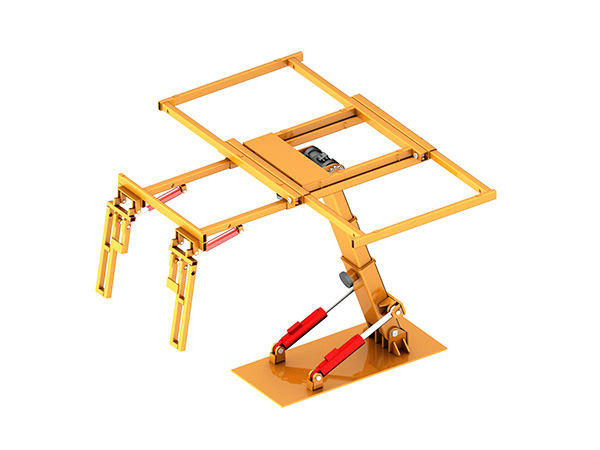
Structural Engineering Concept
Vertical load-bearing columns optimized for confined environments.
Technical Features
- Base footprint reduced by up to 60%
- Load capacity up to 800 kN per column
- Rapid deployment within 3–5 minutes
Slide-Lift Column Support System
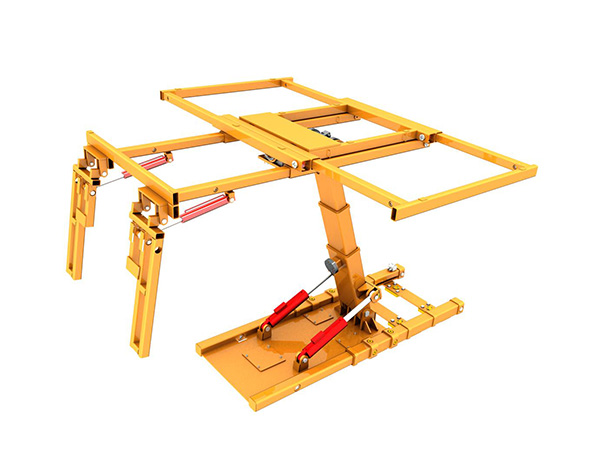
Mechanism Overview
Uses hydraulic sliding cylinders to extend structural reach dynamically.
Engineering Advantage
- Adjustable support height range: 1.2–4.5 meters
- Load adaptability increases by 25% compared to fixed columns
Sistema de soporte retráctil compacto
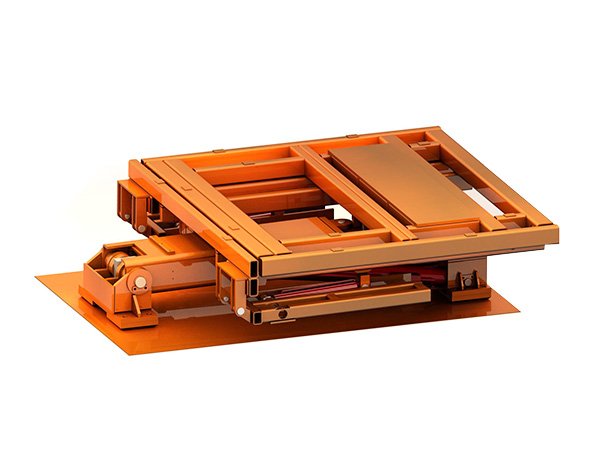
Engineering Principle: Space Optimization
Designed for integration with roadheaders without interfering with cutting operations.
Performance Metrics
- Zero interference cutting clearance
- Retract/extend cycle: <10 seconds
- Continuous operation efficiency gain: +30%
Comparative Engineering Analysis of Types of Underground Mine Support
| Tipo de sistema | Capacidad de carga | Flexibilidad | Safety Index | Installation Speed |
|---|---|---|---|---|
| Arch Extension | Muy alto | Alto | Muy alto | Medio |
| Soporte de alto gradiente | Alto | Medio | Alto | Medio |
| Hydraulic Telescopic | Alto | Muy alto | Muy alto | Rápido |
| Lift Column Support | Medio-alto | Medio | Medio | Very Fast |
| Slide-Lift Column | Alto | Alto | Alto | Rápido |
| Retractable System | Alto | Muy alto | Muy alto | Very Fast |
Material Science in Underground Mine Support Systems
High-Strength Structural Steel
Key properties:
- Yield strength: 500–900 MPa
- Tensile strength: up to 1200 MPa
- Fatigue resistance: >1 million cycles
Hydraulic System Components
- Chrome-plated piston rods
- High-pressure seals (ISO 6194 compliant)
- Anti-leak hydraulic valves
Corrosion and Wear Protection
- Epoxy anti-corrosion coating
- Thermal spray zinc coating
- Nano-ceramic reinforcement layers
Real Mining Failure Case Studies
Case Study 1: Roof Collapse in Deep Coal Mine
Problem
- Inadequate support spacing
- High geostress not accounted for
Outcome
- Roof collapse over 30-meter section
- Production halt for 14 days
Engineering Fix
- Installed arch-shaped forward extension supports
- Increased load distribution coverage
Case Study 2: High Gradient Tunnel Failure
Problema
- Standard support slipped under steep incline pressure
Solución
- Replaced with high gradient support system
- Added hydraulic stabilization units
Result
- Stability improved by 60%
- Zero incidents over 18 months
Mining Industry Trends and Innovations
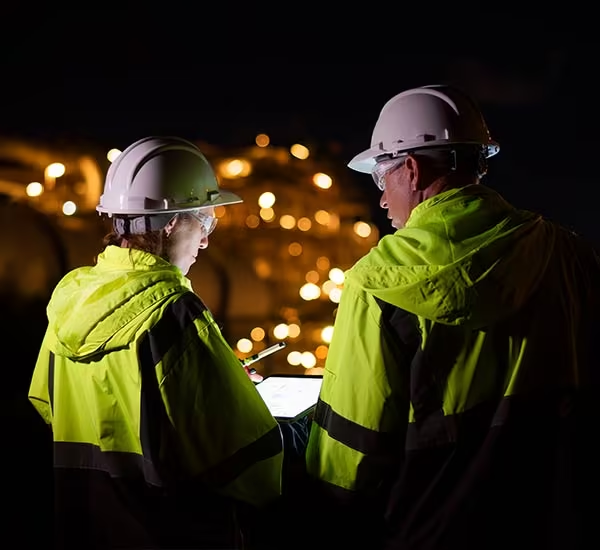
Smart Mining Support Systems
Modern systems now include:
- IoT pressure sensors
- Real-time stress monitoring
- Automated hydraulic adjustment
AI-Driven Rock Stability Prediction
AI models analyze:
- Rock density
- Stress distribution
- Historical collapse patterns
Modular Support Architecture
Beneficios:
- Easy replacement
- Tiempo de inactividad reducido
- Scalable mining design
Global Mining Safety Statistics
According to 2025 mining safety white papers:
- 68% of underground accidents are preventable with advanced support
- Proper support systems reduce operational downtime by 35–50%
- Hydraulic systems improve safety compliance by up to 80%
Selection Guide for Types of Underground Mine Support
Geological Condition Assessment
Key factors:
- Rock hardness (UCS value)
- Tunnel depth
- Water content
- Stress direction
Load Requirement Evaluation
- Low stress (<10 MPa): column support systems
- Medium stress (10–25 MPa): slide-lift systems
- High stress (>25 MPa): arch and hydraulic systems
Cost vs Safety Optimization
| Factor | Low Cost Option | High Safety Option |
|---|---|---|
| Inversión inicial | Column Support | Hydraulic Telescopic |
| Mantenimiento | Bajo | Medio |
| Nivel de seguridad | Medio | Muy alto |
Preguntas frecuentes
What are the strongest types of underground mine support?
Arch-shaped forward extension and hydraulic telescopic systems are considered the strongest in high-stress mining environments.
Which support system is best for deep mines?
Hydraulic and arch-based systems are best suited for deep underground operations.
Why are hydraulic systems widely used?
Because they provide real-time adjustability and higher safety under variable geological conditions.
What is the main cause of support failure?
Improper load estimation and mismatch between geological conditions and support design.
Are modern systems automated?
Yes, many systems now include AI monitoring and hydraulic automation.
How do support systems improve safety?
They redistribute rock stress, prevent roof collapse, and stabilize tunnel geometry.
Conclusión
The evolution of types of underground mine support reflects a major transformation in mining engineering—from static reinforcement to intelligent, adaptive structural systems.
Modern technologies such as arch-shaped extensions, hydraulic telescopic platforms, and retractable support systems significantly improve:
- Safety performance
- Operational efficiency
- Structural stability
- Long-term cost control
As mining continues to move toward deeper and more complex geological environments, intelligent and hydraulic-driven support systems will become the global standard for underground excavation safety.

Bienvenido a ¡Shandong Yanmei Heibao Mining Equipment Co., Ltd.! Desde 2002, estamos Redefiniendo la minería con equipos inteligentes, ofreciendo soluciones más seguras, eficientes y sostenibles.
📌 Síguenos para recibir actualizaciones e información:
- Facebook: Shandong Yanmei Heibao
- YouTube: Canal Shandong Yanmei Heibao
Únase a nosotros para explorar la innovación y la excelencia en la minería.¡juntos!