

Tabla de contenido
Introducción
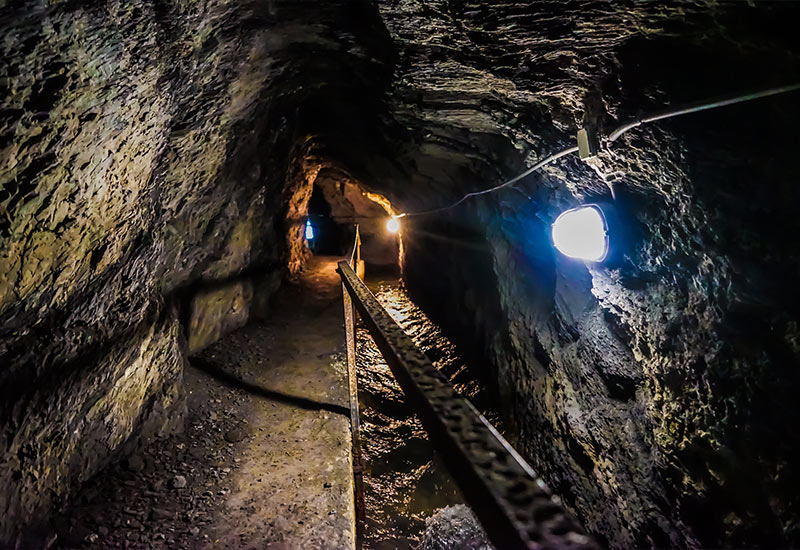
Underground mining depends on far more than a single cutting or drilling machine. Productive operations require an integrated equipment system capable of excavation, roadway development, ground support, drilling, material transportation, maintenance, and safe movement through confined underground environments.
Choosing the right underground mining equipment therefore requires more than comparing machine power or purchase price. Roadway dimensions, geological conditions, production targets, gradients, ground stability, transport distance, power supply, ventilation, maintenance resources, and the required level of automation all influence which equipment configuration will perform effectively.
For mine owners, contractors, engineers, and procurement teams, understanding how different machines fit into the overall mining cycle is the first step toward building a more productive fleet. This guide explains the major types of underground mining equipment, where they are used, what factors matter during selection, and how intelligent equipment is changing modern underground operations.
What Is Underground Mining Equipment?
Underground mining equipment refers to machinery designed to excavate, drill, support, transport, maintain, and perform other production tasks below ground.
Unlike equipment used in open-pit mines, underground machines frequently operate in restricted roadways where available width, height, turning radius, ventilation, visibility, and ground conditions impose significant design limitations.
A successful equipment configuration must therefore balance several requirements. A machine may need high cutting or drilling capacity, but it must also physically fit the roadway, maneuver through intersections, operate on the mine’s gradients, work with existing infrastructure, and integrate with upstream and downstream operations.
This is why underground mining equipment should be evaluated as part of a production system rather than as isolated machines.
Typical underground equipment categories include:
- Roadway tunneling and excavation equipment
- Roadheaders and bolter miners
- Hydraulic drilling and bolting rigs
- Roof and roadway support equipment
- Equipos de transporte auxiliares
- Underground monorail systems
- Roadway maintenance machinery
- Material loading and conveying equipment
- Roof-cutting and pressure-relief equipment
- Intelligent control and automation systems
Buyers evaluating a complete equipment configuration can explore different categories of underground mining equipment according to the required mining process.
Main Types of Underground Mining Equipment
Different stages of underground mine development require different equipment. Understanding the role of each machine helps procurement teams avoid over-specifying individual equipment while overlooking bottlenecks elsewhere in the production cycle.
| Tipo de equipo | Main Function | Typical Application | Important Selection Factors |
|---|---|---|---|
| Encabezado de carretera | Mechanical roadway excavation | Coal roadways and underground development | Rock hardness, cutting range, power, roadway section |
| Minero Bolter | Integrated excavation and bolting | Rapid roadway development | Geology, roadway size, bolting pattern, production cycle |
| Plataforma de perforación de anclaje hidráulica | Bolt, cable and exploration drilling | Roadway support and development | Drilling range, torque, boom coverage, roadway dimensions |
| Monorail Crane | Underground personnel/material transport | Long roadways and auxiliary transport | Load, gradient, route, power system |
| Máquina reparadora de carreteras | Roadway rehabilitation | Floor, wall and roadway maintenance | Working range, maneuverability, excavation demand |
| Equipo de perforación para corte de techo | Pressure-relief and roof cutting | Specialized mining methods | Hole requirements, drilling angle, geology |
| Integrated Tunneling System | Combines multiple roadway operations | High-efficiency mine development | Process compatibility, automation, mine layout |
The correct combination depends on how excavation, support, haulage, maintenance, and production are organized within the mine.
Equipos para túneles de carreteras
Roadway development is one of the most important stages of underground mining because production sections, transport routes, ventilation paths, pipelines, cables, and personnel access all depend on reliable roadway construction.
Moderno equipos de túneles de carreteras is designed to mechanize operations that were historically performed as separate cutting, loading, drilling, and support processes.
Encabezados de carreteras
A roadheader mechanically cuts coal or rock using a boom-mounted cutting head. Material removed from the face can then be gathered and transferred toward the mine’s conveying or haulage system.
Roadheaders are especially useful where flexible excavation profiles are required. Unlike equipment intended primarily for long, uniform circular tunnels, boom-type roadheaders can be suitable for roadway development where mine openings have rectangular, arched, or application-specific cross-sections.
When evaluating a roadheader, buyers should consider:
- Compressive strength and abrasiveness of the material
- Required roadway width and height
- Rango de corte
- Cutting motor power
- Machine dimensions
- Presión sobre el suelo
- gradiente operativo
- Loading and conveying capacity
- Dust-control requirements
- Ability to coordinate with support operations
El Rozadora de carretera tipo pluma EBH300 is one example of equipment developed for mechanized underground roadway excavation.
However, cutting capacity alone should never determine selection. If downstream loading, transportation, or bolting cannot keep pace with excavation, increasing roadheader capacity may not substantially improve overall advance rate.
Bolter Miners and Integrated Roadway Development
One of the major challenges in underground roadway construction is that excavation and support can become separate production bottlenecks.
A conventional cycle may require excavation to stop while another machine performs drilling and bolting. Repositioning equipment and coordinating different crews can increase non-productive time.
Integrated machines are designed to reduce this interruption.
A Minero Bolter combines multiple roadway development functions within one mechanized platform. Depending on configuration, functions may include excavation, loading, conveying, temporary support, drilling, and bolting.
The main value of integration is not simply that one machine performs more functions. The larger advantage is the possibility of shortening the complete excavation-support cycle.
For buyers, this creates an important principle:
Evaluate underground mining equipment according to total cycle performance rather than the maximum output of one machine.
A technically powerful cutting machine paired with slow support operations can still result in poor roadway advance. Integrated systems should therefore be assessed according to the entire sequence from cutting to permanent support.
Hydraulic Drilling Rigs for Underground Support
Excavation creates the roadway, but reliable ground support is required to maintain it.
Hydraulic drilling rigs are widely used for installing roof bolts, cable anchors, drilling exploration holes, performing pressure-relief drilling, and supporting roadway construction.
Modern mechanized drilling equipment can help reduce dependence on manual drilling while improving repeatability and coverage across the roadway section.
El Plataforma de perforación de anclaje hidráulico serie CMM2 is designed for mechanized drilling and anchoring applications in underground coal mine roadways.
What Should Buyers Check in a Mining Drilling Rig?
The most appropriate drilling rig depends on the actual support design rather than simply maximum drilling power.
Important factors include:
- Roadway cross-section
- Minimum and maximum working height
- Número de brazos de perforación
- Boom coverage
- Diámetro de perforación
- Required hole depth
- Par nominal
- Rotational speed
- Feed force
- Machine width
- Turning space
- Maximum operating gradient
- Roof and rib bolt requirements
Before requesting a quotation, buyers should provide the manufacturer with planned bolt length, hole diameter, installation angle, roadway dimensions, geology, and expected support cycle.
This information allows the equipment configuration to be matched to the mine instead of forcing the mine to adapt to a standard machine.
Underground Roof and Roadway Support Equipment
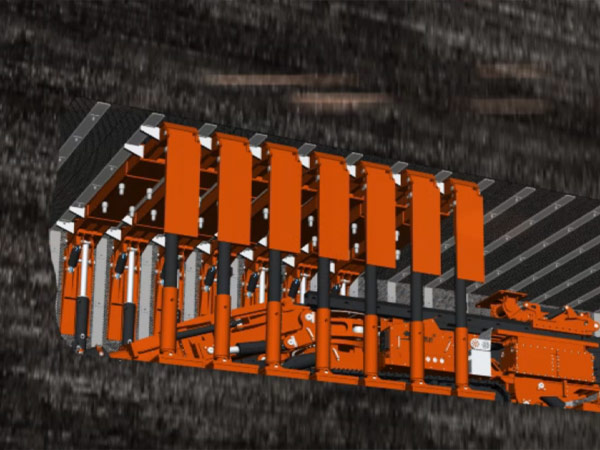
Ground control is a critical part of underground mine design.
Roof bolts, cable bolts, mesh, steel supports, temporary support systems, standing supports, and specialized drilling equipment can all form part of a roadway support strategy depending on geology and mine design.
Equipment selection must therefore be coordinated with the mine’s approved ground-control plan.
The U.S. Mine Safety and Health Administration’s roof-control guidance provides useful technical context on underground roof and ground support considerations.
From an equipment-selection perspective, buyers should examine whether the machine can perform the required support pattern without creating excessive repositioning or leaving critical sections outside its practical drilling range.
Key Questions for Support Equipment Selection
Before choosing a roof bolter or drilling system, determine:
- What is the roadway width and height?
- What roof conditions are expected?
- What bolt and cable lengths are specified?
- What is the required bolt spacing?
- Are rib bolts required?
- Is temporary roof support integrated into the machine?
- What drilling angles are needed?
- How many bolts are installed during each cycle?
- How quickly must permanent support follow excavation?
These engineering questions are much more useful than comparing machines according to price alone.
Equipo de transporte auxiliar
Excavation equipment often receives the most attention, but inefficient auxiliary transportation can significantly restrict underground productivity.
Materials, spare parts, drilling consumables, support materials, tools, components, and personnel all need to move between underground work areas.
The longer the mine develops, the more important an organized transportation system becomes.
Typical auxiliary transportation equipment may include monorail systems and specialized track vehicles designed for constrained underground routes.
Underground Monorail Cranes
Monorail systems travel along suspended rails and can provide an effective alternative where poor floor conditions, roadway congestion, or restricted transport routes make conventional ground-running equipment less practical.
Depending on the mine environment, power options may include:
- Battery-powered systems
- Electric systems
- Diesel-powered systems
Battery technology is receiving increased attention in mining as operators seek to reduce local diesel emissions and improve energy efficiency. NIOSH has also discussed the growing role of battery technologies in mining while emphasizing the importance of addressing battery-related fire and explosion hazards in underground environments through appropriate research and controls.
For hazardous coal mine environments, equipment configuration and applicable certification requirements are especially important. The Grúa monorraíl minera antideflagrante con alimentación a batería serie DX demonstrates one approach to battery-powered underground auxiliary transportation.
Why Transport Equipment Matters to Mine Productivity
Transportation is sometimes treated as a supporting function rather than a production variable. In practice, transport delays can directly affect roadway development.
Consider a roadheader capable of high excavation output. If roof-support materials arrive late, the development crew cannot complete support. If drill rods, spare parts, or mechanical components cannot be transported efficiently, equipment downtime increases.
A productive underground system therefore depends on synchronized flows:
Excavation → material removal → support → consumable supply → maintenance → equipment relocation.
Transportation capacity should consequently be calculated from expected daily demand rather than selected only according to the heaviest individual load.
Equipos de mantenimiento de carreteras
Underground roadways change throughout the operating life of a mine.
Floor heave, convergence, damaged roadway surfaces, accumulated material, localized deformation, and other conditions can reduce available clearance or interfere with equipment movement.
Roadway maintenance machinery is therefore another important part of the underground equipment fleet.
Its purpose may include:
- Roadway rehabilitation
- Floor excavation
- Dinting
- Loading removed material
- Restoring clearance
- Supporting repair work
- Maintaining transport routes
Selection should consider not only excavation capacity but also the machine’s ability to work within existing infrastructure.
A maintenance machine may need to operate around conveyors, pipelines, electrical cables, ventilation equipment, tracks, or installed support systems. Compact working geometry can therefore be as important as raw power.
Underground Mining Equipment Safety Considerations
Safety must be considered during equipment selection, not added after commissioning.
Underground operations combine moving machinery with confined workspaces, limited visibility, ground-control hazards, electrical systems, dust, noise, and frequent interaction between personnel and equipment.
El NIOSH Mining Program’s research on machinery and struck-by injuries highlights the importance of machine-person interaction and proximity risks, particularly where visibility is limited or workers operate close to mobile machinery.
Equipment buyers should evaluate:
- Sistemas de parada de emergencia
- Operator visibility
- Proximity detection compatibility
- Braking systems
- Interlocks
- Fire protection
- Lighting
- Warning devices
- Hydraulic protection
- Electrical protection
- Maintenance access
- Temporary support provisions
- Remote-control functions
- Applicable mine certification requirements
The safest equipment is not necessarily the machine with the longest list of safety features. Safety systems must also suit the actual operating method, mine layout, workforce, maintenance procedures, and regulatory environment.
How to Choose the Right Underground Mining Equipment
Procurement should start with mine conditions before comparing models.
A practical selection process can be divided into several stages.
1. Define the Mining Method
Equipment suitable for coal roadway development may differ considerably from machinery required for metal mining, hard-rock tunneling, maintenance, or specialized roof-cutting operations.
Define what the machine must actually accomplish.
2. Understand Geological Conditions
Record relevant information such as:
- Coal and rock strength
- Abrasiveness
- Roof stability
- Floor conditions
- Geological discontinuities
- Water conditions
- Expected variation along the roadway
A machine selected for one geological condition may perform very differently when strata change.
3. Measure the Roadway
Provide accurate:
- Width
- Height
- Cross-section
- Gradient
- Turning radius
- Intersection dimensions
- Minimum clearance
Do not rely only on nominal roadway dimensions. Pipes, cables, conveyors, ventilation ducting, supports, and other infrastructure can reduce the machine’s actual operating envelope.
4. Define the Production Target
Equipment should match required output.
For roadway development, buyers should evaluate target advance per shift or per day. For drilling equipment, support cycle and required number of holes may be more important. For transportation equipment, payload and transport frequency matter.
5. Check System Compatibility
A new machine must work with:
- Existing conveyors
- Power supply
- Support systems
- Transport network
- Ventilation system
- Maintenance facilities
- Underground communication systems
A high-performance machine that requires major modifications to the rest of the mine may not provide the lowest total project cost.
6. Evaluate Maintenance Requirements
Underground equipment operates under demanding conditions. Downtime can become expensive when critical machines stop production.
Ask the supplier about:
- Preventive maintenance intervals
- Common wear parts
- Recommended spare parts
- Hydraulic component availability
- Electrical component availability
- Diagnostic functions
- Remote technical support
- Operator training
- Maintenance training
- Commissioning support
Lifecycle support should be considered before purchase, not after the first major failure.
Equipment Selection by Application
A useful way to simplify procurement is to connect each operational problem with the equipment designed to solve it.
| Mine Requirement | Equipment to Evaluate |
| Rapid roadway excavation | Encabezado de carretera |
| Excavation plus mechanized bolting | Bolter Miner / Integrated Tunneling System |
| Roof and cable anchor installation | Plataforma de perforación de anclaje hidráulica |
| Long-distance auxiliary transport | Monorail Crane |
| Roadway rehabilitation | Máquina reparadora de carreteras |
| Floor excavation and loading | Dinting Machine |
| Roof cutting and pressure relief | Equipo de perforación para corte de techo |
| Integrated high-efficiency development | Rapid Tunneling and Bolting System |
This approach keeps equipment selection focused on operational requirements rather than machine names.
The Shift Toward Intelligent Underground Mining Equipment
Automation is gradually changing how underground equipment is designed and operated.
The goal is not simply to remove operators from machines. Intelligent mining focuses on making equipment more measurable, controllable, coordinated, and predictable.
Potential functions include:
- Remote operation
- Equipment condition monitoring
- Fault diagnostics
- Automated positioning
- Intelligent drilling control
- Electro-hydraulic control
- Proximity detection
- Operating data collection
- Fleet coordination
- Predictive maintenance
NIOSH research into mining machinery safety also demonstrates how technologies such as intelligent proximity detection can help address interaction risks between workers and moving equipment.
For mine operators, however, automation should solve a defined operational problem. Adding more sensors or software does not automatically increase productivity.
The stronger approach is:
Identify the bottleneck → determine what data or control is needed → integrate automation into the mining process → measure the result.
Building an Integrated Underground Mining System
The future of underground mining equipment increasingly lies in process integration.
Consider a roadway development project. Improving only the cutting machine may produce limited results if support, transportation, or maintenance cannot keep pace.
A stronger system coordinates:
- Geological assessment
- Roadway excavation
- Material loading and transfer
- Apoyo temporal
- Drilling and bolting
- Auxiliary transport
- Apoyo permanente
- Mantenimiento de equipos
- Operating data and control
YMHB’s soluciones mineras inteligentes cover rapid roadway excavation, auxiliary transportation, roadway support, and green mining applications, creating options for projects that require more than an individual machine.
From a procurement perspective, system integration can also simplify communication between equipment suppliers and mine engineers because operating requirements are considered across multiple production stages.
What Information Should You Send an Equipment Manufacturer?
One of the most common problems during equipment procurement is an incomplete RFQ.
Simply asking for “an underground mining machine” does not provide enough engineering information for accurate equipment selection.
Before contacting a manufacturer, prepare the following:
Mine Information
- Mine type
- Extracted material
- Mining method
- Country and applicable standards
- Underground operating environment
Geological Information
- Coal or rock hardness
- Abrasiveness
- Roof and floor conditions
- Geological variation
- Water conditions
Roadway Information
- Width
- Height
- Cross-section
- Gradient
- Turning radius
- Minimum clearance
Production Requirements
- Target advance rate
- Required drilling productivity
- Transport capacity
- Number of working shifts
- Expected annual operating hours
Technical Requirements
- Available voltage
- Required explosion protection
- Communication system
- Automation requirements
- Dust-control method
- Bolting pattern
- Hole diameter and depth
Providing these details early can significantly improve the quality of the equipment recommendation and quotation.
Questions to Ask an Underground Mining Equipment Supplier
A serious procurement process should examine far more than machine price.
Useful questions include:
- Can the machine be configured for our roadway dimensions?
- What geological conditions is the equipment designed to handle?
- Which components are expected to experience the highest wear?
- What spare parts should be stocked at the mine?
- What maintenance intervals are recommended?
- Is commissioning support available?
- Is operator and maintenance training provided?
- Which safety and certification requirements can the equipment meet?
- Can the hydraulic or electrical system be adapted to local requirements?
- What operating data can the machine record?
- Can the equipment integrate with our current mining system?
- What information is required before final model selection?
The answers can reveal much more about a supplier’s engineering capability than a simple price comparison.
Common Mistakes When Buying Underground Mining Equipment
Choosing by Maximum Power
More power does not automatically mean better productivity. If geology, roadway dimensions, support requirements, or downstream processes limit the machine, excess capacity may add cost without increasing output.
Ignoring Equipment Dimensions
A machine may technically perform the required work but still be unsuitable if it cannot pass through roadways or operate its booms within the available space.
Comparing Purchase Price Instead of Lifecycle Cost
Purchase price is only one part of total ownership cost.
Maintenance, wear parts, energy use, labor, downtime, logistics, training, and service availability can have a much greater long-term impact.
Selecting Machines Independently
Roadheaders, drilling rigs, support systems, and transport equipment affect one another.
Equipment should be selected around the complete mining cycle.
Sending an Incomplete RFQ
Without geology, roadway dimensions, production goals, and technical requirements, suppliers can only provide generic recommendations.
Better input leads to better equipment selection.
Preguntas frecuentes
What equipment is commonly used in underground mining?
Common underground mining equipment includes roadheaders, bolter miners, drilling rigs, roof bolters, loaders, conveying systems, underground transport equipment, monorail cranes, maintenance machines, and specialized support equipment. The exact fleet depends on mine type, geology, mining method, and production requirements.
How is underground mining equipment different from surface mining equipment?
Underground equipment generally needs to work in more restricted spaces and must account for roadway dimensions, limited visibility, ventilation, ground-support requirements, gradients, and applicable underground safety standards. Compact dimensions and maneuverability can therefore be as important as machine power.
What is a roadheader used for?
A roadheader mechanically excavates underground roadways using a boom-mounted cutting head. It can be used in mine roadway development and tunneling applications where flexible excavation profiles are required.
What equipment is used for underground roof support?
Roof-support operations may use hydraulic anchor drilling rigs, roof bolters, bolter miners, temporary support systems, and other ground-support machinery depending on the support design.
What is a mining monorail crane used for?
Mining monorail cranes transport materials, components, equipment, and in some configurations personnel through underground roadways using a suspended rail system. They can be especially useful where floor conditions or roadway congestion make conventional transport difficult.
What should buyers consider before purchasing underground mining equipment?
Important factors include geology, roadway dimensions, gradient, production target, power supply, safety requirements, machine compatibility, maintenance resources, spare-parts availability, automation requirements, and total lifecycle cost.
Is battery-powered equipment suitable for underground mines?
Battery-powered equipment can reduce local diesel emissions and support lower-emission underground operations, but battery chemistry, charging infrastructure, fire protection, explosion protection, certification, route requirements, duty cycle, and mine regulations must all be evaluated before deployment.
How can underground mines improve equipment productivity?
Productivity improves when equipment is matched to geology and production requirements and when excavation, support, transport, maintenance, and material supply are treated as one integrated system rather than separate operations.
Conclusión
Selecting underground mining equipment is ultimately a systems-engineering decision.
The best machine is not necessarily the largest, most powerful, or most automated option. It is the equipment that matches the mine’s geology, roadway geometry, production method, support requirements, transport network, safety rules, and maintenance capabilities while integrating effectively with the rest of the operation.
Roadheaders can accelerate excavation, hydraulic drilling rigs can mechanize support work, monorail systems can improve auxiliary transportation, and integrated bolter miners can reduce interruptions between excavation and support. Their real value, however, depends on how well they work together.
For new mine projects, roadway development programs, equipment upgrades, or underground fleet optimization, procurement teams should define operating conditions before comparing machine models.
Explore YMHB’s complete range of equipo de minería y underground mining solutions. If you are preparing a new project, you can also contact the YMHB engineering team with your geology, roadway dimensions, production targets, and technical requirements to discuss a suitable equipment configuration.