

Mining transportation is the backbone of any successful mining operation. Whether you are managing underground tunnels, surface pits, or equipment yards, the choice of transportation vehicles directly affects efficiency, safety, cost, and sustainability. With advancements in automation, battery technology, and smart monitoring systems, the landscape of mining transportation has evolved rapidly in recent years.
This article provides a comprehensive comparison of leading mining transportation vehicles, ranging from flameproof battery-powered monorail cranes to cutting-edge track beam installation systems. By the end, you’ll understand the strengths and limitations of each solution, backed by industry data, expert insights, and practical decision‑making frameworks relevant to modern mining operations.
Table of Contents
Why Mining Transportation Matters More Than Ever
Operational Efficiency and Productivity
Mining transportation systems enable movement of tools, support structures, extracted ore, and construction materials. Efficient systems reduce idle time, improve cycle times, and contribute to consistent throughput. According to Global Mining Review (2024), optimized transportation can improve ore transport efficiency by 20–35%, directly influencing production KPIs.
Safety and Risk Mitigation
Transporting heavy equipment underground or across rough terrain comes with inherent risks. Human‑driven vehicles contribute to a higher incident rate due to fatigue, unpredictable operator behavior, and visibility limitations. Modern mining transportation technologies, especially those integrating automation and remote monitoring, significantly reduce these risks.
Sustainability and Environmental Impact
Regulatory pressure and corporate ESG commitments are pushing mines toward cleaner operations. Electric and battery‑powered vehicles contribute to lower emissions, reduced noise pollution, and improved air quality, which align with international sustainability goals such as the Global Mining Sustainability Standard (GMSS 2030).
What Defines Mining Transportation Vehicles?
Mining transportation vehicles include a variety of mechanical systems that move materials and equipment within mining environments. These can range from cranes and monorail systems to auxiliary track installation vehicles and automated support solutions. Effective mining transportation solutions typically share key attributes:
- Traction and load capacity
- Mobility in restricted or irregular spaces
- Safety certification (e.g., flameproof design)
- Power source (battery vs. electric vs. hybrid)
- Integration with automation and remote operation systems
Advanced Safety and Performance Standards in Mining Transportation
Before comparing specific vehicles, it’s important to understand the standards and regulatory backdrops influencing mining transportation design:
Flameproof and Explosion‑Proof Design
Certain mining environments contain combustible gases or dust. Flameproof mining transportation equipment meets safety standards such as IECEx, ATEX, and local mining safety regulations. These ensure components do not ignite hazardous atmospheres.
Ergonomics and Operator Safety
Whether vehicles are manually driven or automated, features like emergency stop systems, remote controls, and ergonomic design improve safety outcomes. The International Mining Safety Council (IMSC) reports that proper ergonomic design can reduce worker injury rates by as much as 40%.
Automation and Connectivity Standards
Advanced mining transportation systems leverage IoT and digital communication protocols. Mining transportation vehicles that integrate with dashboard systems (via LAN, cloud, or private network) enable predictive maintenance and real‑time monitoring—essential for modern, data‑driven operations.
Mining Transportation Vehicles in Focus
Below we evaluate several key mining transportation vehicles with real product parameters and operational contexts.
DX‑SERIES Flameproof Battery‑Powered Mining Monorail Crane
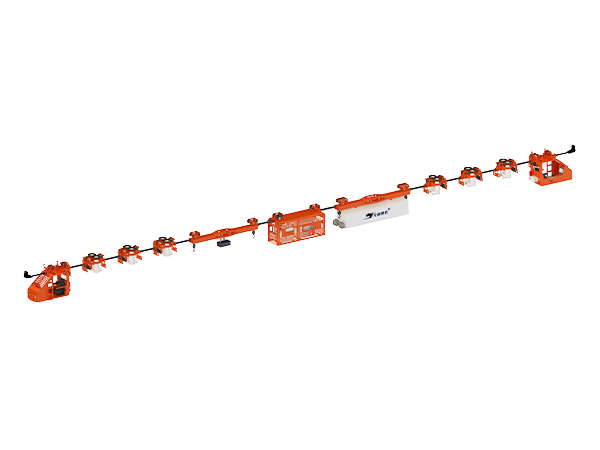
Overview
The DX‑SERIES crane is engineered for challenging underground and surface mining applications. Its flameproof design and battery power make it ideal for environments where exhaust emissions, waste liquids, and noise must be minimized.
Key Strengths
- Adaptability: Performs on uneven and deformed roadways without performance loss.
- Passability: Can navigate narrow or confined spaces typical of underground mining.
- Eco‑Friendly: Zero exhaust and noise emissions contribute to safer working conditions.
Technical Capabilities
| Parameter | DX120/72P | DX100/60P | DX80/48P | DX60/36P | DX40/24P |
|---|---|---|---|---|---|
| Max Traction Force (kN) | 120 | 100 | 80 | 60 | 40 |
| Emergency Braking Force (kN) | 180–240 | 150–200 | 120–160 | 90–120 | 60–80 |
| Max Speed (m/s) | 2 | 2 | 2 | 2 | 2 |
| Max Gradeability (°) | 15 | 15 | 15 | 15 | 15 |
| Battery Capacity (Ah) | 560–730 | 560–730 | 560–730 | 560–730 | 560–730 |
| Endurance Mileage (km) | 20–24 | 20–24 | 20–24 | 20–24 | 20–24 |
Applications
Ideal for transporting heavy mining materials and support structures within underground tunnels, making it a versatile choice for mid‑ to large‑scale operations.
DDD30 Electric Monorail Crane
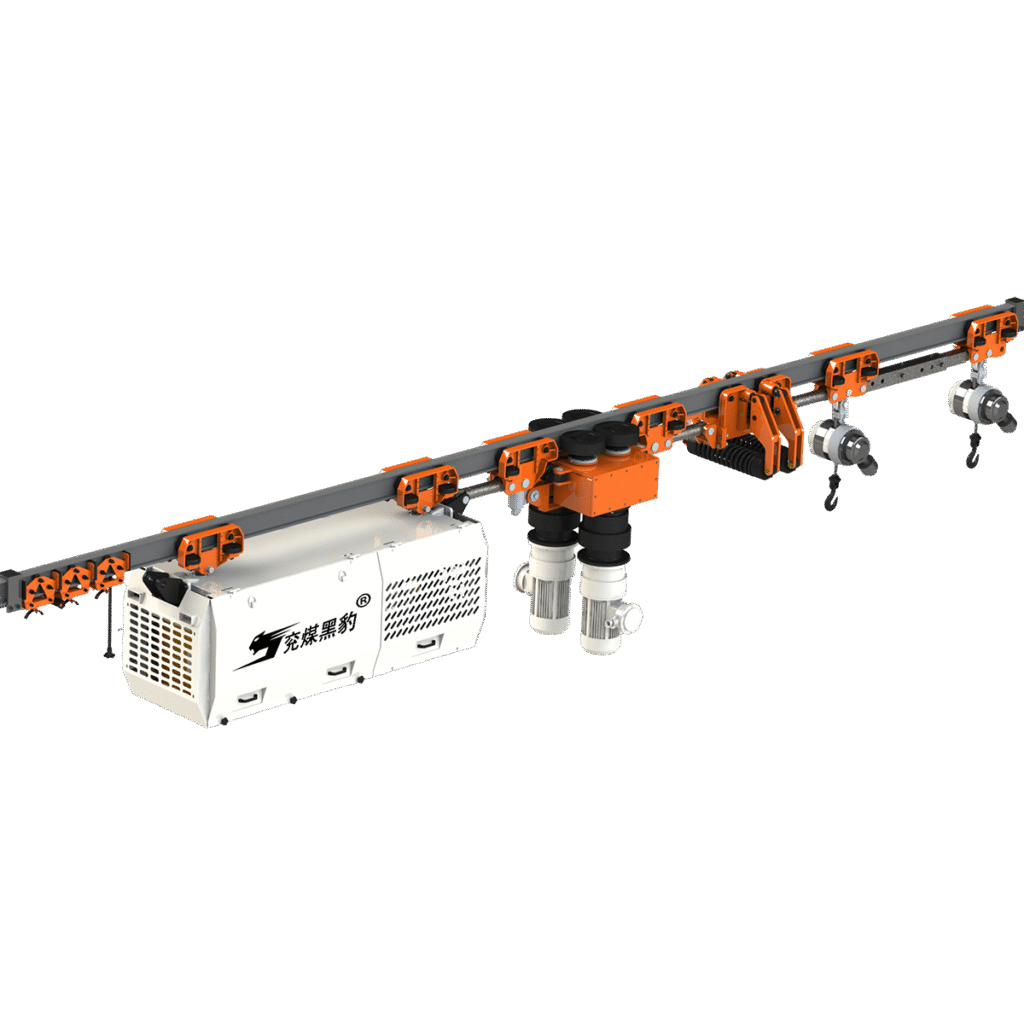
Overview
The DDD30 crane emphasizes reliability and safety. It integrates advanced protection systems and is optimized for enclosed or facility‑based mining work where space is confined.
Key Strengths
- Wireless Flameproof Remote Control: Improves operator safety and flexibility.
- Multiple Protection Systems: Shields personnel and equipment from hazards.
- Low Maintenance: High reliability with easy upkeep.
Technical Snapshot
- Rated Traction Force: 30 kN
- Maximum Speed: 0.4 m/s
- Hoisting Capacity: 10 tons
- Control Method: Wireless flameproof remote
Applications
Best for precise lifting tasks, limited spaces, and maintenance hubs where reliability and low downtime are key.
DL‑SERIES Lithium Battery‑Powered Monorail Crane
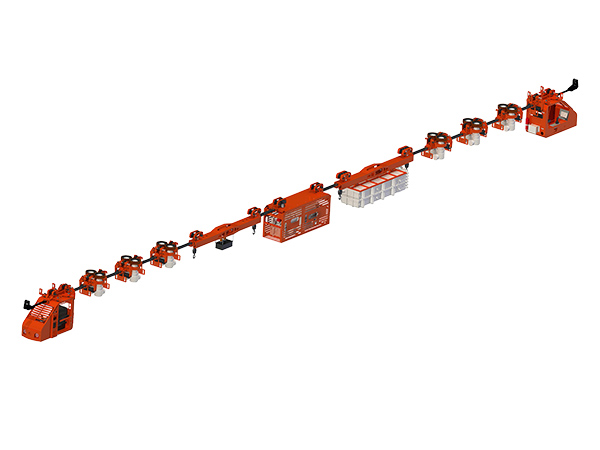
Overview
The DL‑SERIES replaces traditional battery systems with fast‑charging lithium technology, enabling extended operational cycles and reduced downtime.
Key Strengths
- Quick Charging (1.5–2 hours): Minimizes operational interruptions.
- Enhanced Safety & Efficiency: Efficient one‑time transport and installation of heavy support components.
- Advanced Automation Ready: Pre‑installed interfaces for unmanned operation and intelligent marshaling.
Technical Comparison
| Model | Max Traction (kN) | Gradeability (°) | Battery Capacity | Endurance Mileage (km) |
|---|---|---|---|---|
| DL120/72P | 120 | 25 | 2×74 kWh | 20–24 |
| DL80/48P | 80 | 25 | 2×74 kWh | 20–24 |
| DL40/24P | 40 | 25 | 2×74 kWh | 20–24 |
Applications
Ideal for large mines with frequent vehicle movement and long operational cycles where battery performance and charging speed are differentiators.
CGYJ‑22/4.2 Mining Track Beam Auxiliary Installation Vehicle
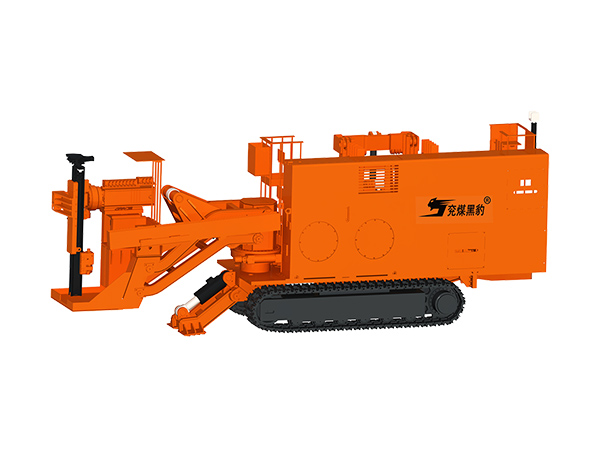
Overview
This vehicle enhances mining support workflows by combining drilling and track installation in one mechanism, reducing labor intensity and safety risks.
Key Strengths
- Simultaneous Drilling & Installation: Streamlines previously sequential tasks.
- Modular Adaptability: Compatible with different track models.
- Reduced Labor Strain: Mechanization minimizes physical workload.
Technical Specifications
- Applicable Tunnel Width × Height: 3–5.5 m × 2.8–4.7 m
- Minimum Turning Radius: 4500 mm
- Total Machine Weight: 18±5% t
Applications
Designed for rapid track construction and infrastructure assembly, particularly in new mining tunnel development.
One‑to‑One Type Flameproof Battery‑Powered Monorail Crane
Overview
A powerful option for heavy‑duty transport, the One‑to‑One crane delivers robust torque, extended endurance, and high safety redundancies.
Key Strengths
- High Traction Force (up to 360 kN): Supports steep gradient operations.
- Independent Motor Control: Allows selective disconnection of motors in failure scenarios.
- Enhanced Coordination: Ensures uniform force distribution and smooth operation.
Technical Snapshot
| Model | Max Traction Force (kN) | Operating Speed (m/s) | Number of Drive Units | Power Supply (Ah) |
|---|---|---|---|---|
| DL360/296Y | 360 | 2 | 12 | 4×74 kWh |
| DL210/296Y | 210 | 2 | 7 | 4×74 kWh |
Applications
Perfect for operations requiring continuous heavy lifting, steep gradients, or rapid material movement — common in both underground and surface mining.
Comparative Analysis: Mining Transportation Vehicles
Choosing the right vehicle requires understanding trade‑offs across performance, safety, energy use, and cost:
| Feature | DX‑SERIES | DDD30 | DL‑SERIES | CGYJ‑22/4.2 | One‑to‑One |
|---|---|---|---|---|---|
| Traction Force | High (40–120 kN) | Medium (30 kN) | High (40–120 kN) | N/A | Very High (up to 360 kN) |
| Speed (m/s) | 2 | 0.4 | 2 | N/A | 2 |
| Battery Tech | Lead‑acid | Electric | Lithium | Electric | Lithium |
| Safety | Flameproof | Flameproof | Flameproof | Mechanized | Flameproof |
| Automation | Ready | Limited | Ready | Limited | Ready |
| Ideal Use | General mining | Light tasks | Large mines | Track installation | Heavy‑duty transport |
Key Insight:
- For heavy material transport, One‑to‑One cranes outperform others due to superior traction and safety redundancies.
- For confined space and mid‑range operations, DL‑SERIES strikes the best balance of speed, efficiency, and automation readiness.
- For specialized tasks like track beam installation, auxiliary vehicles like CGYJ‑22/4.2 deliver targeted productivity improvements.
Trends Shaping Mining Transportation in 2026 and Beyond
Electrification and Zero Emissions
Battery‑powered systems eliminate exhaust, helping mines meet stricter environmental standards. ISO estimates that electrifying transport reduces greenhouse gas emissions by up to 40% in underground operations.
Automation and Remote Management
Remote monitoring reduces human presence in hazardous zones. Integration with IoT platforms enables real‑time alerts, predictive diagnostics, and fleet coordination.
Safety Intelligence and AI
Machine learning algorithms detect patterns indicating potential failures or hazards, allowing preemptive interventions before accidents occur.
Expert Insights on Mining Transportation Selection
Dr. Li Menghua, Mining Engineering Specialist:
“Selecting the right mining transportation vehicle is not just about capacity. It’s about matching operational profiles — whether that’s steep gradient transport, confined tunnels, or extended endurance — with technologies that prioritize safety and long‑term reliability.”
Ms. Emma Rodríguez, Operations Director at Global Mine Services:
“Battery‑powered and flameproof solutions have dramatically improved both safety indices and operational uptime. Mines that adopt lithium battery solutions see 20% less downtime and enhanced operator confidence.”
Conclusion
The world of mining transportation is rapidly advancing, driven by innovations in battery technology, automation, and safety engineering. Vehicles like the DX‑SERIES, DL‑SERIES, One‑to‑One cranes, and specialized auxiliary equipment provide tailored solutions to the diverse challenges of modern mining.
By comparing key parameters — traction force, gradeability, safety features, and energy systems — mining operators can select transportation vehicles that not only meet performance requirements but also align with safety goals and sustainability mandates. With the right choice, mining transportation becomes a critical enabler of productivity, safety, and long‑term operational success.
FAQ
Q1: What’s the biggest advantage of lithium battery‑powered transportation systems?
A1: Faster charging, higher energy density, and longer cycle life compared to traditional batteries, meaning less downtime and greater operational continuity.
Q2: Can automated mining cranes operate without human supervision?
A2: With proper safety protocols and remote monitoring, many systems support unattended operation in designated zones, significantly reducing risk.
Q3: Are flameproof vehicles necessary for all mines?
A3: Not always. Flameproof designs are essential in environments with combustible gases. Surface mines or open pits may not require them.
Q4: How do I choose the right transportation vehicle?
A4: Base the choice on load weight, tunnel size, gradeability, energy source, and integration with automation platforms.
Q5: What maintenance practices improve longevity?
A5: Regular sensor calibration, battery health checks, predictive diagnostics, and adherence to manufacturer service cycles.
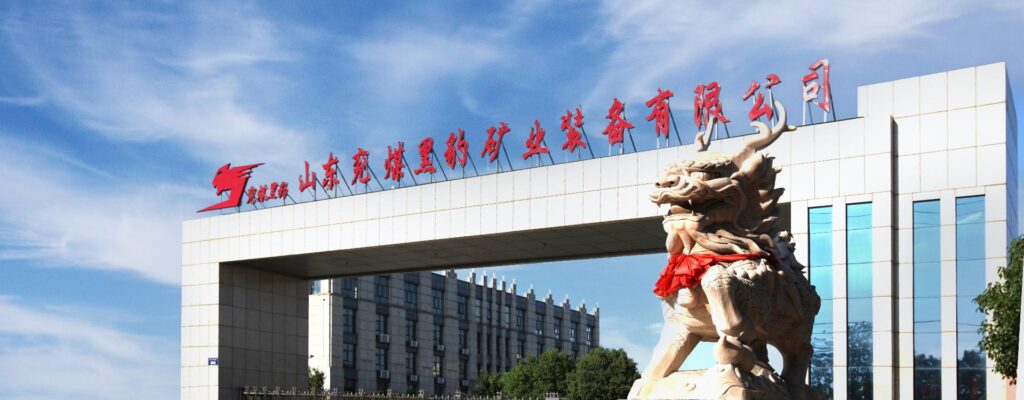
Welcome to Shandong Yanmei Heibao Mining Equipment Co., Ltd.! Since 2002, we’ve been redefining mining with intelligent equipment, delivering safer, more efficient, and sustainable solutions.
📌 Follow us for updates and insights:
- Facebook: Shandong Yanmei Heibao
- YouTube: Shandong Yanmei Heibao Channel
Join us to explore innovation and excellence in mining—together!