

Table of Contents
Introduction

Underground mining utility vehicles form the foundation of modern mining logistics. These machines are engineered to handle heavy transport, lifting, and installation tasks deep below the surface—where reliability, safety, and adaptability are crucial.
As the global mining industry transitions toward smarter, cleaner, and more automated operations, utility vehicles play a leading role in improving productivity while reducing environmental impact.
The evolution from diesel-powered haulers to intelligent electric and flameproof models marks a milestone in underground mining modernization.
A Brief History: From Manual Haulage to Electrified Intelligence
Early Mechanization in Mining
Mining once relied heavily on manual hauling, rail carts, and mechanical winches. These systems were limited by human labor and inefficient fuel consumption.
Diesel Revolution and Its Limitations
Diesel-powered mining vehicles brought greater mobility and strength but also introduced challenges—heat, fumes, and ventilation demands—especially in deep underground mines.
Electrification and Intelligent Control Systems
Today’s underground mining utility vehicles leverage battery power, flameproof protection, and digital control systems. This not only improves safety but also aligns with sustainable mining goals.
Core Concepts Behind Modern Underground Mining Utility Vehicles
Flameproof Engineering
Flameproof (explosion-proof) vehicles are built with sealed motor housings and spark-protection systems, ensuring operational safety in gas-rich or explosive underground environments.
Battery Efficiency and Range
Lithium-ion batteries provide extended endurance—up to 20–24 km per charge—while reducing charging downtime to 1.5–2 hours. This enables continuous operation across shifts.
Remote and Autonomous Operation
Wireless remote control and network-based supervision systems allow operators to monitor vehicles in real time, even from the surface, minimizing on-site risk.
Energy Regeneration
Reverse charging technology captures potential energy during downhill travel, converting it into usable electric power and enhancing overall efficiency.
Categories of Underground Mining Utility Vehicles
Electric Monorail Cranes
Electric monorail cranes are compact and efficient, designed to move along overhead tracks for lifting and transporting materials. Their modular structure offers high passability in narrow tunnels.
Battery-Powered Utility Cranes
These vehicles rely entirely on rechargeable lithium battery systems, offering clean, quiet, and efficient operation. They support intelligent automation interfaces for data tracking and control.
Flameproof Mining Cranes
For hazardous environments such as coal seams with explosive gases, flameproof cranes ensure safe performance through fully sealed systems and multi-layer electrical protection.
Auxiliary Installation Vehicles
Designed for infrastructure support, auxiliary installation vehicles assist in drilling and track beam setup, greatly improving installation speed and reducing human workload.
Technical Benchmark: Comparing Model Performance
DDD30 Electric Monorail Crane
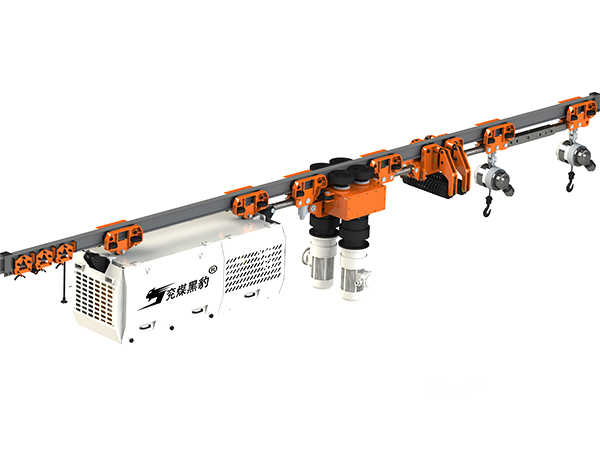
Compact, efficient, and emission-free, the DDD30 provides excellent traction and safety through wireless remote control. It reduces worker labor intensity and ensures stable operation with multiple protection systems.
Ideal for: Underground coal mines and confined tunnels where maneuverability and safety are paramount.
DL-Series Lithium Battery-Powered Monorail Crane
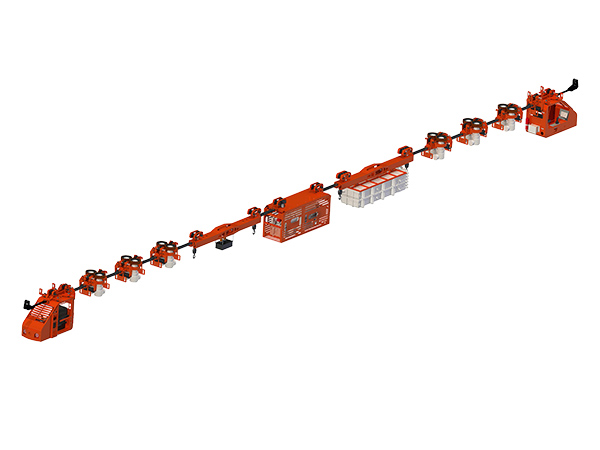
This series delivers exceptional adaptability to uneven tunnels, quick 1.5-hour charging, and intelligent interfaces for unmanned operation.
Key Advantages: Remote control via LAN or internet, strong adaptability, and environmental sustainability.
DX-Series Flameproof Battery-Powered Mining Monorail Crane
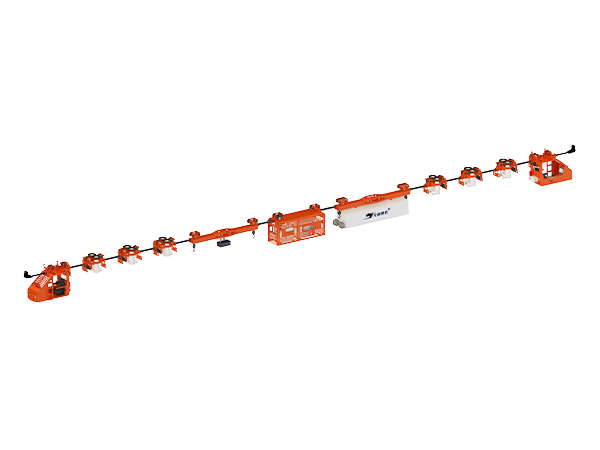
Built for hazardous environments, the DX-Series combines flameproof safety with energy regeneration through reverse charging.
Highlights: Zero emissions, strong passability, and high energy utilization for long operations in deep mines.
One-to-One Type Flameproof Battery-Powered Monorail Crane
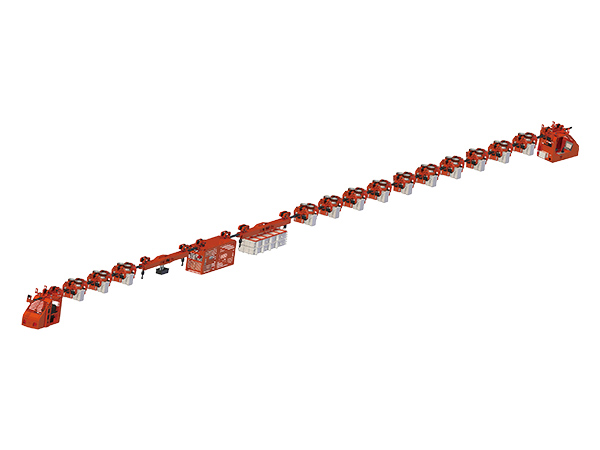
With traction up to 360 kN, this model offers unparalleled power and reliability. Each motor is independently controlled for even load distribution and system redundancy.
Best For: Heavy-duty lifting and transport on steep gradients.
CGYJ-22/4.2 Mining Track Beam Auxiliary Installation Vehicle
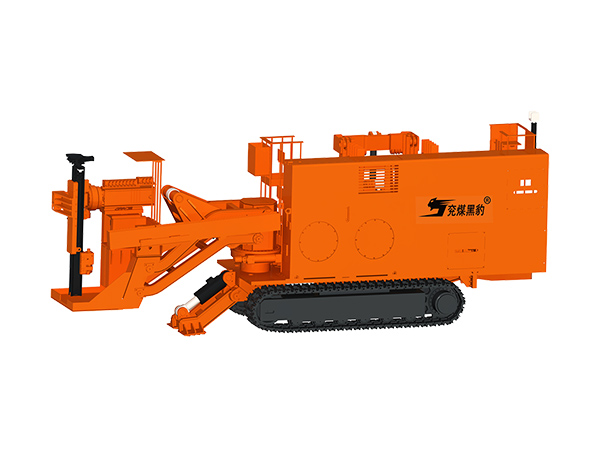
A purpose-built vehicle that integrates drilling and track installation, improving efficiency and installation precision.
Benefit: Mechanized operation reduces manual workload while enhancing installation safety and speed.
Below is a performance comparison table among several representative models of underground mining utility vehicles. It provides a technical overview of power, traction, and endurance across different equipment classes.
| Model | Type | Max Traction (kN) | Max Speed (m/s) | Gradeability (°) | Battery Capacity (kWh) | Endurance (km) | Key Feature |
|---|---|---|---|---|---|---|---|
| DDD30 | Electric Monorail Crane | 30 | 0.4 | 8 | – | 12 | Compact, wireless remote control |
| DL120/72P | Lithium Battery Monorail | 120 | 2.0 | 25 | 148 | 20–24 | Fast charging (1.5–2h), eco-friendly |
| DX120/72P | Flameproof Battery Monorail | 120 | 2.0 | 15 | 148 | 20–24 | Reverse charging, high safety |
| DL360/296Y | One-to-One Flameproof Monorail | 360 | 2.0 | 25 | 296 | 20–24 | Multi-motor drive, heavy-duty lifting |
| CGYJ-22/4.2 | Track Beam Installation Vehicle | – | – | 18 | – | – | Drilling + beam installation combined |
The table shows a clear pattern: as traction and capacity increase, the vehicles’ role shifts from light material handling to large-scale infrastructure and heavy support installation.
The Role of Design and Engineering in Mining Safety
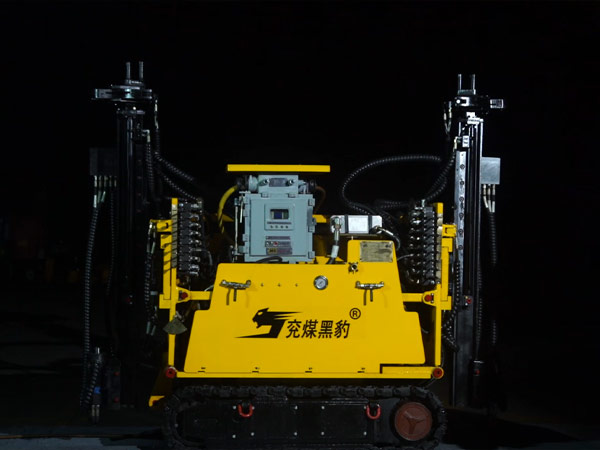
Compact Structural Design
A well-designed structure reduces turning radius and increases tunnel passability. The DDD30 Electric Monorail Crane, for instance, can navigate horizontal radii as tight as 4 meters.
Integrated Safety Systems
Advanced overload protection, anti-slip control, and braking systems ensure safe operation under dynamic underground conditions.
Operator-Centered Design
By adopting wireless remote controls and ergonomic interfaces, modern mining vehicles reduce operator fatigue and enhance productivity.
Sustainability and Environmental Benefits
Zero Emissions and Noise Reduction
Battery-powered mining vehicles eliminate diesel fumes and noise, reducing ventilation needs and improving worker health conditions.
Efficient Energy Utilization
Reverse charging and regenerative braking systems improve overall energy conversion rates, lowering power consumption and operational costs.
Lifecycle Optimization
Longer service intervals, reduced mechanical wear, and minimal maintenance requirements make battery-powered systems more cost-effective over time.
Understanding Battery-Powered and Flameproof Variants
Battery-Powered Mining Vehicles
These vehicles excel in clean operations and easy maintenance. Their modular battery packs can be swapped or charged quickly, ensuring flexible operation across shifts.
Flameproof Mining Vehicles
Built for extreme safety, these machines incorporate sealed compartments, temperature sensors, and spark-proof connectors to prevent ignition in gas-laden tunnels.
Choosing the Right System
Selecting between battery-powered and flameproof designs depends on the mine’s environment. In methane-rich or explosive zones, flameproof vehicles are a regulatory requirement.
Performance Comparison: Battery vs. Flameproof Systems
Operational Safety
Flameproof vehicles provide superior explosion resistance, while battery-powered models focus on environmental safety and energy efficiency.
Energy Recovery Efficiency
Flameproof systems equipped with reverse charging technology can recover up to 15% of energy during downhill transport.
Maintenance and Downtime
Battery-powered models generally require less frequent maintenance, thanks to simplified electrical systems and fewer moving parts.
Real-World Applications of Underground Mining Utility Vehicles
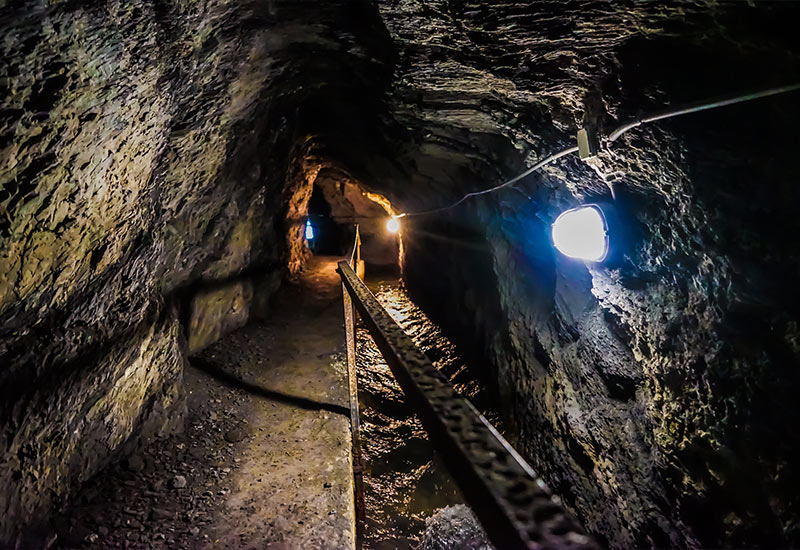
Coal Mines
Electric and flameproof monorail cranes transport supports, equipment, and materials efficiently while ensuring compliance with gas explosion standards.
Metal Mines
Battery-powered systems offer flexibility in non-explosive zones, supporting ore transport and machinery relocation.
Tunnel Construction
Track beam installation vehicles streamline drilling, mounting, and structural assembly, saving hours of manual labor.
Emergency and Rescue Operations
Utility vehicles equipped with modular attachments can assist in emergency evacuations, equipment retrieval, and post-accident maintenance.
Emerging Trends in Underground Mining Technology
Automation and Intelligent Coordination
Integration of AI scheduling, IoT connectivity, and digital twins enhances operational planning and equipment coordination underground.
Solid-State Battery Advancement
Future vehicles will feature higher-density solid-state batteries, reducing weight and extending range by up to 30%.
Hybrid Energy Systems
Combining battery and kinetic energy recovery will make underground transport more efficient and self-sustaining.
Unmanned Driving Integration
Pre-installed interfaces for unmanned driving allow full automation potential as AI navigation systems evolve.
Concept Focus: The Green Mining Revolution
“Green mining” is not just an environmental slogan—it represents a full-scale transformation toward sustainable operations.
Underground mining utility vehicles are central to this shift, driving reductions in emissions, energy use, and safety risks while increasing efficiency and automation.
Concept Focus: Intelligent Maintenance
Predictive maintenance powered by data analytics ensures timely service scheduling, reduces unexpected failures, and maximizes equipment lifespan—lowering operational costs in the long term.
FAQ
What makes underground mining utility vehicles different from surface equipment?
They are specifically engineered for confined, low-clearance spaces and are optimized for safety, durability, and maneuverability in hazardous underground conditions.
How long can battery-powered mining vehicles operate on a single charge?
Depending on model and load, most vehicles can run for 20 to 24 kilometers per charge, enough for a full operational shift in most mines.
Are flameproof models mandatory in every underground mine?
Only in environments where combustible gases or dust are present. Non-flameproof, battery-powered vehicles are suitable for metal and non-gassy mines.
What are the main advantages of lithium battery systems in mining?
They offer higher energy density, faster charging, and longer life cycles than traditional lead-acid systems, making them ideal for continuous mining operations.
Can underground mining utility vehicles be remotely or autonomously controlled?
Yes. Most modern models include pre-installed interfaces for LAN- or Internet-based control, enabling semi-autonomous or fully unmanned operation.
What’s the average maintenance cost compared to diesel vehicles?
Battery-powered vehicles typically reduce maintenance costs by 30–40% due to fewer mechanical components and lower wear rates.
Conclusion
Underground mining utility vehicles are redefining how modern mines operate—combining strength, intelligence, and sustainability in one system.
By integrating electrification, automation, and flameproof safety, these vehicles ensure reliable performance while supporting the global transition toward greener, smarter mining operations.
As technology advances, the role of these machines will continue to expand—forming the backbone of the next generation of intelligent, emission-free mining systems.

Welcome to Shandong Yanmei Heibao Mining Equipment Co., Ltd.! Since 2002, we’ve been redefining mining with intelligent equipment, delivering safer, more efficient, and sustainable solutions.
📌 Follow us for updates and insights:
- Facebook: Shandong Yanmei Heibao
- YouTube: Shandong Yanmei Heibao Channel
Join us to explore innovation and excellence in mining—together!