

Table of Contents
Introduction

For decades, conventional underground coal mining has relied on reserving large coal pillars around roadways to maintain structural stability. While safe, this approach presents two critical challenges:
- Resource underutilization: Coal trapped in pillars remains unmined, significantly limiting the overall coal recovery rate.
- High dynamic disaster risk: Pillars accumulate immense geological stress, often triggering rock bursts, gas outbursts, and impact ground pressure, posing serious threats to personnel and equipment.
The 110/N00 Pillarless Mining Method was developed in response to these challenges, marking a milestone in China’s “third exploration” of mining technology. Guided by Academician He Manchao’s Cut-Roof Short-Cantilever Beam Theory, this method shifts the mining paradigm from passively resisting geological stress to actively utilizing and controlling it. Recognized nationally, the method is included in State Council policies and the Made in China 2025 initiative, highlighting its strategic importance in intelligent and sustainable mining.
Foundational Principles: The Dual Strategy of the 110/N00 Method
The 110/N00 method integrates two core processes that enable continuous pillarless mining, maximizing coal recovery while ensuring roadway safety.
Roof Cutting and Targeted Pressure Relief
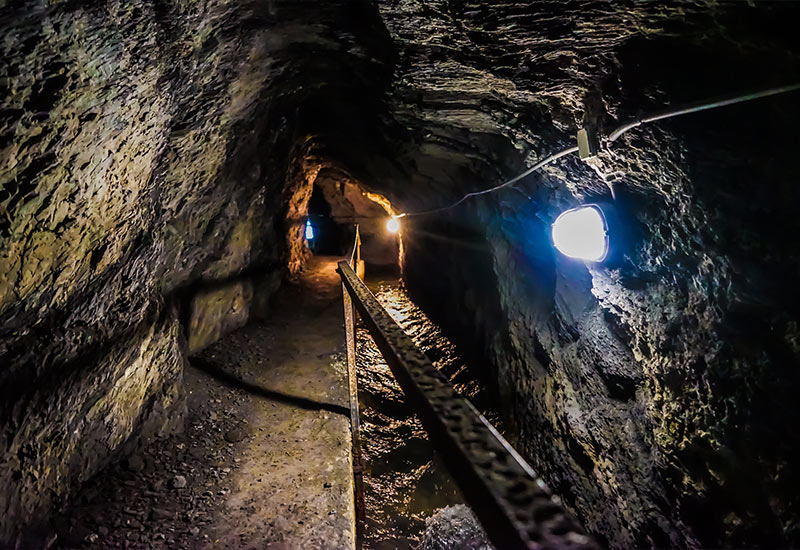
The first pillar actively isolates the roadway from the stress of the collapsing goaf roof.
Stress Isolation Belt Concept
Specialized boreholes are drilled with precise orientation, depth, and spacing using high-precision roof-cutting drill rigs. Controlled blasting fractures the roof along a predefined line, severing the mechanical connection between the goaf roof and roadway roof.
Redirection of Stress
This creates a stress isolation belt, directing caving pressure into the deeper goaf rather than the roadway. This proactive stress management significantly reduces mining-induced damage and prepares the entry for safe retention.
Gob-Side Entry Retaining and Reuse

The second pillar enables continuous reuse of the stabilized roadway, eliminating repeated tunneling.
Synergistic Support System
As mining progresses, collapsed goaf roof is partially filled with gangue. On the roadway side, high-water materials or paste-based fillings are installed alongside hydraulic props and steel beams.
Maintaining Stability
The pre-relieved stress ensures that retained entries remain stable, allowing direct reuse for ventilation or material transport. This approach fully unifies mining and tunneling operations, converting traditional twin-roadway faces into single-entry continuous pillarless mining.
N00 Method Upgrade
The N00 variant further eliminates the need for recovery roadways, completing the transition to zero-entry mining and achieving maximum coal recovery with minimal excavation.
Technical Parameters, Precision, and Equipment
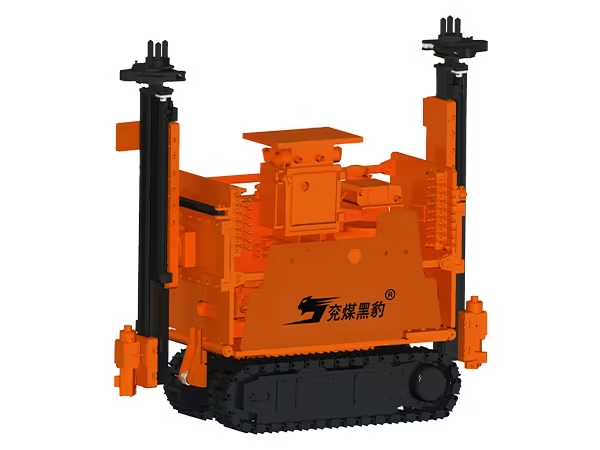

Implementation of the 110/N00 Pillarless Mining Method requires precision engineering and real-time monitoring.
Achieving Precision in Roof Control
Strict Control over Blasting Parameters:
The effectiveness of pressure relief depends on optimal charging quantity and initiation sequence. Undercharging may fail to sever the roof, while overcharging risks uncontrolled caving. Numerical modeling and site testing guide the development of the optimal blasting plan.
Ensuring Drill Hole Accuracy:
Orientation, depth, and spacing of boreholes must be tightly controlled. The CMO2-400/45 (K) Coal Mine Roof-Cutting Drill Rig, equipped with real-time measurement systems, enables continuous monitoring and adjustment, ensuring a precise fracture line.
Designing Robust Roadside Support
Adapting Support Structures:
Technical design typically follows a “strong rib, weak roof” principle, combining flexible and rigid components to absorb dynamic deformation energy.
The Role of the CMM2-8 Bolting Jumbo:
For retained entries, high-quality anchoring using constant resistance cables and other reinforcements ensures stability against mining-induced deformation. Integration with intelligent bolting modules allows continuous adjustment based on real-time data.
Operational Comparison: Traditional vs. Pillarless Methods
| Feature | Traditional Pillar Mining | 110 Method (Single Entry) | N00 Method (Zero Entry) |
|---|---|---|---|
| Coal Resource Recovery | Limited; large portion left in pillars | Significantly enhanced; pillars abolished | Maximized |
| Required Roadway Excavation | Twin-roadway | Single-entry | Zero recovery roadway excavation |
| Safety Risk | High; stress accumulation in pillars | Significantly reduced | Low risk |
| Cost & Efficiency | High; repeated tunneling | Reduced; faster cycle | Maximum efficiency; highest cost reduction |
| Technical Guidance | Traditional rock mechanics | Cut-Roof Short-Cantilever Beam Theory | Cut-Roof Short-Cantilever Beam Theory |
The N00 method represents the ultimate evolution, progressing from reducing tunneling (110 Method) to eliminating recovery roadways entirely, fully integrating mining and tunneling processes.
Practical Application and Viability (Project Cases)
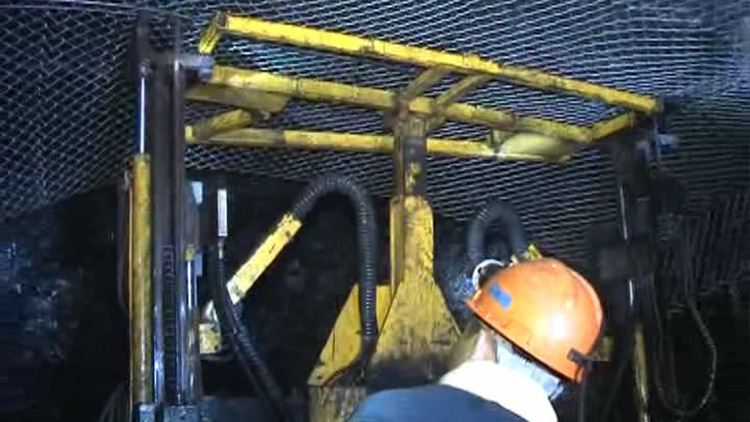
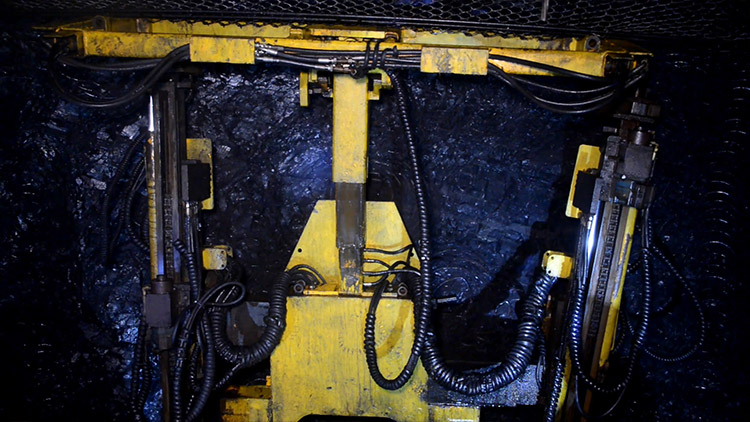
The 110/N00 Pillarless Mining Method is most effective in mines with specific geological and operational conditions. Careful planning and adherence to technical parameters are essential to ensure safety, efficiency, and maximum coal recovery.
Suitable Geological Requirements
1. Roof Integrity:
- The method requires a stable, medium-hard roof that can maintain structural integrity after roof-cutting.
- Controlled fracturing is essential for forming the stress isolation belt. Irregular or highly fragmented roofs may prevent predictable stress transfer and lead to chaotic goaf caving, increasing the risk of roadway instability.
- Roof strata should exhibit clear bedding or joint structures to facilitate precise borehole placement and predictable fracture propagation during blasting.
2. Coal Seam Thickness:
- Optimal thickness: 1–5 meters. This range allows installation of roof-cutting equipment and support systems while maintaining operational safety.
- Thinner seams (<1 m): Equipment clearance becomes limited, making precise roof-cutting and support installation challenging.
- Thicker seams (>5 m): Roof pressure increases significantly, demanding stronger roadside support and advanced monitoring to prevent deformation or collapse.
3. Surrounding Rock Properties:
- The strength and deformation characteristics of the surrounding rock must be considered in support design.
- Hard surrounding rock provides natural confinement but may require flexible supports to absorb dynamic stress.
- Soft or fractured surrounding rock necessitates additional reinforcement, such as paste backfill, high-water material walls, and hydraulic props, to maintain roadway stability.
Sustaining Stability Under Operational Constraints
1. Mining Height and Width:
- Recommended mining height: 2–4 meters. Heights within this range ensure effective integration of roof-cutting and support systems.
- Excessive height: Increases roof caving pressure and risks premature roof collapse.
- Insufficient height: Limits installation of key equipment, including drill rigs and hydraulic props, reducing efficiency.
2. Mining Advance Speed:
- Moderate and stable speed is critical.
- Too fast: Support installation may be incomplete, and roof-cutting stress redistribution may be ineffective.
- Too slow: Prolonged exposure to mining-induced stress increases maintenance demands and operational costs.
- Project case studies demonstrate that maintaining a controlled mining advance allows the synergistic support system and stress isolation belt to work effectively, sustaining roadway stability throughout the mining cycle.
3. Monitoring and Adaptive Control:
- Continuous real-time monitoring is essential to maintain operational safety. Recommended measures include:
- Roof separation sensors to detect top plate movement.
- Anchor force meters to monitor the stress on bolting and cables.
- Displacement monitoring stations to measure roadway surface deformation.
- Data from these systems guide real-time adjustments to hydraulic supports, backfill density, and cutting parameters, allowing for proactive management of geological stress.
4. Equipment Coordination:
- Proper deployment of the CMO2-400/45 (K) Roof-Cutting Drill Rig and CMM2-8 Hydraulic Bolting Jumbo is critical for precise execution.
- Drill rigs must maintain borehole spacing, orientation, and depth within minimal error margins to ensure formation of a continuous stress isolation belt.
- Bolting and backfill systems must be coordinated with roof collapse and gangue filling to maintain continuous roadway stability.
5. Operational Integration:
- Successful implementation relies on synchronization of mining, support installation, and roof-cutting processes.
- Coordination ensures that the retained entry can be safely reused for ventilation, material transport, or as the next working face, achieving continuous pillarless mining without compromising safety.
Conclusion
The 110/N00 Pillarless Mining Method is a landmark achievement in Chinese mining technology, integrating safety, efficiency, and resource stewardship. By maximizing coal recovery, reducing environmental impact, and enabling intelligent mining operations, it embodies the principles of sustainable mining.
Implementation demands not only theoretical understanding but precise operation of specialized machinery, including the CMO2-400/45 (K) Drill Rig and CMM2-8 Hydraulic Bolting Jumbo. With proper planning and technical guidance, mines can fully leverage the transformative potential of this technology.
FAQ
What is the main difference between the 110 method and the N00 method?
The 110/N00 Pillarless Mining Method includes two key variants:
- 110 Method: Single-entry mining, also referred to as “one face single roadway.” Coal is recovered while partially retaining roadway support.
- N00 Method: Zero-entry recovery, or “full pillarless mining.” No additional recovery roadways need to be excavated; previously mined entries are reused directly.
Both methods are based on the Cut-Roof Short-Cantilever Beam Theory and share the same principles of stress control and roadway retention. The N00 method represents the ultimate stage of resource maximization, enabling full coal recovery while minimizing excavation and operational costs.
How does the 110/N00 Pillarless Mining Method ensure roadway safety without coal pillars?
Safety is maintained through active roof-cutting pressure relief combined with a synergistic roadside support system:
- The roof-cutting process creates a stress isolation belt, redirecting excessive stress away from the roadway.
- Side supports—including hydraulic props, steel beams, or high-strength paste/filling walls—stabilize the retained entries.
- Continuous real-time monitoring with sensors for roof separation, anchor force, and deformation allows engineers to detect issues early and take corrective actions.
This proactive approach significantly reduces the risk of rock bursts, gas outbursts, and other dynamic mining hazards, making pillarless mining safer than traditional methods in suitable geological conditions.
How much does the 110/N00 Pillarless Mining Method improve coal recovery rates?
By eliminating coal pillars and reducing roadway excavation, the method significantly increases coal recovery, allowing previously unrecoverable coal to be mined.
- The 110 Method already improves recovery by reducing pillar retention.
- The N00 Method achieves near-total recovery, fully integrating mining and tunneling processes, reducing costs, and shortening production cycles.
This makes the 110/N00 Pillarless Mining Method a high-efficiency, cost-effective, and resource-maximizing solution for mines that meet the geological criteria.
Is it safer without coal pillars?
Yes. By actively controlling stress via the stress isolation belt, the method prevents pressure buildup around the roadway, greatly reducing the risk of rock bursts and other dynamic disasters.
How do I know if my mine’s geology is suitable?
A medium-hard, stable roof and seam thickness under 5 meters are ideal. Fragmented roofs or extremely thick seams may require customized support and advanced technical adjustments.
What maintenance is required?
Retained entries require continuous monitoring using multi-sensor systems such as roof separation indicators and anchor force meters. Data-driven adjustments ensure ongoing stability and preempt potential risks.
Can the 110/N00 Pillarless Mining Method improve coal recovery rates?
Absolutely. By eliminating coal pillars and minimizing roadway excavation, the method maximizes seam recovery. Traditional mining leaves large portions of coal in pillars, but the 110/N00 method allows near-complete extraction, improving operational efficiency and profitability.
How does pillarless mining with the 110/N00 method impact mine ventilation?
Since the method allows the reuse of previously mined entries as return airways or transport passages, mine ventilation systems become more efficient. Careful planning ensures optimal airflow, maintaining safety and air quality in active working faces.
Is the 110/N00 Pillarless Mining Method suitable for deep or high-stress mining conditions?
Yes, but additional engineering design is necessary. For deep mines with high geostress, the roof-cutting patterns, support systems, and stress isolation belts must be tailored. Advanced monitoring systems and adaptive hydraulic supports are recommended to maintain safe pillarless mining operations.
Does implementing the 110/N00 Pillarless Mining Method reduce mining costs?
Yes. Eliminating twin-roadway excavation, reducing repeated tunneling, and maximizing coal recovery collectively reduce labor, materials, and time costs. Lower risk of dynamic disasters also decreases repair and downtime expenses, improving the overall cost efficiency of mining operations.
What level of training or expertise is required to implement the 110/N00 Pillarless Mining Method?
Technical staff must be trained in pillarless mining techniques, roof-cutting operations, and stress control strategies. Familiarity with specialized equipment, such as the CMO2-400/45 (K) Roof-Cutting Drill Rig and CMM2-8 Hydraulic Bolting Jumbo, is essential. Staff must also interpret real-time sensor data to make operational decisions.
Are there environmental benefits associated with the 110/N00 Pillarless Mining Method?
Yes. By reducing roadway excavation and waste rock displacement, the method minimizes the environmental footprint of underground mining. Continuous entry reuse further reduces surface and subsurface disruption, aligning with sustainable and green mining practices.
What contingency measures exist if unexpected roof instability occurs?
The 110/N00 Pillarless Mining Method includes adaptive support systems and real-time monitoring. If instability is detected, hydraulic supports and bolting systems can be adjusted, and mining operations temporarily paused to stabilize the roadway. This proactive approach ensures the safety of personnel and equipment.
Can the 110/N00 Pillarless Mining Method be applied in mines with irregular coal seams or complex geology?
Yes. The method can be adapted to irregular seam thicknesses or complex geological formations by customizing roof-cutting patterns, support designs, and mining sequences. Numerical modeling and geomechanical simulations help optimize operations while maintaining the principles of safe pillarless mining.

Welcome to Shandong Yanmei Heibao Mining Equipment Co., Ltd.! Since 2002, we’ve been redefining mining with intelligent equipment, delivering safer, more efficient, and sustainable solutions.
📌 Follow us for updates and insights:
- Facebook: Shandong Yanmei Heibao
- YouTube: Shandong Yanmei Heibao Channel
Join us to explore innovation and excellence in mining—together!